


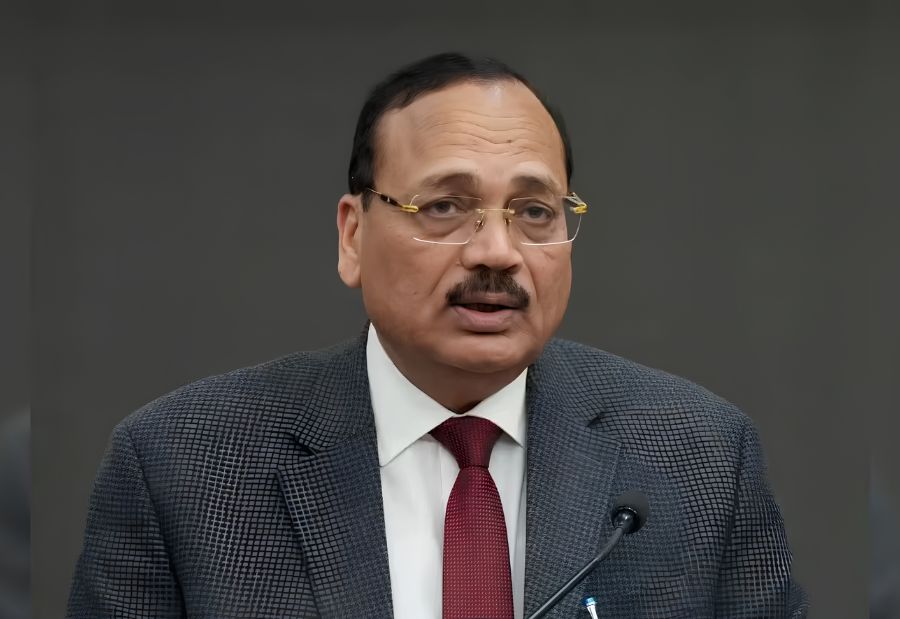
Chief Justice of India Surya Kant has urged the Commonwealth Legal Education Association (CLEA) to develop model guidelines for disclosing the use of artificial intelligence in legal research. He also called for compulsory legal aid work as a graduation requirement for law students, with additional academic credits for those who contribute beyond the minimum requirement.
Speaking at the inaugural session of CLEA’s 1st Annual International Conference on Legal Education 2026, he highlighted the need for responsible AI use in legal education and research.
“I would urge CLEA to take the lead by developing model guidelines on the disclosure of AI assistance in legal research, which law schools and journals across the Commonwealth could adapt to their own needs,” he said.
Discussing research in the age of AI, Justice Surya Kant said these tools can help researchers find and organise information, but their answers are not always accurate. They may also produce fabricated legal references that appear genuine. He stressed that students must understand which uses of AI are permitted and when its assistance must be disclosed.
He said researchers must verify every legal reference against its original source, disclose significant AI assistance and take responsibility for their published work. An AI system cannot be credited as an author because it cannot be held accountable for the work.
He also cautioned against relying entirely on AI detection software to identify academic misconduct. Such tools can produce incorrect results, and no student should be held guilty based only on a machine-generated assessment.
Citing a 2023 study, he noted that 7 widely used AI detectors, while almost flawless in identifying essays written by US schoolchildren, wrongly flagged more than 3 in every 5 essays written by non-native English speakers as AI-generated. He said this could unfairly label students across the Commonwealth, where many use English as a second or third language.
Justice Surya Kant said generative AI has changed traditional ideas about examinations and research papers as evidence of a student’s knowledge. AI tools can now summarise judgments, suggest arguments and prepare polished responses within minutes.
“The question, therefore, is no longer whether students will use these tools, but whether the work they submit still reflects their own reasoning, understanding, and appreciation for the law,” Justice Surya Kant said.
He said completely banning AI tools would be neither practical nor wise. Courts across the Commonwealth have largely chosen to regulate their use instead of prohibiting them. He cited the Supreme Court of Singapore, which allows court users to use such tools while holding them responsible for everything they submit.
“The wiser course is to set clear rules and to teach responsible use, so that technology assists the student’s search,” he said.
He added that assessments should evolve through oral explanations, defences of legal references and exercises that require students to identify errors in AI-generated answers.
On legal aid education, Justice Surya Kant called for stronger participation by students in legal aid clinics. He referred to the legal services authority’s scheme, which brings together panel lawyers, para-legal volunteers and students to provide assistance in villages and settlements.
He said students working in legal aid clinics during academic breaks should receive certificates recognising their actual contributions. Clinics could also become centres for continuous learning through regular case discussions involving advocates, legal services officers and students.
He further suggested integrating practical learning into core subjects such as Evidence, Criminal Procedure, Family Law and Constitutional Law rather than keeping it limited to a separate part of the curriculum.
During a technical session on uniform citation across the Commonwealth, he said courts using neutral citations should follow a consistent identification system. He noted that the Supreme Court has used neutral citations since 2023.
A common format covering the year, court, decision number and paragraph would make judgments easier to trace and verify across countries, he added.
Also read: Viksit Workforce for a Viksit Bharat
Do Follow: The Mainstream LinkedIn | The Mainstream Facebook | The Mainstream Youtube | The Mainstream Twitter
About us:
The Mainstream is a premier platform delivering the latest updates and informed perspectives across the technology business and cyber landscape. Built on research-driven, thought leadership and original intellectual property, The Mainstream also curates summits & conferences that convene decision makers to explore how technology reshapes industries and leadership. With a growing presence in India and globally across the Middle East, Africa, ASEAN, the USA, the UK and Australia, The Mainstream carries a vision to bring the latest happenings and insights to 8.2 billion people and to place technology at the centre of conversation for leaders navigating the future.