


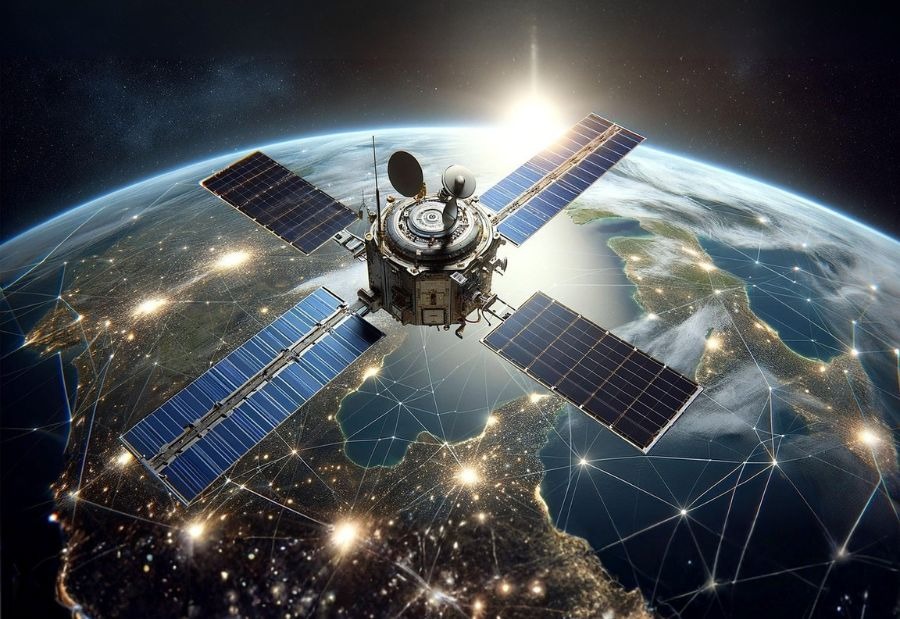
As climate disasters intensify worldwide, China is rapidly expanding its technology-driven disaster response systems using satellites, drones, and artificial intelligence to support countries vulnerable to extreme weather events.
According to the World Meteorological Organization’s 2025 climate report, the world has experienced 1 of its 3 hottest years on record, while Asia is warming nearly twice as fast as the global average. Recent heatwaves in the Philippines pushed the heat index above 51 degrees Celsius, while Pakistan faced another severe monsoon flood season.
China’s Fengyun meteorological satellite network has emerged as a major global monitoring system. The network currently operates 9 satellites in orbit, supported by 842 weather radars and more than 90,000 ground stations. It now provides real-time weather data to 133 countries and regions worldwide.
China plans to launch 3 additional satellites between 2025 and 2026 to strengthen coverage over the Indian Ocean and western Pacific, regions highly vulnerable to cyclones and extreme weather.
Chen Zhenlin stated that the country’s microwave satellites can penetrate cloud cover to study typhoon structures and provide Pacific island nations with cyclone warnings up to 72 hours in advance.
China also introduced its “Action Plan on Early Warning for Climate Change Adaptation (2025-2027)” during COP29. The initiative supports the UN’s Early Warnings for All program, which aims to protect every person globally through early warning systems by 2027. China has already deployed cloud-based warning systems in Pakistan and the Solomon Islands and plans to train 2,000 specialists over the next 2 years.
In disaster-hit regions where communication systems fail, China is deploying the Wing Loong-2H emergency-response drone. Developed by the Aviation Industry Corporation of China, the drone can restore mobile coverage across 50 square km and create a 15,000-square-km communication network. During Typhoon Wepha in July 2025, it completed China’s first typhoon reconnaissance mission and delivered 6,000 SMS alerts to affected residents.
China has also built the world’s largest earthquake early-warning system with nearly 18,000 observation stations. Its AI-powered system, AIRES, reportedly detects 5 times more seismic events than manual processing methods.
Also read: Viksit Workforce for a Viksit Bharat
Do Follow: The Mainstream LinkedIn | The Mainstream Facebook | The Mainstream Youtube | The Mainstream Twitter
About us:
The Mainstream is a premier platform delivering the latest updates and informed perspectives across the technology business and cyber landscape. Built on research-driven, thought leadership and original intellectual property, The Mainstream also curates summits & conferences that convene decision makers to explore how technology reshapes industries and leadership. With a growing presence in India and globally across the Middle East, Africa, ASEAN, the USA, the UK and Australia, The Mainstream carries a vision to bring the latest happenings and insights to 8.2 billion people and to place technology at the centre of conversation for leaders navigating the future.