


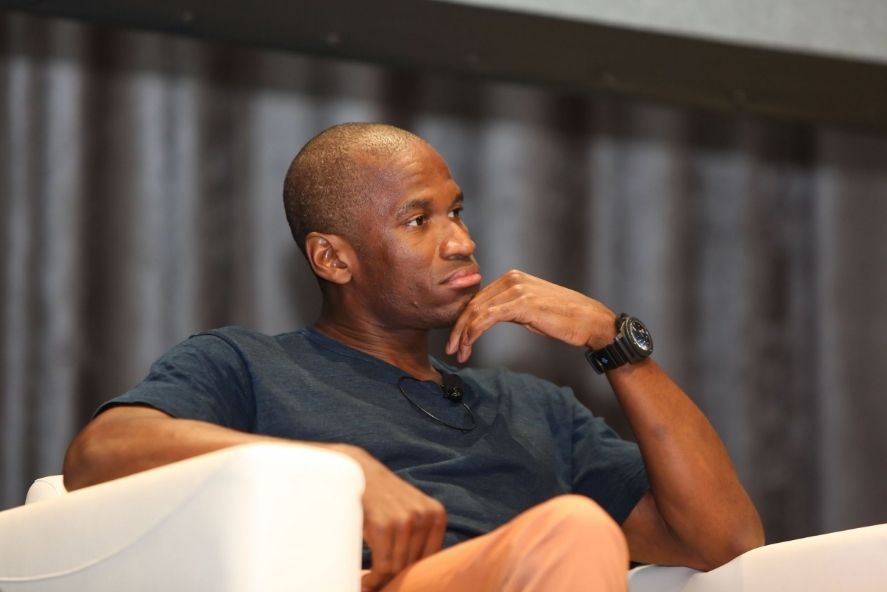
The rapid expansion of AI infrastructure could eventually create more computing capacity than the market needs, according to former BitMEX CEO Arthur Hayes. He believes that such an outcome could trigger a downturn followed by a bailout, creating conditions that could benefit crypto assets.
Hayes, who is co-founder and chief investment officer of crypto investment firm Maelstrom, said at the Gamma Prime Investing Conference in Singapore that humanity is “wasting multi-trillion dollars” on AI data centres.
He expects the huge investment in data centres to eventually make computing power “extremely cheap and extremely plentiful”. His view contrasts with the current rush by technology companies to secure the computing resources needed to develop and operate increasingly advanced AI models.
Hayes argued that major technological expansions have historically resulted in excessive investment, followed by a crash and eventual bailout.
“If you study financial history and you study every single major technological rollout, it always is overbuilt. There always is a crash, and there always is a bailout,” Hayes said.
He believes investors positioned for such bailouts could benefit, citing the aftermath of the 2008 financial crisis and other events over the past 2 decades.
“Thankfully, we have bitcoin and other crypto to soak up that excess liquidity, and so we know the asset that’s going to perform the best when the bailout comes,” Hayes said, adding that “you just have to be patient.”
Hayes pointed to SpaceX, OpenAI and Anthropic as major users driving demand for computing power. He said these companies do not currently make money and argued that infrastructure providers will eventually seek payment for the computing capacity they have committed to use.
According to Hayes, this pressure could emerge in late 2027 or 2028, when much of the data centre capacity currently being built is expected to be delivered.
However, Hayes also outlined a more positive scenario. He said AI could become “so useful” over the next 12 months that demand rises enough for AI companies to become profitable.
He noted that some companies supporting the AI boom, including memory chipmakers and Nvidia, are already generating profits. For investors, he said the key question is whether their current valuations properly reflect future earnings.
Hayes said he does not favour betting against AI companies or shorting their shares, describing it as “not really a great investment opportunity”. Instead, he continues to focus on the possibility that major technology rollouts will eventually create excess capacity.
That expectation also forms part of Hayes’ latest crypto project, Flop, an AI-agent payments venture expected to launch in the 1st quarter of 2027.
Hayes believes cheaper and more abundant computing power could accelerate the growth of AI agents. Flop aims to create a spot market for computing power, where participants receive Flop tokens for supplying GPUs and carrying out AI inference.
Hayes said there is currently no dedicated payments network for AI agents. Flop is intended to address that gap by creating a spot market for compute.
“If agents can convert a currency directly into compute, which is what they eat and consume, then they will use this currency,” Hayes said. “That’s our bet.”
Also read: Viksit Workforce for a Viksit Bharat
Do Follow: The Mainstream LinkedIn | The Mainstream Facebook | The Mainstream Youtube | The Mainstream Twitter
About us:
The Mainstream is a premier platform delivering the latest updates and informed perspectives across the technology business and cyber landscape. Built on research-driven, thought leadership and original intellectual property, The Mainstream also curates summits & conferences that convene decision makers to explore how technology reshapes industries and leadership. With a growing presence in India and globally across the Middle East, Africa, ASEAN, the USA, the UK and Australia, The Mainstream carries a vision to bring the latest happenings and insights to 8.2 billion people and to place technology at the centre of conversation for leaders navigating the future.