


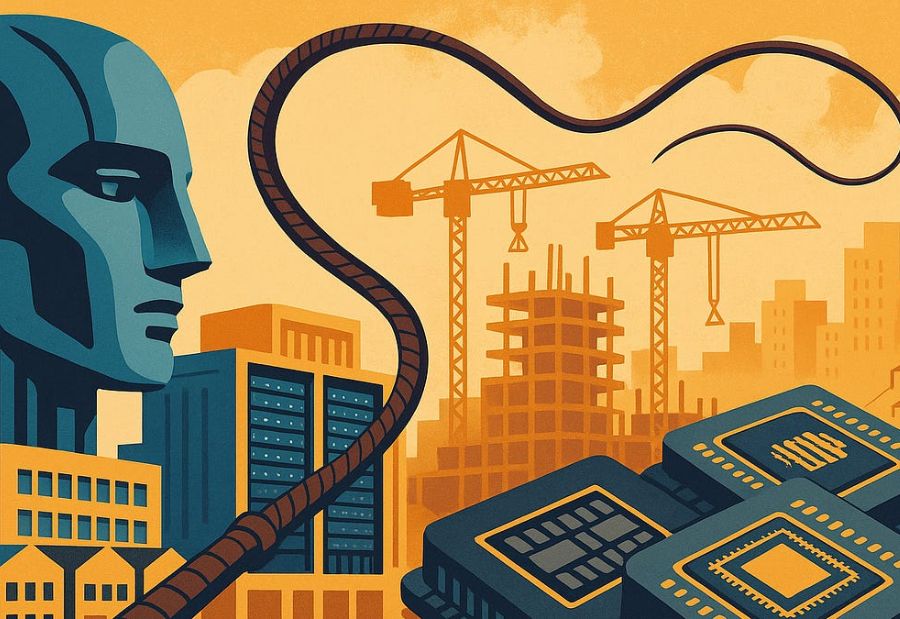
The rapid expansion of artificial intelligence infrastructure is starting to generate business returns for major U.S. technology companies, but the rising cost of these investments is putting increasing pressure on their free cash flow and raising investor concerns.
According to a Reuters analysis of LSEG consensus estimates, Microsoft, Alphabet, Amazon, Meta Platforms and Oracle are expected to spend more on capital expenditure (capex) than they generate in free cash flow by 2027. While the 5 companies are projected to generate around $340 billion more in annual operating cash flow in 2027 than in 2025, capex is expected to increase by about $534 billion. That equals roughly $1.57 in additional investment for every $1 of extra cash flow.
As the companies begin reporting earnings, investors will closely watch whether growth in AI and cloud businesses can keep pace with the sharp rise in infrastructure spending. Over the past year, all of the major hyperscalers except Alphabet have underperformed the S&P 500.
Shay Boloor, Chief Market Strategist at Futurum Equities, said, “Investors are underestimating how fundamentally AI is changing the Big Tech business model.” He added, “These companies were historically valued as asset-light platforms because revenue could scale much faster than capital requirements, but AI is pushing them toward a hybrid model where software, advertising and cloud economics increasingly depend on enormous physical infrastructure spending.”
The capex figures include spending on data centres, servers, networking equipment and cloud infrastructure, which executives say is largely driven by AI demand. LSEG estimates show expected capex for the 5 companies increased from about $485 billion in January to nearly $730 billion in July.
Some companies are already seeing gains. Microsoft said its AI business has surpassed a $37 billion annual revenue run rate, while Amazon reported 28% growth in its AWS business during the 1st quarter. However, concerns remain over whether AI-generated revenue will continue to justify rising investment.
Oracle has faced the strongest investor reaction, with its shares falling 36% this year after free cash flow turned negative. The company plans to raise $45 billion to $50 billion through debt and equity to support cloud infrastructure expansion. Meanwhile, Microsoft, Alphabet and Meta continue to generate enough free cash flow to fund dividends and share buybacks.
Freddy Lavric, Senior Trader at Winthrop Capital Management, said, “Over the next 2 to 3 years, companies need to show that AI is driving incremental revenue, expanding margins and improving cash flow.” He added, “If those financial benefits aren’t becoming evident by then, the market will start questioning whether the investment cycle has gone too far.”
Also read: Viksit Workforce for a Viksit Bharat
Do Follow: The Mainstream LinkedIn | The Mainstream Facebook | The Mainstream Youtube | The Mainstream Twitter
About us:
The Mainstream is a premier platform delivering the latest updates and informed perspectives across the technology business and cyber landscape. Built on research-driven, thought leadership and original intellectual property, The Mainstream also curates summits & conferences that convene decision makers to explore how technology reshapes industries and leadership. With a growing presence in India and globally across the Middle East, Africa, ASEAN, the USA, the UK and Australia, The Mainstream carries a vision to bring the latest happenings and insights to 8.2 billion people and to place technology at the centre of conversation for leaders navigating the future.