


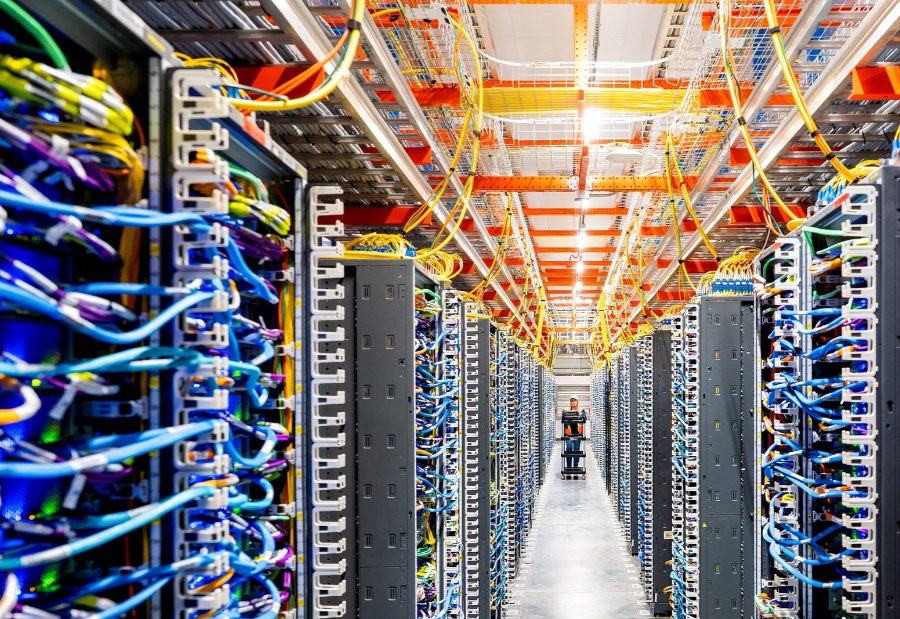
The rapid expansion of AI infrastructure is creating new opportunities for fuel-cell manufacturers as US technology companies face delays in securing reliable electricity from the power grid. According to energy research firm Rystad Energy, investment in fuel cells for data centers could reach $30 billion by 2030, up from $2.8 billion in 2025.
Fuel cells generate electricity through a chemical reaction between a fuel, such as natural gas or hydrogen, and oxygen. Unlike conventional power generation, they produce electricity without burning fuel inside the cell.
Bloom Energy uses solid-oxide technology designed to operate on 100% pure hydrogen, while FuelCell Energy’s molten carbonate systems support hydrogen blends of up to 40%. Both technologies can use different fuels.
Why AI data centers need fuel cells
AI data centers require continuous electricity for computing and cooling. Connecting large facilities to the US grid can take 3–6 years, encouraging developers to consider on-site power generation.
Bloom Energy CEO KR Sridhar said the company delivered power to Oracle’s Utah site in less than 2 months. He also said planning board approvals for a project with Nebius in New Jersey were secured within 3 months of signing the contract.
Rystad estimates that around 40% of projected US data center capacity in 2030 could pursue dedicated on-site power. It also produce lower local emissions than conventional gas-fired generation because they avoid combustion within the cell.
Companies prepare for rising demand
Bloom Energy reported a 138% increase in third-quarter revenue to $1.24 billion and a net profit of $250.3 million, compared with a loss of $23.1 million a year earlier. It raised its 2026 revenue forecast to $4.4 billion–$4.6 billion.
Oracle plans to procure up to 2.8 gigawatts (GW) of Bloom fuel-cell systems, with 1.2 GW already contracted.
FuelCell Energy CEO Jason Few said “time to power has really become as important as cost of power.” The company expects data centers and related business to contribute 75%–85% of its business within 2–3 years, up from 25%–30% currently.
Rystad estimates the industry’s order book at around 9 GW, including framework agreements involving Oracle, AEP, Equinix and Brookfield. These agreements do not necessarily confirm orders for the full capacity.
Manufacturing remains a challenge
Annual fuel-cell manufacturing capacity is expected to rise from around 1.8 GW currently to 4 GW by 2030.
Bloom’s Chief Commercial Officer Aman Joshi said “For 100 MW-plus projects, the biggest determinants of timeline are typically site readiness, permitting, and supporting infrastructure, not the fuel-cell technology itself,”
Gas connections, permits, transformers and switchgear can still delay projects. Future growth will depend on competitive costs, manufacturing capacity and reliable it supplies.
Also read: Viksit Workforce for a Viksit Bharat
Do Follow: The Mainstream LinkedIn | The Mainstream Facebook | The Mainstream Youtube | The Mainstream Twitter
About us:
The Mainstream is a premier platform delivering the latest updates and informed perspectives across the technology business and cyber landscape. Built on research-driven, thought leadership and original intellectual property, The Mainstream also curates summits & conferences that convene decision makers to explore how technology reshapes industries and leadership. With a growing presence in India and globally across the Middle East, Africa, ASEAN, the USA, the UK and Australia, The Mainstream carries a vision to bring the latest happenings and insights to 8.2 billion people and to place technology at the centre of conversation for leaders navigating the future.