


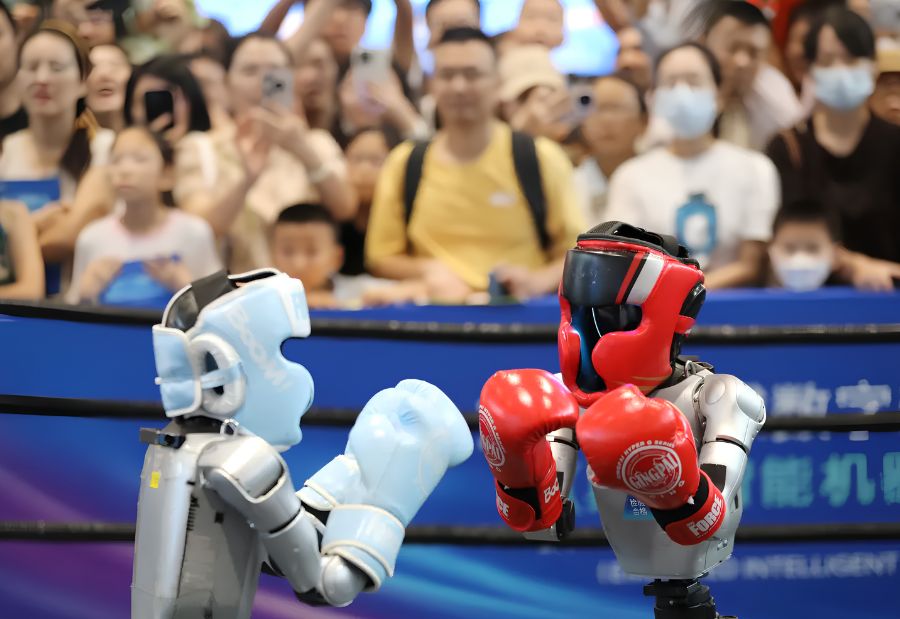
China’s securities regulator is tightening scrutiny of humanoid robot companies seeking to go public, with new expectations around revenue, financial performance and core technology as the sector attracts growing investment.
According to people familiar with the regulator’s thinking, the China Securities Regulatory Commission (CSRC) is informally asking embodied AI startups to demonstrate 3 key areas: sustainable revenue and commercial orders, a path toward narrowing losses, and ownership of core technologies such as robotic “brains” or hands.
One source indicated that a company may need to satisfy 2 of the 3 conditions, although it remains unclear which startups currently meet the requirements. The tighter approach could reduce the number of humanoid robotics companies able to reach public markets.
At least 2 dozen humanoid-related embodied AI companies have reportedly filed to list in Hong Kong. Mainland Chinese companies seeking Hong Kong listings also require approval from the CSRC.
The increased scrutiny follows a surge in investment and valuations across China’s humanoid robotics industry. The country now has more than 100 humanoid robot companies, with embodied AI receiving support through national policy initiatives. At the same time, Chinese authorities have warned about the possibility of excessive speculation in the sector.
Industry data shows investment in humanoid robotics reached 47.09 billion yuan ($6.95 billion) in Q2, more than double the previous quarter and more than 6 times the level recorded during the same period a year earlier.
Unitree, one of the sector’s most prominent companies, received regulatory approval for its Shanghai listing in August. Its shares surged 460% on their first trading day, closing at 845 yuan after the company raised about 6.1 billion yuan ($905 million) through its IPO.
However, Unitree founder Wang Xingxing later cautioned that broader commercial applications for humanoid robots remained years away, adding to questions about how quickly the technology can move from demonstrations and research into widespread commercial use.
Unitree’s share price has since fallen substantially from its debut levels. Hong Kong-listed UBTECH has also declined more than 40% this year while continuing to report operating losses.
The pressure on humanoid startups comes as investors increasingly examine whether valuations across AI and robotics are supported by actual revenue. The debate has also highlighted the gap between rapid investment in physical AI and the current commercial adoption of humanoid robots.
China’s tougher IPO approach could therefore place greater emphasis on proven commercial demand, improving financial performance and technological differentiation before humanoid robotics companies enter public markets.
Also read: Viksit Workforce for a Viksit Bharat
Do Follow: The Mainstream LinkedIn | The Mainstream Facebook | The Mainstream Youtube | The Mainstream Twitter
About us:
The Mainstream is a premier platform delivering the latest updates and informed perspectives across the technology business and cyber landscape. Built on research-driven, thought leadership and original intellectual property, The Mainstream also curates summits & conferences that convene decision makers to explore how technology reshapes industries and leadership. With a growing presence in India and globally across the Middle East, Africa, ASEAN, the USA, the UK and Australia, The Mainstream carries a vision to bring the latest happenings and insights to 8.2 billion people and to place technology at the centre of conversation for leaders navigating the future.