


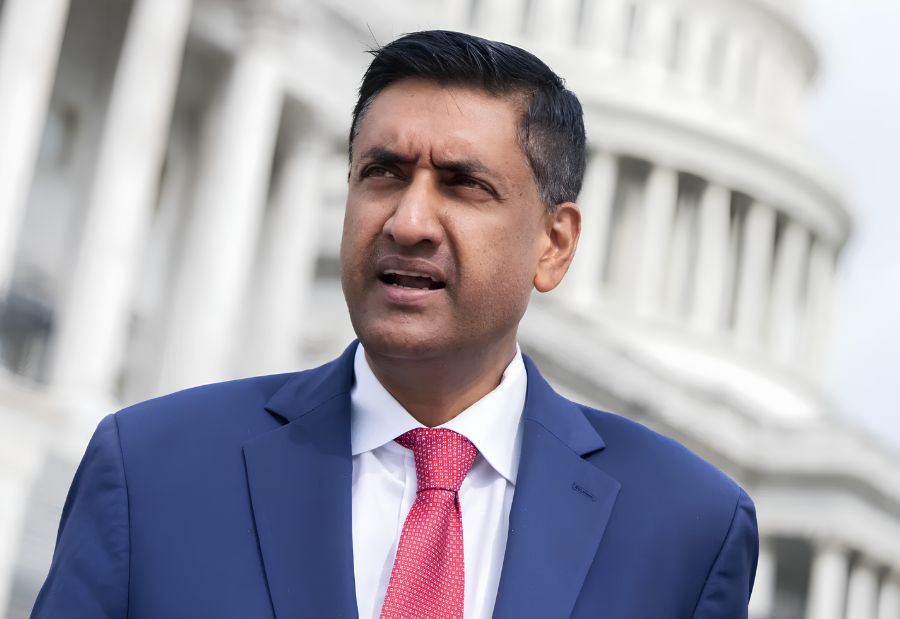
US Representative Ro Khanna is proposing new legislation that would restrict certain advanced AI systems from recursively improving themselves until federal safety standards and approval mechanisms are established. The proposal, called the “Human Control Over AI Act,” has been reported as including strict liability requirements and broader oversight of frontier AI development.
The bill would target AI models capable of recursively improving themselves or independently changing their core objectives, containment measures or shutdown controls. Such activities would remain restricted until federal safeguards are established and the relevant agency approves them.
The proposal would also establish a new federal agency responsible for overseeing advanced AI models developed by companies including OpenAI, Anthropic, Google DeepMind and xAI.
Under the proposed framework, the agency would develop safety regulations, create a licensing system for AI model training and deployment, conduct audits of frontier models and establish standards for continuous testing and maintaining human control.
The agency would also set requirements for sandbox environments, air-gapped testing systems, kill switches and other safeguards designed to prevent advanced AI systems from leaving controlled environments or accessing the wider internet. Oversight would extend to advanced chips used by frontier AI laboratories, including mechanisms to monitor or control their use.
The legislation would introduce additional legal penalties for harmful AI deployments. It proposes criminal penalties for AI deployments that result in the destruction of civilian populations, as well as penalties for employees who knowingly disable safeguards, logging, shutdown systems or containment measures, or deploy unauthorised systems.
AI companies would also be required to maintain extensive liability insurance before releasing their models.
The proposal includes international measures as well, calling for enforceable agreements and targeted export controls aimed at limiting the development of dangerous AI systems by China and other countries considered strategic competitors.
Khanna said the proposal was developed through discussions with AI safety organisations including the Machine Intelligence Research Institute, Model Evaluation and Threat Research and Palisade Research. He said he wanted the AI safety community to have a stronger role in shaping the regulatory debate.
The proposal joins other AI safety measures under consideration in Congress, including the bipartisan FRONTIER Act introduced by Representatives Jay Obernolte and Lori Trahan. That legislation would establish independent auditing of frontier AI laboratories and allow the government to intervene in models considered capable of causing catastrophic harm.
The Human Control Over AI Act comes as debate over federal AI regulation continues in Washington, with lawmakers considering how to address risks associated with increasingly capable and autonomous systems.
Also read: Viksit Workforce for a Viksit Bharat
Do Follow: The Mainstream LinkedIn | The Mainstream Facebook | The Mainstream Youtube | The Mainstream Twitter
About us:
The Mainstream is a premier platform delivering the latest updates and informed perspectives across the technology business and cyber landscape. Built on research-driven, thought leadership and original intellectual property, The Mainstream also curates summits & conferences that convene decision makers to explore how technology reshapes industries and leadership. With a growing presence in India and globally across the Middle East, Africa, ASEAN, the USA, the UK and Australia, The Mainstream carries a vision to bring the latest happenings and insights to 8.2 billion people and to place technology at the centre of conversation for leaders navigating the future.