


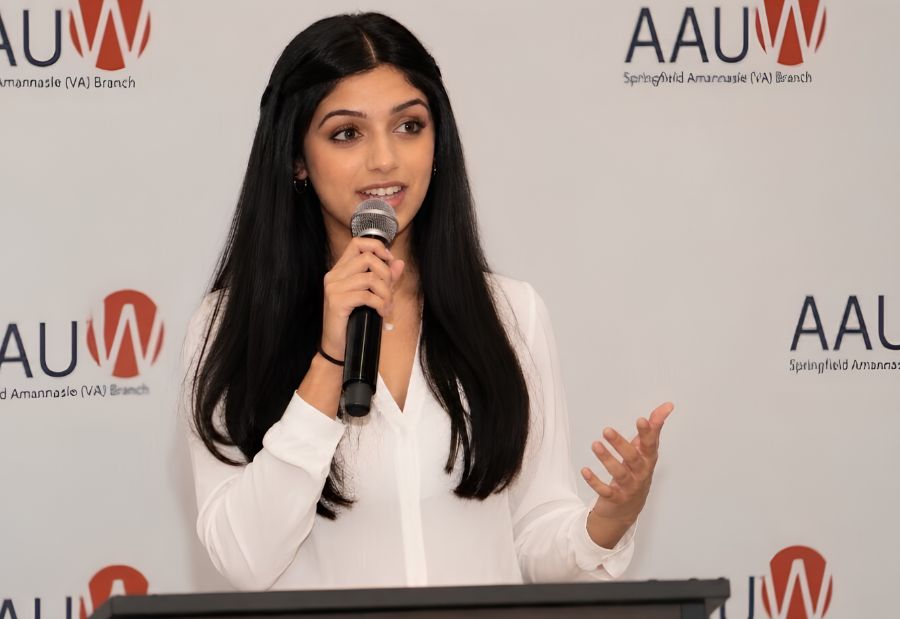
A 17-year-old high school student has built an AI startup with more than 1,000 users while following a school policy that blocks access to ChatGPT and similar generative AI tools.
Navya Tuteja, a senior at Thomas Jefferson High School for Science and Technology in Virginia, launched Raaha 2 months ago. The free platform helps neurodivergent job seekers assess job listings before applying and already covers more than 20,000 listings.
The idea came partly from Tuteja’s mother, who is hard of hearing, and from her observations of how job postings often focus heavily on employer requirements while offering little insight into what the actual work environment and day-to-day experience may be like.
Raaha uses a quiz-based system to evaluate job listings across several factors, helping candidates determine whether a position may be a suitable fit before investing time in an application. Tuteja has funded the platform herself and plans to keep it free while building its user base. A potential business model would involve employers and workforce organisations paying to use the platform or improve their job listings.
Tuteja said her school’s Wi-Fi blocks ChatGPT, Claude and similar services. “It made me use it in school way less,” she said. “So I guess, as annoying as it was, it was still good, in a way.”
Although she leads her school’s AI club, Tuteja said she does not use AI for schoolwork and prefers to complete exam-related learning herself. She wrote Raaha’s underlying algorithm and used AI mainly for mechanical tasks such as improving the website’s design. She also uses AI to draft emails and organise complex information when she is short on time.
Her approach stands out as student use of AI continues to grow. RAND polling found that the share of students regularly using AI for homework increased from 48% to 62% between May and December 2025. A study of more than 95,000 undergraduates also found that daily AI users were nearly 4 times as likely as monthly users to report using AI to cheat.
Tuteja said she believes people should be transparent about how they use AI. “I think it’s good to own up to it if you’re using it right,” she said. “If you’re very transparent about what you use it for, and you actually didn’t use it to create your whole company, then I don’t think there’s any reason to be embarrassed.”
Beyond Raaha, Tuteja has developed Legible, a separate tool that converts special-education documents such as IEPs and 504 plans into simpler language for families. She also proposed a transparency standard called Traceable Accessibility and has discussed the idea with local state senators and the U.S. Department of Education.
Despite her experience with an AI ban at school, Tuteja does not believe restricting access is the long-term answer. “I don’t think banning it is the solution,” she said. “I think you have to regulate it in the right way. So that’s what I’ve been trying to do right now.”
Her parents, Deepti and Rohit Tuteja, have encouraged her to avoid shortcuts and focus on hard work. Both also work in technology-related fields, with Deepti involved in data management at TD Bank and Rohit working in cybersecurity governance, risk and compliance at Sentara Health.
Tuteja plans to attend college, but said she would consider running Raaha full-time if the platform continues to grow. She has also built an AI agent for her mother that can respond to her texts when she is unavailable.
Also read: Viksit Workforce for a Viksit Bharat
Do Follow: The Mainstream LinkedIn | The Mainstream Facebook | The Mainstream Youtube | The Mainstream Twitter
About us:
The Mainstream is a premier platform delivering the latest updates and informed perspectives across the technology business and cyber landscape. Built on research-driven, thought leadership and original intellectual property, The Mainstream also curates summits & conferences that convene decision makers to explore how technology reshapes industries and leadership. With a growing presence in India and globally across the Middle East, Africa, ASEAN, the USA, the UK and Australia, The Mainstream carries a vision to bring the latest happenings and insights to 8.2 billion people and to place technology at the centre of conversation for leaders navigating the future.