


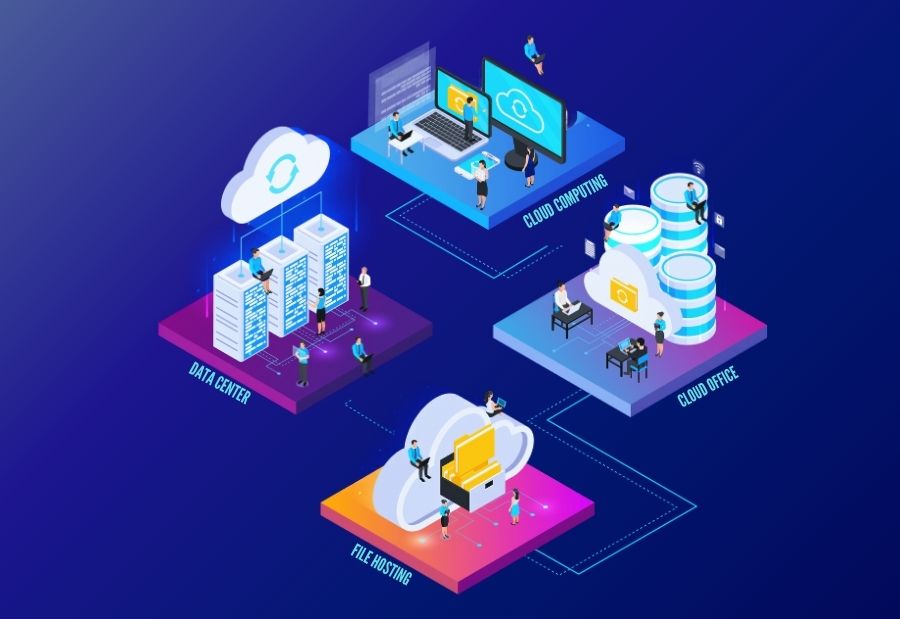
Cloud adoption gives businesses flexibility, but managing several cloud platforms can introduce a new layer of complexity. Different providers may use different tools, configurations, security controls and pricing models. As workloads become distributed, technology teams can spend more time managing the environment instead of improving it.
This is why multi-cloud simplification is becoming an important technology priority. The goal is not necessarily to reduce the number of cloud providers. Instead, organisations can simplify how they operate across those platforms while keeping the flexibility required by the business.
Why does multi-cloud become difficult to manage?
Companies often adopt multiple clouds for practical reasons. One provider may offer a specific service, while another may support a particular geographic region or application requirement.
Over time, however, separate technology decisions can result in duplicated tools, inconsistent processes and different security approaches.
Teams may also need to learn several management consoles and operational models. This can increase support requirements and make it harder to maintain a consistent technology environment.
Where should businesses start?
The first step in multi-cloud simplification is visibility.
Technology leaders need to understand which workloads operate on each cloud, why they are there and how they connect to other systems. Application dependencies, data movement and third-party services should also be documented.
This can help identify unnecessary duplication and workloads that may be easier to manage through a more standardised approach.
Standardize common operating practices
Businesses do not need to make every cloud platform identical.
However, businesses can establish common practices for areas such as identity management, monitoring, resource tagging, security baselines, and incident response.
For example, a shared approach to access control can make it easier for security teams to review permissions across different environments.
Standardising these operational processes can reduce unnecessary variation without removing platform-specific capabilities.
Reduce tool sprawl
Each cloud environment may encourage the use of its own management and monitoring tools. Using too many overlapping products can create additional cost and operational effort.
Technology teams can review whether existing tools provide duplicate functionality and determine where consolidation makes sense.
A smaller set of well-integrated tools can make monitoring and support easier.
Use automation to reduce manual work
Automation is another practical area for multi-cloud simplification.
Businesses can automate infrastructure provisioning, policy enforcement, resource scheduling and routine configuration checks.
Infrastructure-as-code practices can also make deployments more consistent. Instead of manually configuring every environment, approved templates can be reused across workloads.
This can reduce human error and make changes easier to review.
Improve cost visibility
Multiple cloud platforms can make spending difficult to understand.
Different billing structures and resource models can create challenges when finance and technology teams try to calculate total cloud expenditure.
Standard naming, tagging and reporting practices can provide better visibility into which applications, teams or business functions are consuming resources.
This helps leaders identify duplication and make better decisions about workload placement.
Simplify architecture where possible
Some workloads may rely on unnecessary dependencies or complicated data flows.
Architecture reviews can help technology teams identify systems that have become difficult to maintain. Simplifying application dependencies, removing unused services and consolidating duplicated workloads can reduce operational overhead.
The objective should be targeted simplification rather than an attempt to redesign everything.
Security must remain consistent
Simplification should not reduce security controls.
Access policies, logging, encryption, monitoring and configuration standards should be applied consistently across relevant cloud environments.
A common security framework can make it easier to identify gaps and investigate incidents.
The role of CIOs
CIOs can help define where standardisation is necessary and where flexibility creates genuine value.
The decision to maintain multiple clouds should be based on business and technical requirements, not simply because different teams adopted different platforms over time.
Regular reviews can help ensure the cloud strategy remains aligned with changing business needs.
The Mainstream perspective
As businesses expand their use of cloud platforms, managing multiple environments efficiently is becoming an important part of technology leadership. The Mainstream continues to cover cloud strategy, infrastructure, cybersecurity and digital transformation developments shaping modern organisations.
Final Thought
Multi-cloud simplification is about reducing unnecessary complexity while preserving useful cloud flexibility. Better visibility, common operating practices, automation, tool consolidation and stronger governance can help businesses manage multiple cloud platforms more efficiently and with greater consistency.