


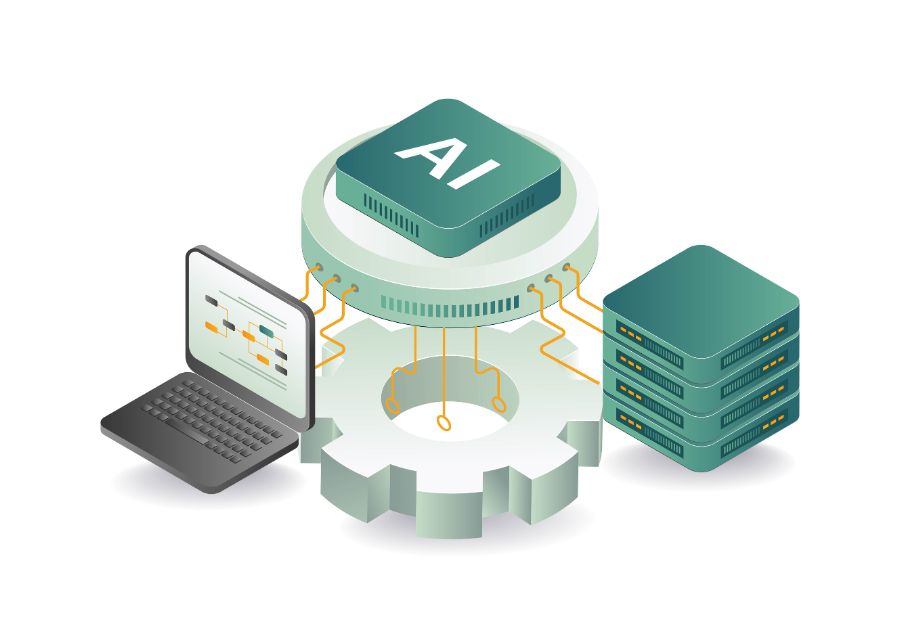
Artificial intelligence is becoming part of more enterprise functions, from customer service and fraud detection to forecasting, automation and business intelligence. While much of the attention remains on AI models, the quality and movement of data behind those models can be just as important.
This is why AI data pipelines are becoming a technology leadership priority. These pipelines help collect, process, transform and deliver data to the systems that support AI applications. Without a reliable data flow, even a powerful AI model may struggle to produce useful and consistent results.
What are AI data pipelines?
An AI data pipeline is a structured process that moves data from different sources into the systems where it can be prepared and used for AI.
Enterprise data may come from customer applications, business software, databases, connected devices, cloud platforms or external sources. Before this information reaches an AI system, it may need to be cleaned, transformed, combined and validated.
A well-designed pipeline helps ensure that AI systems receive data that is relevant, timely and consistent.
Why are AI data pipelines becoming important?
1. AI depends on reliable data
AI systems are only as useful as the information they receive. Incomplete, outdated or inconsistent data can affect model performance and business outcomes.
Technology leaders therefore need to treat data quality as part of AI strategy rather than as a separate data management activity.
Strong AI data pipelines can include validation and quality checks before data is used for analytics or model development.
2. Enterprise data is increasing
Organisations are generating data across more applications and platforms than ever. Customer interactions, business transactions, digital services and connected systems all contribute to growing data volumes.
Moving this information manually is not practical at enterprise scale. Automated pipelines can help organisations process and deliver data more efficiently.
3. AI Workloads need timely information
Some AI applications depend on recent or real-time data. Fraud monitoring, recommendation systems and operational analytics may need information to move quickly between source systems and AI platforms.
Technology leaders therefore need to consider speed and reliability alongside data accuracy when designing AI infrastructure.
4. AI Governance starts with data
Data governance and AI governance are becoming increasingly connected.
Organisations need to know where data comes from, how it is transformed, who can access it and where it is being used. Well-managed pipelines can create greater visibility across the data lifecycle.
This can support privacy, security, compliance and accountability requirements.
What should technology leaders consider?
Building effective AI data pipelines requires more than selecting a data platform. CIOs and technology teams should consider the full data journey.
Key areas include data integration, quality management, access controls, observability and scalability. Teams also need to understand how pipelines connect with data warehouses, data lakes, AI platforms and enterprise applications.
Automation is another important factor. Automated validation, monitoring and failure handling can reduce manual intervention and help teams respond more quickly when problems occur.
Data pipelines need strong observability
A pipeline can fail without immediately affecting the AI model itself. Data may become delayed, incomplete or incorrectly transformed while the underlying systems continue running.
Observability can help technology teams detect these problems by monitoring data freshness, pipeline performance, errors and unusual changes in data patterns.
This gives leaders a clearer understanding of whether the data foundation supporting AI is working as expected.
The Mainstream perspective
As enterprises move from AI experimentation toward broader deployment, the supporting data infrastructure is receiving greater attention. The Mainstream continues to cover AI transformation, data strategy and technology leadership developments shaping enterprise adoption.
Final Thought
AI data pipelines are becoming an important part of enterprise AI strategy because they connect business data with the systems that depend on it. Reliable pipelines can improve data quality, speed, governance and visibility. For technology leaders, investing in this foundation can help enterprises build AI capabilities that are more scalable, manageable and ready for long-term use.