


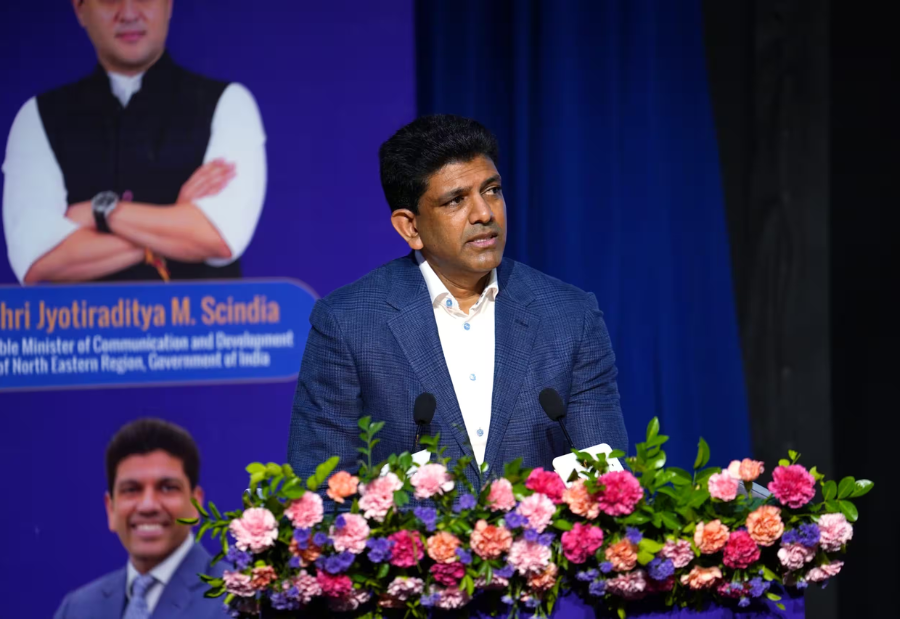
India is positioning itself to play a stronger role in shaping next-generation technologies, with 6G, quantum communications and quantum security emerging as key areas of focus. Minister of State for Communications Chandra Sekhar Pemmasani said on Tuesday that the country has an opportunity to contribute to global technology standards rather than only adopt them.
“We have the opportunity to impact 6G, rather than just reading the standards. We have an opportunity to write those standards at this time because of the government push. We also have an opportunity to make an impact in quantum communications and quantum security,” Pemmasani said.
“We all have equal responsibility to build the entire ecosystem, whether it is 4G, 5G, or quantum. The whole thing is to build India, and that is the primary purpose of the Centre for Development of Telematics (C-DoT).”
Pemmasani was speaking at the 43rd foundation day of C-DoT. At the event, the public sector telecom research and development organisation under the Department of Telecommunications unveiled nearly 14 quantum products.
India has also contributed to the International Telecommunication Union’s IMT 2030 framework for 6G, seeking the inclusion of “ubiquitous connectivity” among the 6G usage scenarios, along with coverage, interoperability and sustainability as technology capabilities.
The government is supporting Indian participation in global standardisation bodies, including 3GPP, ITU and oneM2M, through the DoT’s TDIP scheme.
Pemmasani said initiatives such as the Sanchar Saathi application and Financial Fraud Risk Indicator have helped prevent nearly ₹4,000 crore in cyber fraud losses. “Sanchar Saathi app…and with financial fraud risk indicator, so far, an estimated ₹4,000 crores of cyber fraud has been prevented.”
Meanwhile, a TCS-led consortium, with C-DoT as the core partner and Tejas Networks as the RAN vendor, has deployed an indigenous 4G technology stack for BSNL across 1 lakh sites.
Pemmasani said India is now the 5th country globally with self-reliant 4G technology, serving 22 million subscribers. He urged C-DoT to “reduce the distance between invention and implementation”, noting its 12 to 18-month product cycle.
“It is important to release timely, reliable, scalable, and globally competitive products…we have grown from ₹80 crores to ₹600 crores over the last few years,” he said, adding that Indian technology can scale when domestic and global markets adopt indigenous products.
(Sources: ET Telecom)
Also read: Viksit Workforce for a Viksit Bharat
Do Follow: The Mainstream LinkedIn | The Mainstream Facebook | The Mainstream Youtube | The Mainstream Twitter
About us:
The Mainstream is a premier platform delivering the latest updates and informed perspectives across the technology business and cyber landscape. Built on research-driven, thought leadership and original intellectual property, The Mainstream also curates summits & conferences that convene decision makers to explore how technology reshapes industries and leadership. With a growing presence in India and globally across the Middle East, Africa, ASEAN, the USA, the UK and Australia, The Mainstream carries a vision to bring the latest happenings and insights to 8.2 billion people and to place technology at the centre of conversation for leaders navigating the future.