


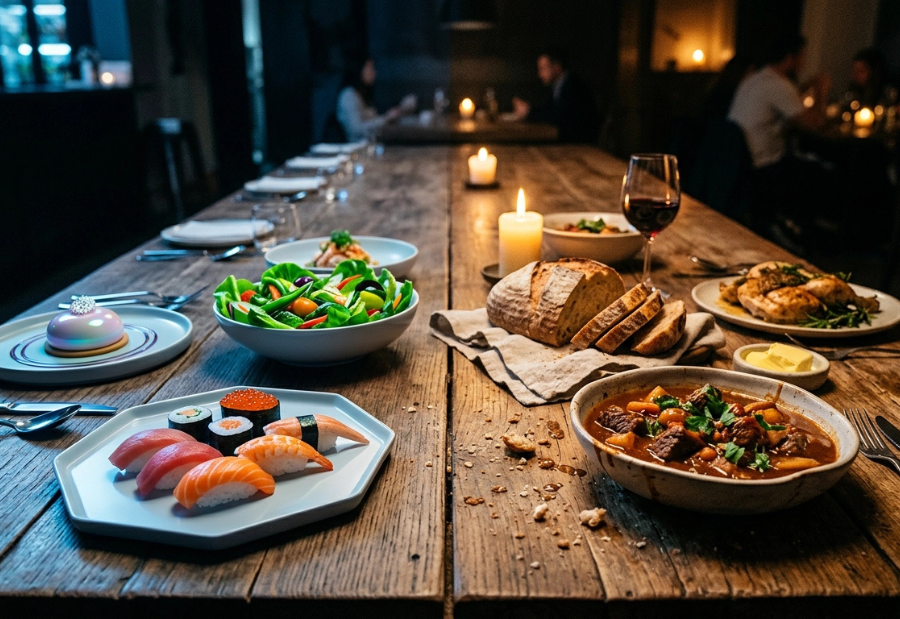
For customers ordering food online, the gap between what appears on a menu and what arrives at the doorstep could become harder to judge as AI-generated food images become more realistic.
A look at the Swiggy app found several restaurants using AI-generated images for dishes such as noodles, pizza, pulao and more. Some images show clear signs of AI, including unnaturally flowing cheese, unusual textures, uniformly patterned vegetables and overly bright colours. Others appear realistic until users enlarge them and notice a faint AI disclaimer.
Swiggy’s disclaimer for restaurants using AI-generated images states that “dish details might be AI-crafted for a better experience.” However, the label can be easy to overlook when users are quickly browsing food options.
In November 2023, Swiggy introduced its “AI-Fuelled Photoshoot” feature to improve restaurant menus. A sample comparison showed a food image being brightened and given stronger colours. However, newer text-to-image AI models can now create food photos of dishes that restaurants may not be able to reproduce as shown.
Zomato, meanwhile, appears to have fewer AI-generated food images. In August 2024, then-CEO Deepinder Goyal said the platform “strongly” discouraged AI-generated menu images.
“AI-generated food/dish images are misleading, and we have received numerous customer complaints on this issue. Customers say that this leads to breach of trust, and it leads to higher complaints & refunds, and also, lower ratings,” he posted on X. He added that Zomato would remove existing AI-generated images and stop accepting new ones.
His post also showed a comparison in which an AI-generated hamburger appeared larger and cheesier than the actual product.
Although generative AI food images are not allowed or specifically flagged on Zomato, some restaurants still use heavily edited visuals that appear AI-generated. Signs include unrealistic pizza toppings, overly uniform noodles, digitally altered ingredients, spices and perfectly diced food.
As AI models become better at producing hyper-realistic images, identifying machine-generated content is becoming harder. Watermarks can also be cropped, while customers may not closely examine small menu thumbnails before ordering.
For restaurants and food delivery platforms, AI images can offer commercial benefits. For the customer, however, the risk is ordering a meal that looks very different from what was shown on the screen.
Also read: Viksit Workforce for a Viksit Bharat
Do Follow: The Mainstream LinkedIn | The Mainstream Facebook | The Mainstream Youtube | The Mainstream Twitter
About us:
The Mainstream is a premier platform delivering the latest updates and informed perspectives across the technology business and cyber landscape. Built on research-driven, thought leadership and original intellectual property, The Mainstream also curates summits & conferences that convene decision makers to explore how technology reshapes industries and leadership. With a growing presence in India and globally across the Middle East, Africa, ASEAN, the USA, the UK and Australia, The Mainstream carries a vision to bring the latest happenings and insights to 8.2 billion people and to place technology at the centre of conversation for leaders navigating the future.