


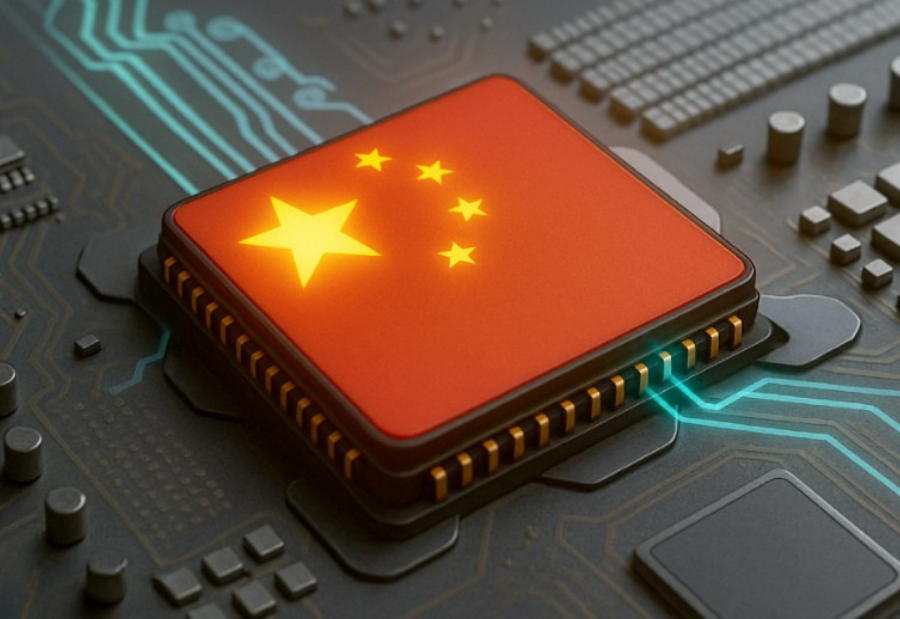
China’s drive to build a self-sufficient semiconductor industry is facing growing obstacles as access to advanced chipmaking technologies remains restricted by global export controls and supply chain limitations.
While the country has invested heavily in domestic semiconductor development, industry experts say significant gaps remain between Chinese manufacturers and leading global chipmakers. One of the biggest challenges is limited access to advanced extreme ultraviolet (EUV) lithography machines, which are essential for producing next-generation semiconductor chips.
In response, Chinese companies have been exploring alternative approaches to improve chip performance. Huawei, one of the country’s leading technology firms, has focused on advanced packaging and chip integration techniques to enhance computing capabilities without relying entirely on the latest manufacturing processes.
However, analysts caution that these methods cannot fully replace access to cutting-edge fabrication technologies. Issues related to manufacturing efficiency, production yields, scalability, performance optimization, and heat management continue to present challenges for domestic chipmakers.
Export restrictions imposed by the United States and allied nations have further complicated China’s efforts to secure advanced semiconductor equipment and AI-focused processors. As a result, Beijing has intensified investments in local semiconductor research, manufacturing, and supply chain development.
Several major technology companies, including Huawei, Alibaba, Baidu, and SMIC, are expanding their chip development initiatives as part of broader efforts to strengthen China’s technology ecosystem and reduce dependence on foreign suppliers.
Experts acknowledge that China has achieved notable progress in semiconductor manufacturing capabilities and AI infrastructure development. However, reaching full technological self-reliance remains a long-term objective that will require sustained investment, specialized talent, mature supply chains, advanced manufacturing tools, and continued research and development.
The situation reflects the broader strategic competition between China and the United States, where semiconductor technology has become central to economic growth, artificial intelligence advancement, and national security priorities.
Despite ongoing innovation and investment, industry observers believe China’s semiconductor sector still faces critical technological barriers that could limit its ability to match global leaders in the near future.
Also read: Viksit Workforce for a Viksit Bharat
Do Follow: The Mainstream LinkedIn | The Mainstream Facebook | The Mainstream Youtube | The Mainstream Twitter
About us:
The Mainstream is a premier platform delivering the latest updates and informed perspectives across the technology business and cyber landscape. Built on research-driven, thought leadership and original intellectual property, The Mainstream also curates summits & conferences that convene decision makers to explore how technology reshapes industries and leadership. With a growing presence in India and globally across the Middle East, Africa, ASEAN, the USA, the UK and Australia, The Mainstream carries a vision to bring the latest happenings and insights to 8.2 billion people and to place technology at the centre of conversation for leaders navigating the future.