


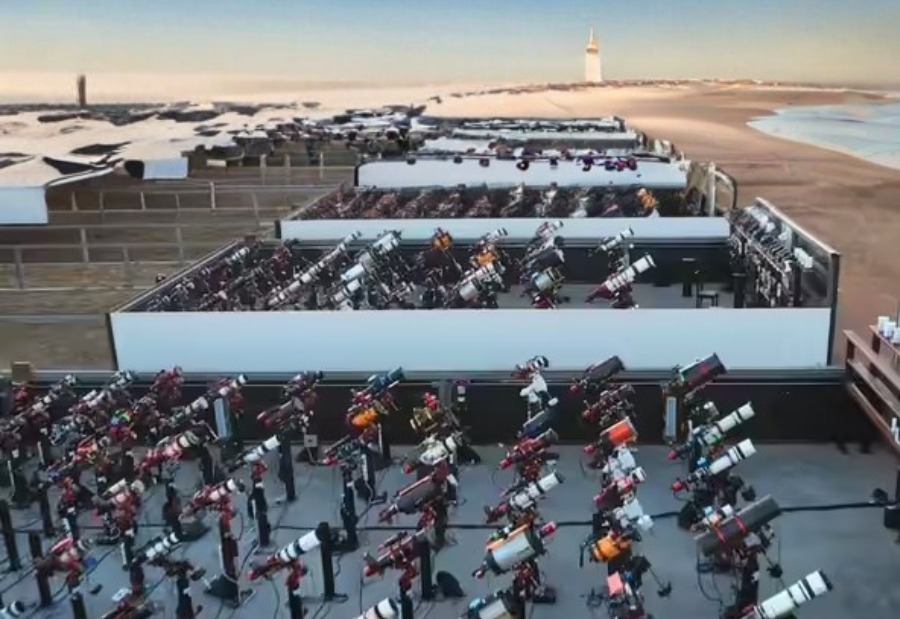
Far from city lights and crowded urban areas, a new model of astronomy is gaining popularity in rural Texas. Known as “telescope ranches,” these remote observatory hubs allow astronomers, researchers and astrophotographers from around the world to operate powerful telescopes over the internet without being physically present.
As night falls across the Texas plains, the roofs of large observatory buildings automatically slide open, revealing hundreds of telescopes aimed at the sky. Many of these systems are controlled remotely by users located thousands of kilometres away across Europe, Asia and North America.
Telescope ranches provide permanent homes for expensive astronomy equipment in some of the darkest skies in the United States. Instead of transporting and setting up telescopes for every observation session, owners can install their systems at specialized facilities that offer permanent mounts, electricity, fibre internet and automated observatory infrastructure.
The concept has become increasingly popular as light pollution continues to affect astronomy in major cities. Artificial lighting from roads, buildings and urban development often makes it difficult to observe faint galaxies, nebulae and star clusters. By placing telescopes in remote rural locations, users can capture significantly clearer images of deep-space objects.
One of the most prominent examples is Starfront Observatories, which operates in a Bortle 1 to Bortle 2 dark-sky zone. The Bortle Scale measures light pollution, with lower numbers representing darker skies and better viewing conditions. Most major cities typically fall within Bortle 7 to 9 zones.
The facility houses more than 550 telescope systems across large warehouse-style observatories. Each telescope is connected to high-speed fibre internet, automated controls and weather-monitoring systems. After sunset, the observatory roofs open automatically, allowing the telescopes to begin collecting astronomical data.
Many of these telescope systems are valued at more than $10,000 and include advanced imaging cameras, robotic tracking mounts, automated focusing systems and specialized software. Some owners never visit the observatory after installation, managing their equipment entirely online.
Modern telescope ranches rely on automated technology that enables users to control telescope positioning, camera settings, focus and image collection remotely. Many systems can also respond automatically to changing weather conditions by closing observatory roofs during rain or high winds.
Rural Texas has emerged as an ideal location due to its dark skies, stable weather, open landscapes, affordable land and access to fibre internet. These factors have helped telescope ranches grow into large-scale astronomy infrastructure serving users worldwide.
The rise of telescope ranches reflects a broader shift toward remote and automated astronomy. What was once limited to professional observatories is now becoming accessible to hobbyists and enthusiasts, allowing them to capture images of distant galaxies and nebulae from almost anywhere with an internet connection.
Beyond their futuristic appearance, telescope ranches demonstrate how remote technology is transforming even traditional hands-on hobbies, making advanced astronomical observation possible without ever physically touching the telescope.
Also read: Viksit Workforce for a Viksit Bharat
Do Follow: The Mainstream LinkedIn | The Mainstream Facebook | The Mainstream Youtube | The Mainstream Twitter
About us:
The Mainstream is a premier platform delivering the latest updates and informed perspectives across the technology business and cyber landscape. Built on research-driven, thought leadership and original intellectual property, The Mainstream also curates summits & conferences that convene decision makers to explore how technology reshapes industries and leadership. With a growing presence in India and globally across the Middle East, Africa, ASEAN, the USA, the UK and Australia, The Mainstream carries a vision to bring the latest happenings and insights to 8.2 billion people and to place technology at the centre of conversation for leaders navigating the future.