


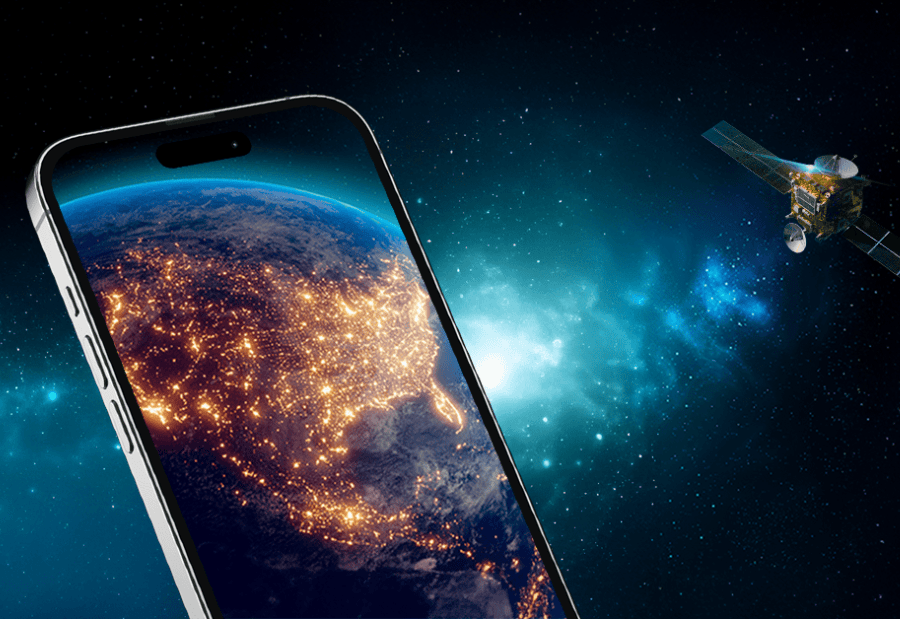
India is moving closer to enabling direct-to-device (D2D) satellite connectivity for smartphones, a technology that could help users stay connected in areas with weak or no mobile network coverage. However, major tech companies including Apple and Google have reportedly raised concerns over how the service will function under India’s telecom regulations.
According to a media report, Apple recently shared its views with the Department of Telecommunications (DoT) during discussions around satellite communication technology. Google and several other industry stakeholders have also reportedly submitted feedback to the regulator.
The companies are seeking more clarity on how satellite messaging and emergency communication services would operate within India’s telecom framework.
The move is seen as important for India, especially in remote regions where mobile connectivity remains unreliable. Areas across hilly states, dense forests, and border regions often face network gaps due to the difficulty and high cost of setting up telecom towers.
With satellite connectivity, users could potentially send emergency messages, share locations, and communicate even without access to a nearby cellular network.
Satellite-based emergency features have already started appearing in premium smartphones globally over the past few years. These services mainly work as SOS tools when regular mobile networks are unavailable.
However, companies have highlighted several technical challenges that still need to be solved before the feature can become widely available on smartphones.
One major issue is battery consumption. Connecting directly to low-earth-orbit satellites requires far more power compared to traditional mobile networks.
Smartphone makers have also pointed to antenna limitations, as slim phone designs leave very little space for hardware capable of maintaining stable satellite communication.
The companies have additionally raised concerns over maintaining reliable connectivity across India’s varied terrain and environmental conditions. Integrating satellite communication smoothly with existing 4G and 5G networks without impacting user experience is another challenge.
The report also states that Apple and other companies are concerned that India-specific requirements could force brands to redesign globally standardised satellite features. Apple has reportedly advised the DoT against mandatory hardware modifications or recertification rules for enabling satellite connectivity.
The DoT is currently conducting informal consultations with industry players, while TRAI has also invited feedback on whether satellite services should use dedicated spectrum or existing mobile airwaves.
Also read: Viksit Workforce for a Viksit Bharat
Do Follow: The Mainstream LinkedIn | The Mainstream Facebook | The Mainstream Youtube | The Mainstream Twitter
About us:
The Mainstream is a premier platform delivering the latest updates and informed perspectives across the technology business and cyber landscape. Built on research-driven, thought leadership and original intellectual property, The Mainstream also curates summits & conferences that convene decision makers to explore how technology reshapes industries and leadership. With a growing presence in India and globally across the Middle East, Africa, ASEAN, the USA, the UK and Australia, The Mainstream carries a vision to bring the latest happenings and insights to 8.2 billion people and to place technology at the centre of conversation for leaders navigating the future.