


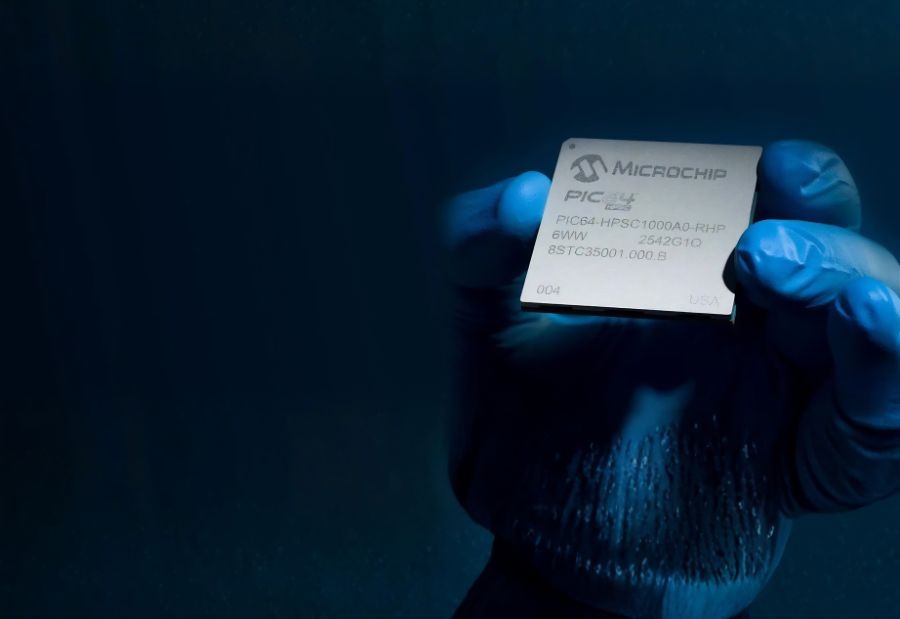
NASA is testing a next-generation radiation-hardened processor that could significantly improve how future spacecraft process data, navigate environments, and make decisions in deep space.
Developed in partnership with Microchip Technology, the new processor is designed to deliver nearly 500 times the performance of the radiation-hardened chips currently used in space missions.
The processor is part of NASA’s High Performance Spaceflight Computing (HPSC) project and is being tested at the Jet Propulsion Laboratory. Engineers believe the technology could transform deep-space exploration, planetary landings, and future human missions to the Moon and Mars.
Unlike commercial chips, the new processor is built to survive extreme radiation, launch stress, and major temperature swings over long-duration space missions without repairs.
The system uses a compact “system-on-a-chip” design that combines central processing units, memory, networking systems, computational offloads, and input/output interfaces into a single unit. While the architecture is similar to modern smartphones and tablets, NASA’s version is specifically hardened for space environments.
Eugene Schwanbeck said, “Building on the legacy of previous space processors, this new multicore system is fault-tolerant, flexible, and extremely high-performing.”
NASA also expects the processor to support future artificial intelligence systems onboard spacecraft. These AI systems could help spacecraft analyze environments, avoid hazards, and respond to unexpected situations in real time without waiting for instructions from Earth.
Current spacecraft still rely on older processors because modern chips often fail under space radiation exposure. NASA’s new chip aims to solve that limitation and reduce dependence on Earth-based computing.
The processor has already undergone radiation exposure, thermal testing, shock evaluations, and electromagnetic interference assessments. NASA engineers also tested the chip using advanced planetary landing simulations that required rapid processing of large sensor data streams.
Jim Butler said, “This is an exciting time for us to be working on hardware that will enable NASA’s next giant leaps.”
Once certified for spaceflight, the processor could eventually power orbiters, planetary rovers, deep-space probes, and crewed habitats.
Also read: Viksit Workforce for a Viksit Bharat
Do Follow: The Mainstream LinkedIn | The Mainstream Facebook | The Mainstream Youtube | The Mainstream Twitter
About us:
The Mainstream is a premier platform delivering the latest updates and informed perspectives across the technology business and cyber landscape. Built on research-driven, thought leadership and original intellectual property, The Mainstream also curates summits & conferences that convene decision makers to explore how technology reshapes industries and leadership. With a growing presence in India and globally across the Middle East, Africa, ASEAN, the USA, the UK and Australia, The Mainstream carries a vision to bring the latest happenings and insights to 8.2 billion people and to place technology at the centre of conversation for leaders navigating the future.