


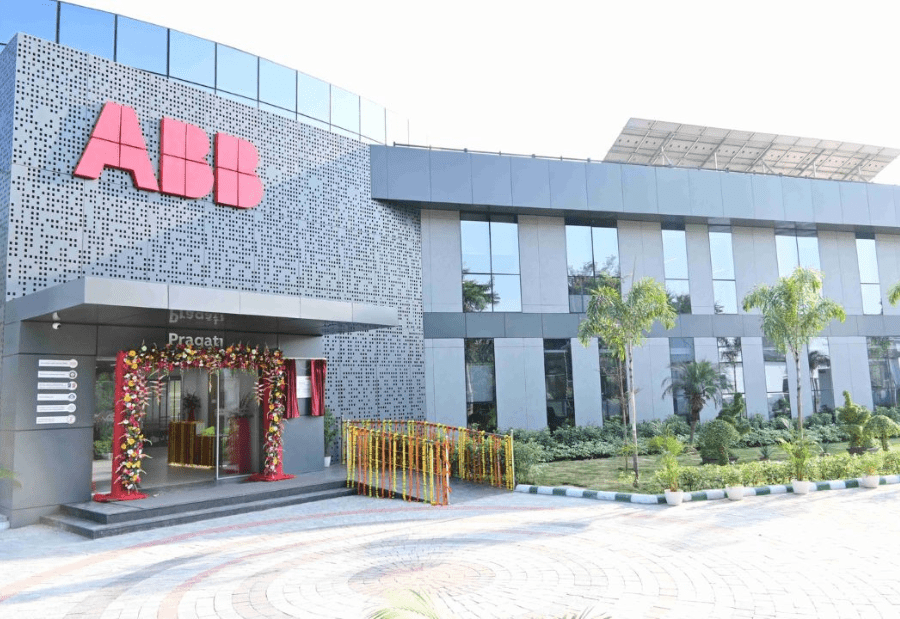
A growing wave of AI-driven infrastructure is reshaping how global companies build and manage industrial systems, and India is emerging as a key centre for this transformation. ABB, a $33 billion electrification and automation group, is expanding its focus on data centres and AI, with significant contributions coming from its Bengaluru operations.
At a newly set up factory in Bengaluru, ABB is developing UPS systems for data centres, a segment seeing rapid growth in India. “We see a very large pipeline now for data centres in India,” said CEO Morten Wierod. The data centre business, which contributed less than 1% of ABB’s revenue in 2019, now accounts for 9% and is growing at nearly 35% annually.
AI demand is pushing power needs to new levels. Large data centres now require up to 1 gigawatt of electricity, comparable to power plants. At the same time, shifts in architecture are underway. Nvidia is working on an 800-volt DC system, moving away from the current 48/54-volt setup, to improve efficiency. Rack power consumption is expected to rise from 100-150 kilowatts to 1 megawatt. “We are working with Nvidia to design that next generation of data centres,” Wierod said, with deployments expected by 2028.
Beyond infrastructure, AI is transforming ABB’s software and automation capabilities. Much of this innovation is being led from Bengaluru, where around 4000 employees support global operations. About half focus on R&D, contributing over 75 patents, while the rest handle project execution.
One key breakthrough is software that upgrades legacy control systems. Earlier, such conversions took around 3 months. Now, the new system can complete the process in half a day. “Changing such a system is a massive exercise… we are now able to do it in half a day,” said Sanjeev Sharma, MD of ABB India.
The India team has also developed Genix, an AI layer that analyses large volumes of industrial data to improve production and maintenance decisions. In addition, domain-specific AI agents have been created for industries like cement, steel, and chemicals.
“If you today ask ChatGPT how to run a cement plant, you don’t get very good answers,” Wierod said. These specialised AI agents act as first-response assistants, helping operators solve issues and identify required parts quickly.
The developments highlight India’s growing role in building AI-driven industrial solutions at a global scale.
Also read: Viksit Workforce for a Viksit Bharat
Do Follow: The Mainstream LinkedIn | The Mainstream Facebook | The Mainstream Youtube | The Mainstream Twitter
About us:
The Mainstream is a premier platform delivering the latest updates and informed perspectives across the technology business and cyber landscape. Built on research-driven, thought leadership and original intellectual property, The Mainstream also curates summits & conferences that convene decision makers to explore how technology reshapes industries and leadership. With a growing presence in India and globally across the Middle East, Africa, ASEAN, the USA, the UK and Australia, The Mainstream carries a vision to bring the latest happenings and insights to 8.2 billion people and to place technology at the centre of conversation for leaders navigating the future.