


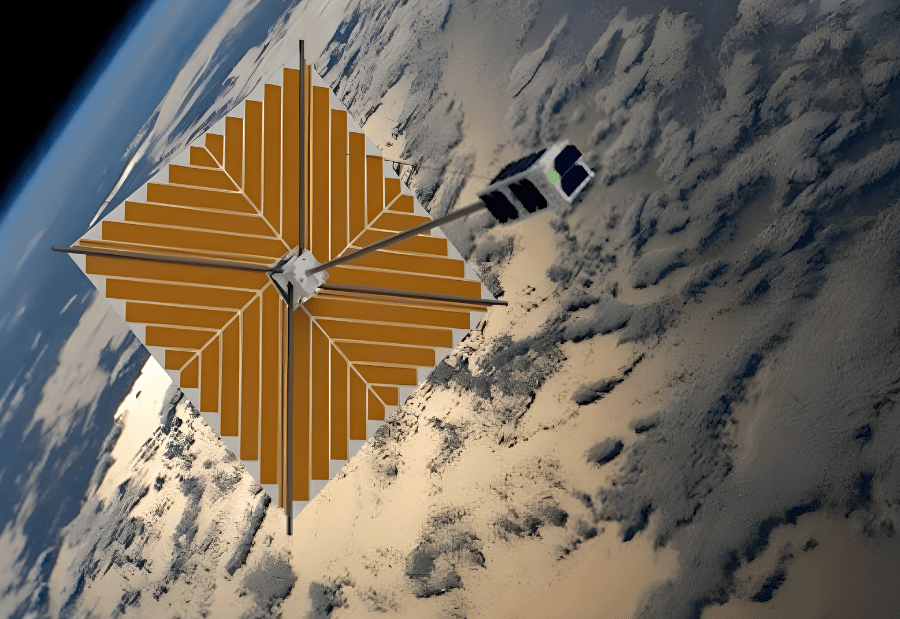
In a step toward more efficient and affordable space exploration, Japan has introduced a compact satellite equipped with innovative design technology to expand its capabilities in orbit.
JAXA has launched a 10 cm CubeSat featuring an origami-inspired antenna that can expand to 25 times its original size. The satellite was sent into orbit from New Zealand on April 23 and is part of JAXA’s effort to develop smarter and cost-effective space missions.
The CubeSat is one of 8 satellites in the mission. It is designed to support earthquake detection, ocean monitoring, and multispectral imaging. These capabilities are achieved at a much lower cost compared to traditional satellites.
The satellite uses advanced folding techniques such as the Miura fold, allowing it to remain compact during launch and expand once in space. Lower launch costs, including those offered by Rocket Lab’s Electron, are also making such missions more accessible.
This approach is opening new opportunities, enabling even university teams to build and launch satellites.
The global CubeSat industry is already valued at $355 million, reflecting the growing demand for compact and cost-efficient space technologies.
Also read: Viksit Workforce for a Viksit Bharat
Do Follow: The Mainstream LinkedIn | The Mainstream Facebook | The Mainstream Youtube | The Mainstream Twitter
About us:
The Mainstream is a premier platform delivering the latest updates and informed perspectives across the technology business and cyber landscape. Built on research-driven, thought leadership and original intellectual property, The Mainstream also curates summits & conferences that convene decision makers to explore how technology reshapes industries and leadership. With a growing presence in India and globally across the Middle East, Africa, ASEAN, the USA, the UK and Australia, The Mainstream carries a vision to bring the latest happenings and insights to 8.2 billion people and to place technology at the centre of conversation for leaders navigating the future.