


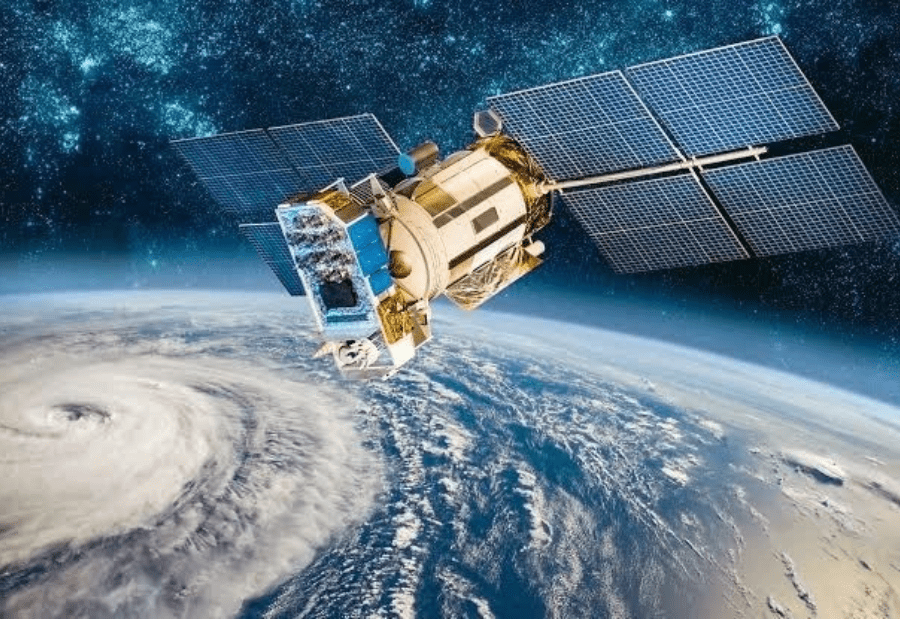
In a high-stakes push toward advanced space technology, a Bengaluru-based startup is preparing to launch a breakthrough satellite that could redefine how Earth is observed from space.
GalaxEye’s Mission Drishti, a 180 kg satellite, is currently in its final testing phase inside a clean room facility. Developed over 3 years by a team of 100+ employees, it marks India’s first multi-sensor Earth observation satellite. The satellite combines a 7-band multispectral imager with a synthetic aperture radar (SAR) sensor.
Unlike traditional satellites that capture either optical or radar data, Mission Drishti integrates both at the source. The company uses its AI platform, SyncFusion, to process this combined data and generate clear, usable images even during night-time or cloudy conditions.
The idea originated in 2019 when the founder observed how autonomous vehicles merge sensor data in real time. This led to the vision of applying a similar approach in space technology. The company was founded in 2021 in a small 150 sq ft workspace near IIT Madras and has now scaled to a 50,000 sq ft facility in Bengaluru.
Building this system was complex. Engineers had to align sensors capturing data at different angles and synchronise them both physically and through software. Regulatory challenges also slowed progress, especially restrictions on radar testing. To overcome this, the team miniaturised the radar to 4 kg and tested it using drones.
Mission Drishti is among the lightest satellites of its kind globally. For comparison, similar international satellites weigh around 2,800 kg. While such projects can cost up to $650 million, GalaxEye has built its system with around $14 million in funding.
The satellite is expected to launch around May or June from California aboard a SpaceX rocket and will operate in low Earth orbit at 500 km. It will serve sectors like defence, maritime, insurance, and disaster management.
The startup plans to launch 20–25 satellites by 2035 and aims to capture 10% of India’s sovereign space market. With 200–220 satellites expected to be launched in India over the next decade, the opportunity is significant.
However, risks remain high. A failed launch could delay progress by 18–24 months, making precision critical.
Also read: Viksit Workforce for a Viksit Bharat
Do Follow: The Mainstream LinkedIn | The Mainstream Facebook | The Mainstream Youtube | The Mainstream Twitter
About us:
The Mainstream is a premier platform delivering the latest updates and informed perspectives across the technology business and cyber landscape. Built on research-driven, thought leadership and original intellectual property, The Mainstream also curates summits & conferences that convene decision makers to explore how technology reshapes industries and leadership. With a growing presence in India and globally across the Middle East, Africa, ASEAN, the USA, the UK and Australia, The Mainstream carries a vision to bring the latest happenings and insights to 8.2 billion people and to place technology at the centre of conversation for leaders navigating the future.