


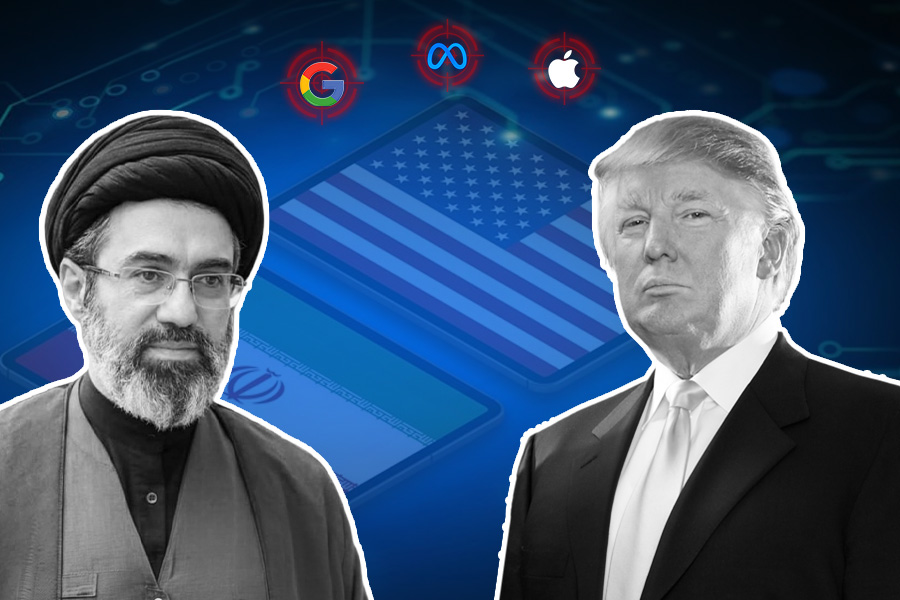
Iran’s warning that it could target major US technology companies if more Iranian leaders are killed has triggered global concern, highlighting how cloud infrastructure, artificial intelligence and data platforms are increasingly becoming part of geopolitical conflict.
The warning came from Iran’s powerful military body, the Islamic Revolutionary Guard Corps (IRGC), which accused American technology companies of supporting US and allied intelligence and military operations through digital infrastructure, surveillance technologies and artificial intelligence systems.
The statement marks a significant shift in how modern conflicts are evolving — from physical battlefields to digital infrastructure and technology ecosystems.
Big Tech and modern warfare
Iran reportedly named several major US technology companies, including Microsoft, Google, Apple, Meta, Intel, Oracle, Tesla, Nvidia and Palantir.
The allegations centre on the role technology companies play in providing cloud computing infrastructure, AI data processing, satellite mapping and geolocation, cybersecurity and intelligence software, and data analytics platforms.
Experts say the growing integration of commercial technology into defence and intelligence systems has blurred the line between civilian companies and military infrastructure.
Technology infrastructure becomes strategic infrastructure
The warning reflects a broader global shift where data centres, cloud networks and semiconductor supply chains are becoming as strategically important as oil, ports and telecom networks.
Companies such as Microsoft and Google provide cloud infrastructure used by governments, defence agencies and intelligence organisations worldwide, while chip companies like Nvidia and Intel supply processors used in artificial intelligence, surveillance systems and advanced computing.
This has created a new reality where private technology companies are increasingly embedded in national security and defence ecosystems.
Global governance and regulation challenges
The development also raises major global governance questions, particularly around the role of private technology companies in geopolitical conflicts.
International bodies such as the United Nations have attempted to establish norms around cyber warfare and digital infrastructure protection, but there is still no comprehensive global framework governing the militarisation of artificial intelligence, use of commercial cloud infrastructure in warfare, cyberattacks on private companies, protection of global digital infrastructure, and responsibility of tech companies in conflict situations.
Experts warn that the world is entering a phase where global governance structures are lagging behind technological and geopolitical realities.
Risk to global economy and digital systems
Any escalation involving attacks on technology companies could have far-reaching consequences beyond geopolitics.
Technology infrastructure operated by major cloud and technology firms supports global banking systems, government services, communications networks, healthcare systems and digital commerce platforms.
Disruption to cloud infrastructure or semiconductor supply chains could impact global financial systems, stock markets, supply chains, telecommunications, AI and data services, and government digital infrastructure.
The warning underscores a larger global trend — technology, artificial intelligence, semiconductors and cloud infrastructure are now central to geopolitical power and national security. In the digital age, conflicts are no longer fought only with weapons, but also with data, chips, algorithms and cloud infrastructure.
Also read: Viksit Workforce for a Viksit Bharat
Do Follow: The Mainstream LinkedIn | The Mainstream Facebook | The Mainstream Youtube | The Mainstream Twitter
About us:
The Mainstream is a premier platform delivering the latest updates and informed perspectives across the technology business and cyber landscape. Built on research-driven, thought leadership and original intellectual property, The Mainstream also curates summits & conferences that convene decision makers to explore how technology reshapes industries and leadership. With a growing presence in India and globally across the Middle East, Africa, ASEAN, the USA, the UK and Australia, The Mainstream carries a vision to bring the latest happenings and insights to 8.2 billion people and to place technology at the centre of conversation for leaders navigating the future.