


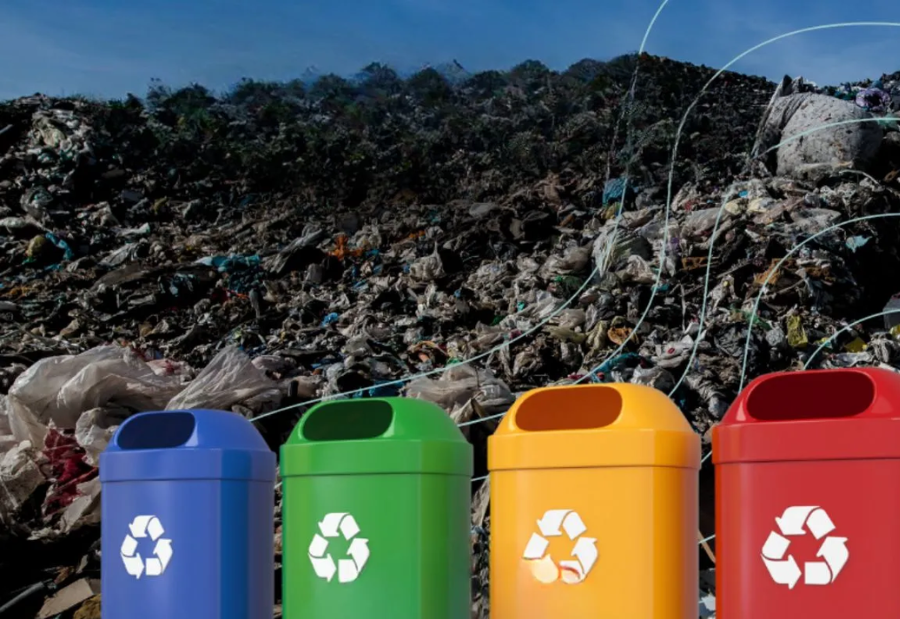
India is set to overhaul its waste management framework as the Union Ministry of Environment, Forest and Climate Change introduces the Solid Waste Management Rules, 2026 from April 1. Replacing the 2016 framework, the new rules focus on digital traceability, standardised reporting, and stronger compliance systems.
The shift signals a move from fragmented local reporting to a centralised national system. At the centre of this transition is a digital portal that mandates registration of all entities involved in waste management, including bulk waste generators, local bodies, processing units, and landfill operators. Engagement with unregistered entities will not be allowed.
All registered entities must submit periodic reports, with the portal acting as a single national platform to track waste flows. Public dashboards are expected to improve transparency, although full operational data may not be accessible.
However, implementation challenges remain. The rules assume uniform administrative capacity across local bodies, which has historically varied. Past experiences with digital monitoring platforms have highlighted gaps in execution, raising concerns about data quality and consistency.
The rules also reinforce environmental standards for air, water, compost quality, and emissions. A graded classification system for refuse-derived fuel has been introduced. Compliance and data verification will be overseen by State Pollution Control Boards (SPCBs), supported by Environment Auditors under the Environment Audit Rules, 2025. However, detailed operational guidelines are still awaited.
Financial accountability is strengthened through the polluter-pays principle. Local bodies must collect user fees to cover operational costs, while a new Extended Bulk Waste Generator Responsibility (EBWGR) certificate requires bulk generators to fund waste processing or trade compliance credits.
An Environmental Compensation (EC) mechanism has also been introduced. Entities operating without registration or submitting false data will face penalties, with SPCBs authorised to collect compensation. Local bodies can also impose fines. However, concerns remain about how effectively these funds will be utilised to improve waste systems.
The rules define clear timelines for compliance. Larger cities must comply within 18 months, while smaller regions have up to 36 months. State governments are required to prepare strategies within 1 year, and local bodies must update byelaws by March 2027.
Unlike the 2016 rules, the new framework does not specify strict infrastructure deadlines. Instead, it focuses on continuous reporting through quarterly and annual disclosures.
While the rules aim to improve transparency and accountability, their success will depend on the capacity of institutions to implement and sustain this digital and compliance-driven system.
Also read: Viksit Workforce for a Viksit Bharat
Do Follow: The Mainstream LinkedIn | The Mainstream Facebook | The Mainstream Youtube | The Mainstream Twitter
About us:
The Mainstream is a premier platform delivering the latest updates and informed perspectives across the technology business and cyber landscape. Built on research-driven, thought leadership and original intellectual property, The Mainstream also curates summits & conferences that convene decision makers to explore how technology reshapes industries and leadership. With a growing presence in India and globally across the Middle East, Africa, ASEAN, the USA, the UK and Australia, The Mainstream carries a vision to bring the latest happenings and insights to 8.2 billion people and to place technology at the centre of conversation for leaders navigating the future.