


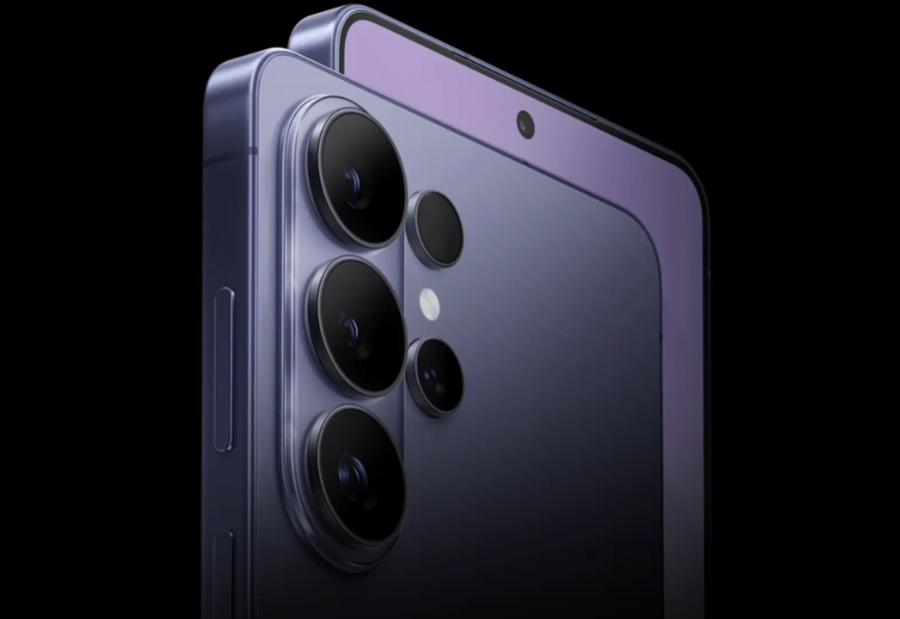
At its Unpacked event on Wednesday, February 25, Samsung revealed the Galaxy S26 series, including the S26, S26 Plus, and the flagship S26 Ultra. While AI upgrades, camera improvements, and hardware refinements grabbed attention, one feature stood out — the built-in Privacy Display on the S26 Ultra. Samsung claims it is the world’s first integrated privacy solution at the device level. During the nearly 2-hour presentation, a live demo showed that the screen looked normal from the front, but as the camera shifted sideways, the display faded into shadow, making it almost impossible to read from that angle. The audience responded with applause. “Designed for everyday situations like transit, cafés and shared environments, Privacy Display goes beyond anything previously available on mobile devices – hardware and software working as one to protect privacy without compromising the viewing experience,” Samsung said in its announcement.
Samsung says the feature builds on decades of display innovation. The company has often introduced breakthrough screen technologies through its flagship devices. From the curved display on the Galaxy Note Edge to the 5.3-inch HD screen on the Galaxy Note, and later experiments with foldables like the Galaxy Fold and its first-ever Trifold launched in December, Samsung has pushed boundaries. At CES 2026, it showcased a foldable panel with no visible crease and an under-display camera. The roots of Privacy Display trace back to Mobile World Congress 2024, where Samsung presented a concept called Flex Magic Pixel that adjusted viewing angles. The trademark was registered in November last year.
Privacy Display works differently from traditional screens. Standard displays spread light widely so multiple people can view the screen. When enabled, the S26 Ultra narrows this light path. Samsung engineered a black matrix that funnels light forward in a tight beam, limiting side visibility while maintaining clarity for the main user. “This new architecture makes up the Narrow Pixel, which works alongside a newly widened standard pixel engineered to deliver sufficient light in every direction,” the company explained. It also uses directional backlighting, front camera sensors, and ambient-aware algorithms to detect extra faces. If someone tries to glance from the side, the feature activates automatically.
Unlike privacy films that sit on top of the screen and can permanently darken displays, Samsung’s solution is built into the panel. When turned off, full viewing quality is restored from all angles. It works in both portrait and landscape modes. Users can customise notifications or specific screen areas and adjust intensity, including a “Maximum Privacy Protection” setting. A journalist who tested the device at the launch event said, “When turned on, the feature prevents others from glancing over your shoulder or from the side to see potentially private content on your screen. A software toggle enables this setting, which shades the screen when you’re not looking at it directly.” He added that it is especially useful for people commuting on public transport.
Also read: Viksit Workforce for a Viksit Bharat
Do Follow: The Mainstream LinkedIn | The Mainstream Facebook | The Mainstream Youtube | The Mainstream Twitter
About us:
The Mainstream is a premier platform delivering the latest updates and informed perspectives across the technology business and cyber landscape. Built on research-driven, thought leadership and original intellectual property, The Mainstream also curates summits & conferences that convene decision makers to explore how technology reshapes industries and leadership. With a growing presence in India and globally across the Middle East, Africa, ASEAN, the USA, the UK and Australia, The Mainstream carries a vision to bring the latest happenings and insights to 8.2 billion people and to place technology at the centre of conversation for leaders navigating the future.