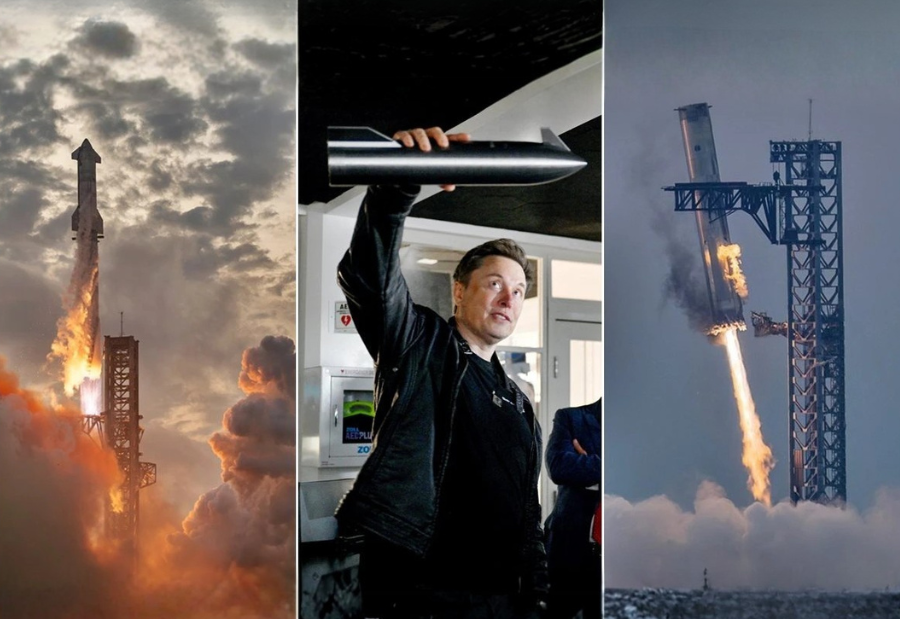
In a major change to its space exploration plans, SpaceX has decided to prioritise the construction of a self-growing city on the Moon, placing its long-standing ambition of building a settlement on Mars on the back burner.
Elon Musk announced the shift in a post on X on 8 February, stating that a lunar city could be achieved in less than 10 years, while a similar effort on Mars would take more than 20 years.
“The overriding priority is securing the future of civilisation, and the moon is faster,” Musk wrote.
He further explained that SpaceX has already moved its focus to developing a self-growing city on the Moon, as it can potentially be completed in under 10 years, compared to over 20 years for Mars.
The decision is largely based on orbital mechanics and logistics. Musk pointed out that Earth and Mars align for launches only once every 26 months, followed by a journey time of around 6 months. In contrast, missions to the Moon can be launched every 10 days.
“A trip to the moon takes just two days,” Musk explained. “This means we can iterate much faster to complete a moon city than a Mars city.”
The change in direction follows a report by a business daily, which stated that SpaceX has informed investors about a revised roadmap. This updated plan targets March 2027 for the company’s first uncrewed lunar landing.
Despite the revised priorities, Musk said Mars remains part of SpaceX’s long-term vision. He noted that the company still plans to “strive to build a Mars city,” with early groundwork possibly starting within the next 5 to 7 years.
This marks a shift from last year, when Musk had aimed to send an uncrewed mission to Mars by the end of 2026, a goal now overtaken by the lunar settlement strategy.
The announcement comes during a significant week for SpaceX. Recently, the company confirmed a major deal to acquire xAI, an artificial intelligence firm also led by Musk. The merger values the combined rocket and satellite business at $1 trillion.
Analysts believe xAI will play a key role in enabling the self-growing nature of the Moon city, using autonomous robotic systems and space-based data centres to build and maintain infrastructure with minimal human involvement.
Also read: Viksit Workforce for a Viksit Bharat
Do Follow: The Mainstream formerly known as CIO News LinkedIn Account | The Mainstream formerly known as CIO News Facebook | The Mainstream formerly known as CIO News Youtube | The Mainstream formerly known as CIO News Twitter
About us:
The Mainstream is a premier platform delivering the latest updates and informed perspectives across the technology business and cyber landscape. Built on research-driven, thought leadership and original intellectual property, The Mainstream also curates summits & conferences that convene decision makers to explore how technology reshapes industries and leadership. With a growing presence in India and globally across the Middle East, Africa, ASEAN, the USA, the UK and Australia, The Mainstream carries a vision to bring the latest happenings and insights to 8.2 billion people and to place technology at the centre of conversation for leaders navigating the future.