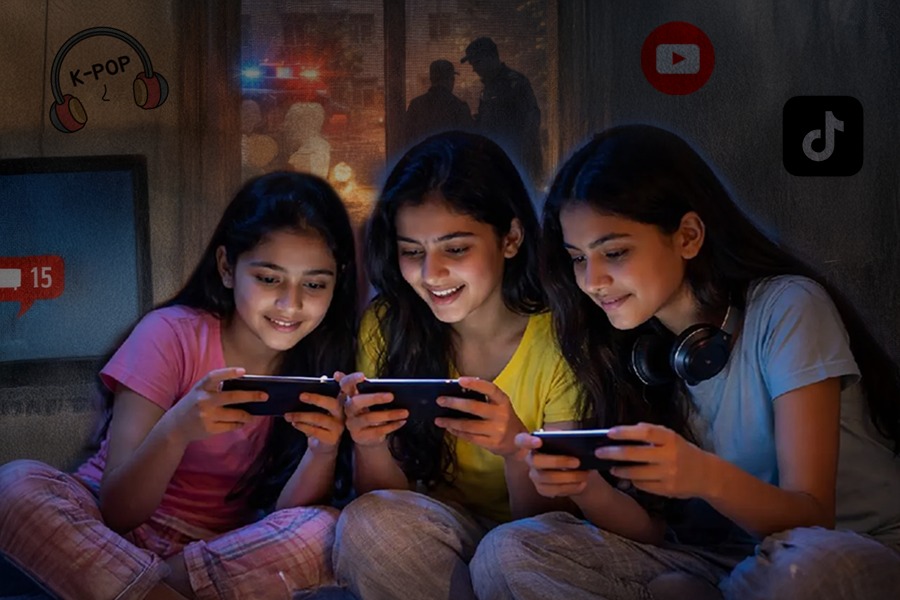
Three sisters. Twelve, fourteen, sixteen. One building in Ghaziabad. Three bodies on the ground before dawn.
It was a morning like any other in Ghaziabad, until it wasn’t. Three sisters, barely teenagers, were gone. Phones, screens, social media, online games, Korean dramas, each quickly offered as an explanation, each easily named and measured. Authorities promised regulations, bans, and parental guidelines. Headlines followed, debates followed, yet the heart of the story remained unseen. These sisters were not just users of digital platforms, they were children navigating worlds that algorithms, apps, and online communities had quietly shaped.
Much of their lives unfolded in digital spaces, structured, social, intimate. These worlds were more than entertainment; they were spaces of identity, belonging, and rhythm. When access was suddenly removed, the collapse was swift, not dramatic, not performative, not noisy, but complete. Presence in the physical world did not protect them. Attention and understanding were absent. Their deaths are a reminder that connection is not the same as being seen, and that technology, for all its promise, can shape lives in ways we barely perceive.
Childhood today stretches far beyond classrooms, playgrounds, or family rooms. It exists wherever children find recognition and emotional space, which increasingly is online. According to UNICEF India 2022, nearly 60% of adolescents spend more than 4–5 hours daily on digital devices, and social media engagement among teens has grown fivefold over the past decade. Algorithms amplify content, keep users engaged, and feed a relentless stream of notifications. While this drives platforms’ business models, it also contributes to anxiety, sleep disruption, and in some cases, depression. Teen suicide is now the leading cause of death among 15–19-year-olds in India, and experts warn that excessive screen time and social media dependence can exacerbate feelings of isolation.
In the aftermath of the tragedy, policymakers and authorities called for restrictions, limiting social media use for minors, curbing online gaming, and issuing parental advisory guidelines. Screens are tangible, measurable and controllable. Policy can address them. But what about the underlying architecture that drives engagement, that subtly nudges children to stay online, to seek validation from likes and comments, to be measured by metrics adults rarely see? Bans alone will not address these design choices or the emotional landscapes they shape.
It is easy to assign blame to technology, culture, or parenting. Blame is tidy. Reflection is harder. Reflection asks questions with no easy answers. How do we notice when a life is quietly folding inward? How do we distinguish engagement from dependence, attention from escape? How do we see children who are physically present but emotionally absent? How do we design technology that respects wellbeing rather than exploits attention?
The lesson may not lie in bans or restrictions, but in awareness, patience, and presence. To notice the small signs, to ask uncomfortable questions, to create spaces where children are truly seen. The Ghaziabad sisters did not disappear suddenly. They drifted quietly into spaces adults failed to notice. Their story reflects how a connected world can sometimes isolate more than it unites, and how the digital architectures of our lives, social platforms, apps, and algorithms, can shape experiences in ways invisible until it is too late.
And so the question lingers, for parents, policymakers, and technologists alike: in a world where childhood increasingly exists online, where screen’s mediate identity and connection, how do we truly see our children before they drift entirely into silence, and how do we ensure technology serves life rather than diminishes it?
Also read: Viksit Workforce for a Viksit Bharat
Do Follow: The Mainstream formerly known as CIO News LinkedIn Account | The Mainstream formerly known as CIO News Facebook | The Mainstream formerly known as CIO News Youtube | The Mainstream formerly known as CIO News Twitter
About us:
The Mainstream is a premier platform delivering the latest updates and informed perspectives across the technology business and cyber landscape. Built on research-driven, thought leadership and original intellectual property, The Mainstream also curates summits & conferences that convene decision makers to explore how technology reshapes industries and leadership. With a growing presence in India and globally across the Middle East, Africa, ASEAN, the USA, the UK and Australia, The Mainstream carries a vision to bring the latest happenings and insights to 8.2 billion people and to place technology at the centre of conversation for leaders navigating the future.