A quiet transformation is taking place in India’s dining sector, where technology is beginning to reshape how restaurants operate and serve customers.
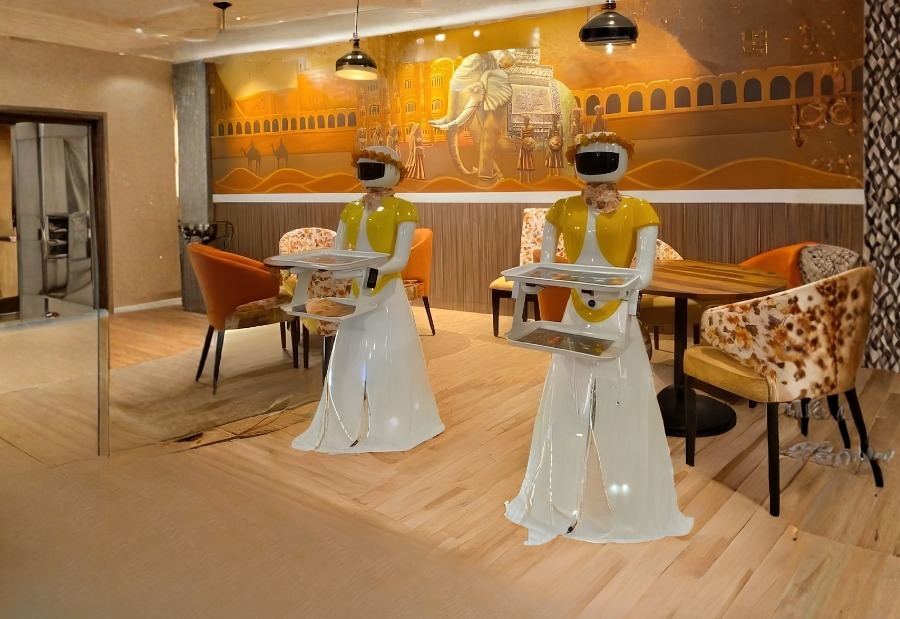
At Mie.Roboluscious, robotic servers named Nishi, Nishu and Nisha are becoming a major attraction. Known for precise and efficient service, these robots are drawing customers seeking a unique dining experience. “Technology wows everyone. These three [robots] are bringing a Japan-like experience to Mohali,” said Kunwaldeep Singh. “And it isn’t expensive either. With time, the technology will only get better and spread across the country.”
The trend is gaining traction across India’s food and beverage industry, which supports over 8 million jobs. While earlier experiments with restaurant robots around 2017 lasted only 2 years, a new wave is emerging. Premium venues like Roseate House and Hilton Gurugram Baani City Centre, along with outlets such as Cafe Safar and Vintage Madras, are adopting robotic service.
Currently, robots are mainly used to deliver food and manage rising footfall. However, future plans include room service, luggage handling, customer interaction, and concierge-like roles.
Industry leaders are positioning this shift as support rather than replacement. “It’s co-dependency. If anything, robots will help equip the workforce. They will be more trained, and therefore better paid,” said Jishu Bansal, owner of Mie.Roboluscious. “Robots aren’t replacing the workforce; they can’t. They will only aid it.”
Bansal also highlighted pricing concerns. “I have overheard people say, ‘Let’s not go inside. It has robots, it must be expensive’.” He maintains an average bill of around ₹2,000 for 2 people. The robots were developed by his brother, who works with DRDO.
At DEL, inside Roseate House, a 140-cm robot with animated eyes delivers food silently, enhancing efficiency. CEO Kush Kapoor said the move is driven by demand. “Restaurants are getting busier. Footfalls have multiplied. We saw it as the need of the hour. Robots are being used to aid staff.”
According to industry estimates, around 1,056 crore Indians dine out every night, underlining the scale of opportunity.
Also read: Viksit Workforce for a Viksit Bharat
Do Follow: The Mainstream LinkedIn | The Mainstream Facebook | The Mainstream Youtube | The Mainstream Twitter
About us:
The Mainstream is a premier platform delivering the latest updates and informed perspectives across the technology business and cyber landscape. Built on research-driven, thought leadership and original intellectual property, The Mainstream also curates summits & conferences that convene decision makers to explore how technology reshapes industries and leadership. With a growing presence in India and globally across the Middle East, Africa, ASEAN, the USA, the UK and Australia, The Mainstream carries a vision to bring the latest happenings and insights to 8.2 billion people and to place technology at the centre of conversation for leaders navigating the future.