


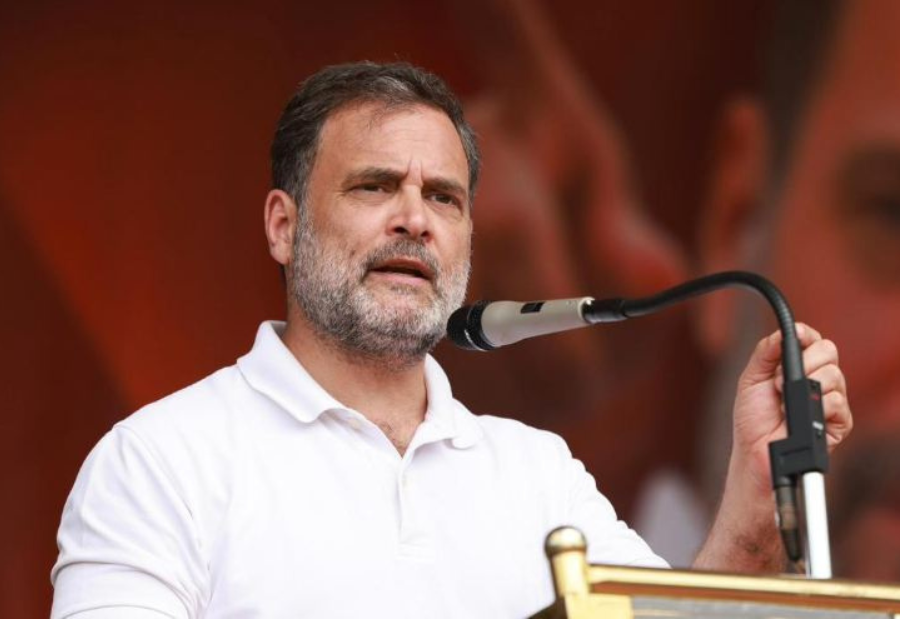
Amid growing debates around digital governance, concerns over India’s data sovereignty have come into focus following remarks by Congress leader Rahul Gandhi.
Speaking on April 6, 2026, the Leader of Opposition in the Lok Sabha said India should be leading the global technology race but is instead being kept unaware of how its data will be protected. He stressed that India’s data belongs to its people and is a key asset in the AI economy for building companies, creating jobs, and driving growth.
“So I asked the government some important questions about the recent trade deal with the U.S.:- What does ‘reducing barriers’ with the United States mean for our data? Will our health data, financial data, and government databases stay in India? Can India still require foreign companies to store data here and use it to build our own AI?” Mr. Gandhi said.
He criticised the lack of clarity in official responses, adding, “Every question on our data sovereignty, health data, AI, and local data storage gets the same treatment: ‘framework’, ‘balance’, ‘autonomy’ – big words, zero specifics,” the former Congress president said.
Alleging a lack of transparency, he said the government is not disclosing what is being negotiated. “We should be leading the global tech race, but instead we are kept in the dark about how India’s data will be protected,” Gandhi said. He also stressed that citizens deserve accountability and control over their data, stating, “We deserve to own and use our data to build a better future.”
In his earlier questions in the Lok Sabha on April 1, he had raised concerns about how commitments under the United States-India Joint Statement to reduce digital trade barriers align with India’s data localisation rules and cross-border data policies. He also asked whether such agreements could impact India’s ability to regulate AI, store critical data locally, and protect digital infrastructure.
Responding to these concerns, Minister of State for Electronics and IT Jitin Prasada said India’s IT sector recorded revenues of over $280 billion and exports of $225 billion in FY 2024-25, employing more than 60 lakh people. He stated that digital trade remains a key part of the economy.
He added that India has signed Free Trade Agreements with the United Arab Emirates, United Kingdom, and the European Union, each including a digital trade component. On the India-US Bilateral Trade Agreement under negotiation, he said it aims to create a fair and open digital environment.
“India and the United States have established a framework for an interim agreement that reflects both nations’ shared commitment to fostering an open, and equitable digital trade environment,” the Minister said.
He maintained that India’s regulatory autonomy in data governance remains intact and that such agreements do not restrict the country’s ability to manage its data under existing legal frameworks.
Also read: Viksit Workforce for a Viksit Bharat
Do Follow: The Mainstream LinkedIn | The Mainstream Facebook | The Mainstream Youtube | The Mainstream Twitter
About us:
The Mainstream is a premier platform delivering the latest updates and informed perspectives across the technology business and cyber landscape. Built on research-driven, thought leadership and original intellectual property, The Mainstream also curates summits & conferences that convene decision makers to explore how technology reshapes industries and leadership. With a growing presence in India and globally across the Middle East, Africa, ASEAN, the USA, the UK and Australia, The Mainstream carries a vision to bring the latest happenings and insights to 8.2 billion people and to place technology at the centre of conversation for leaders navigating the future.