


India Plans Next Phase of GCC Growth with Focus on Value Creation and Global Innovation
The Finance Minister, Nirmala Sitharaman called for India’s Global Capability Centre (GCC) ecosystem to evolve beyond its traditional role as a service delivery hub, outlining a vision that places innovation, artificial intelligence and intellectual property at the centre of future growth.
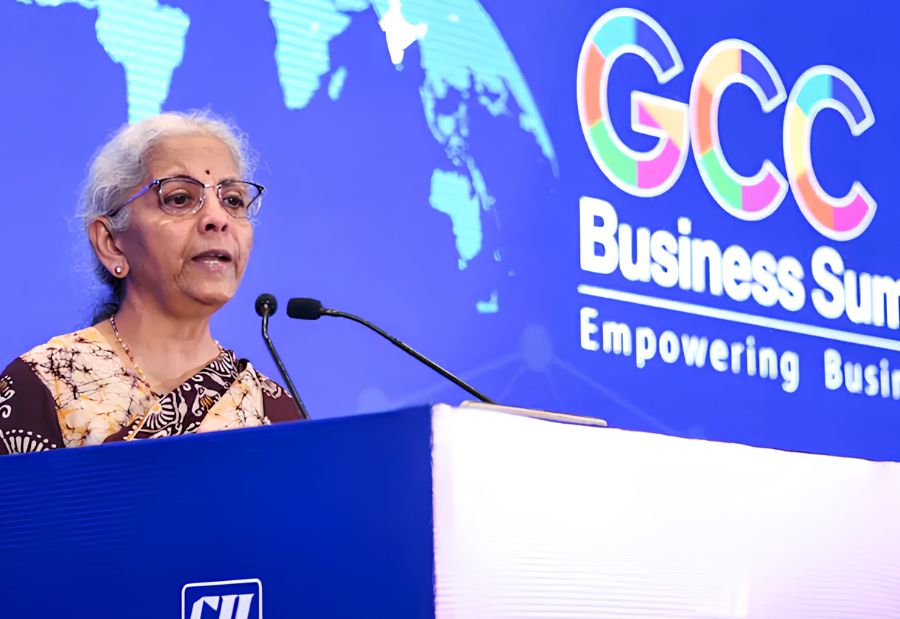
Speaking at the CII National GCC Summit, Union Finance Minister Nirmala Sitharaman said India is on course to become home to 5,000 Global Capability Centres (GCCs) by 2030, nearly tripling the current base. She noted that the country is witnessing the establishment of almost one GCC every day, reflecting sustained interest from multinational corporations looking to expand their operations in India.
Emphasising the need for the sector to move beyond its reputation as a cost-efficient outsourcing destination, Sitharaman said the next phase of GCC growth should focus on innovation, product development and global value creation. She urged organisations to position their India centres as strategic hubs capable of driving research, engineering and advanced technology initiatives.
The Finance Minister also highlighted the growing role of artificial intelligence in shaping the future of GCCs, noting that a significant share of newly established centres are being designed with AI capabilities at their core. According to her, the shift reflects changing business priorities, with enterprises increasingly leveraging their India operations to build digital products, develop intellectual property and accelerate technology-led transformation.
Calling for more balanced regional development, Sitharaman encouraged companies to explore expansion beyond established metropolitan hubs. She said the growth of GCCs in Tier II and emerging cities could help unlock new talent pools, create high-value employment opportunities and contribute to more inclusive economic development.
To support the sector’s long-term growth, the Finance Minister outlined key focus areas including strengthening collaboration between industry and academia, investing in future-ready skills, promoting research and development, and fostering an environment that enables innovation-led enterprises to thrive. She stressed that India’s competitiveness would increasingly depend on its ability to deliver high-value capabilities rather than cost advantages alone.
India has emerged as one of the world’s largest GCC destinations, with multinational companies establishing centres across technology, financial services, manufacturing, healthcare and other sectors. These centres have evolved from managing back-office operations to leading critical functions such as product engineering, cybersecurity, cloud computing, data analytics and artificial intelligence.
With enterprises continuing to expand their digital capabilities, the government’s vision signals an effort to position India’s GCC ecosystem as a global innovation network, where technology development, research and strategic business functions increasingly originate rather than simply operate.
Also read: Viksit Workforce for a Viksit Bharat
Do Follow: The Mainstream LinkedIn | The Mainstream Facebook | The Mainstream Youtube | The Mainstream Twitter
About us:
The Mainstream is a premier platform delivering the latest updates and informed perspectives across the technology business and cyber landscape. Built on research-driven, thought leadership and original intellectual property, The Mainstream also curates summits & conferences that convene decision makers to explore how technology reshapes industries and leadership. With a growing presence in India and globally across the Middle East, Africa, ASEAN, the USA, the UK and Australia, The Mainstream carries a vision to bring the latest happenings and insights to 8.2 billion people and to place technology at the centre of conversation for leaders navigating the future.