


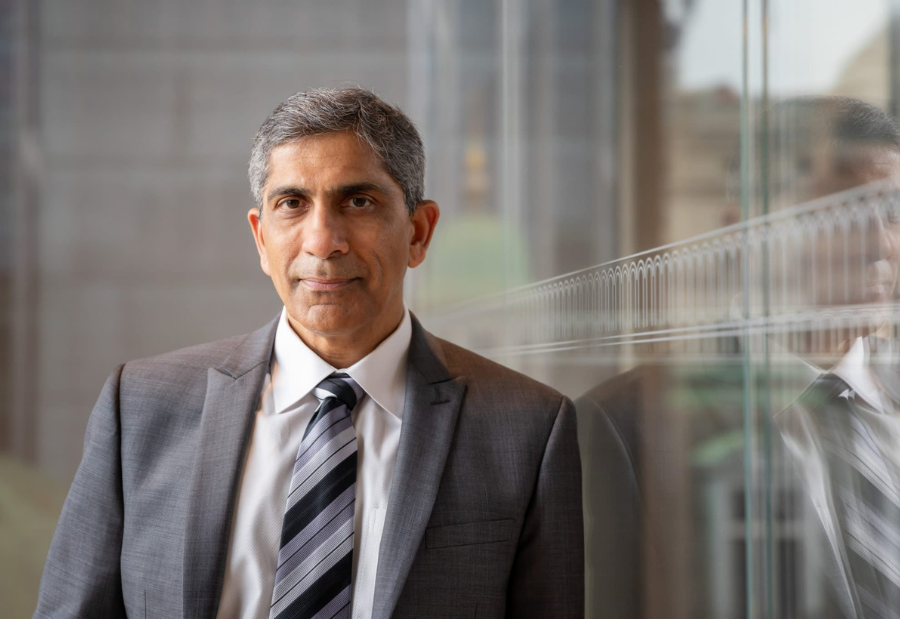
Honeywell CEO Vimal Kapur believes artificial intelligence will play a central role in the future of industrial automation, creating new growth opportunities for the company as labor shortages continue to affect industries worldwide.
Speaking in a recent interview, Kapur said, “The power of AI is going to redefine automation,” highlighting the technology’s potential to reshape how businesses operate and manage critical infrastructure.
His comments come as Honeywell prepares to spin off its aerospace business on June 29, a move that will position the company as a pure-play automation provider. Honeywell’s automation portfolio includes sensors, controls, and software used across hospitals, airports, data centers, semiconductor facilities, and liquefied natural gas plants.
The company has been streamlining its operations in recent years to focus more heavily on automation. Last year, Honeywell also separated its advanced materials business as part of its broader portfolio simplification strategy.
“We are taking the opportunity to build a pure play automation company across multiple sectors, and opportunity is more compelling now, with AI coming in,” Kapur said.
According to Kapur, AI significantly increases the value of Honeywell’s automation systems because they already generate large volumes of operational data. With AI, that data can be converted into actionable insights that improve decision-making, optimize performance, and automate tasks that previously required human involvement.
The growing demand for automation is also being driven by workforce challenges. Kapur noted that many Honeywell customers are struggling to find enough skilled operators and technicians, while aging populations and slower workforce growth are expected to intensify the issue in the coming years.
“Net workforce is not going to be increasing. It’s going to be decreasing over a period of time,” he said.
As a result, organizations are increasingly adopting AI and automation technologies to improve efficiency and support business expansion. Kapur emphasized that customers are not viewing AI solely as a cost-saving tool.
“Our customers are looking at it not as a productivity opportunity,” he said. “They are looking at it as a revenue-generation opportunity.”
Kapur added that Honeywell is well-positioned to benefit from this trend because of its industry expertise and the extensive operational data generated through its automation platforms.
“Physical AI for us is built on our domain knowledge,” he said. “It’s built upon the data which we possess in our system.”
Also read: Viksit Workforce for a Viksit Bharat
Do Follow: The Mainstream LinkedIn | The Mainstream Facebook | The Mainstream Youtube | The Mainstream Twitter
About us:
The Mainstream is a premier platform delivering the latest updates and informed perspectives across the technology business and cyber landscape. Built on research-driven, thought leadership and original intellectual property, The Mainstream also curates summits & conferences that convene decision makers to explore how technology reshapes industries and leadership. With a growing presence in India and globally across the Middle East, Africa, ASEAN, the USA, the UK and Australia, The Mainstream carries a vision to bring the latest happenings and insights to 8.2 billion people and to place technology at the centre of conversation for leaders navigating the future.