


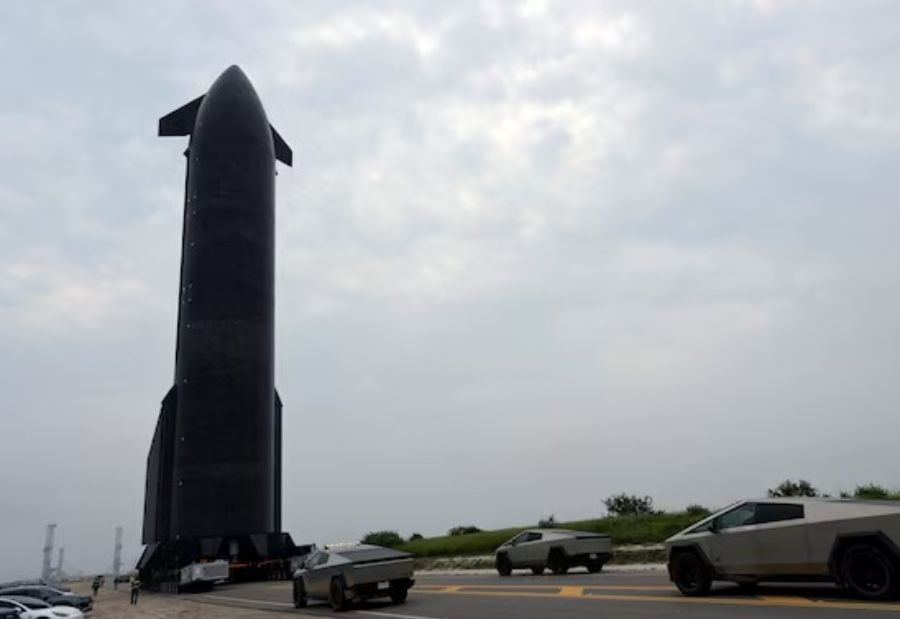
SpaceX has received approval to move ahead with its next Starship test flight after the US Federal Aviation Administration (FAA) completed its review of the booster return failure that occurred during the rocket’s 12th test flight in May. The next launch from Starbase, Texas, could take place as early as Thursday.
During the May 22 mission, the latest version of Starship successfully sent its upper stage onto a suborbital path toward the Indian Ocean. However, the Super Heavy booster failed to complete its planned controlled landing in the Gulf of Mexico after 5 of its 33 Raptor engines did not restart during descent.
The FAA said the booster also suffered heat damage during stage separation about 2 minutes into the flight, while “erroneous engine alarm system settings” contributed to the failed return. As a result, the booster crashed into the Gulf of Mexico at high speed and exploded on impact.
According to the FAA, SpaceX has identified 4 corrective actions to address the booster return failure. The company also confirmed that one engine on the Starship upper stage failed during Flight 12 and said it has introduced “several hardware and operational modifications” to resolve “the interconnected causes,” without providing further details.
The upcoming 13th Starship test flight is scheduled within a 90-minute launch window beginning at 6:45 p.m. ET on Thursday. Similar to the previous mission, SpaceX plans to land the Super Heavy booster in the Gulf of Mexico while the Starship upper stage will make a water landing in the Indian Ocean after an approximately 1-hour suborbital flight.
The mission will also mark the 1st deployment of actual Starlink V3 satellites from Starship. 20 satellites will be released during the flight, with some carrying sensors to monitor the rocket’s heatshield during re-entry. The satellites will eventually burn up in Earth’s atmosphere.
SpaceX expects to begin regular Starlink V3 launches using Starship by the end of 2026. The company has invested more than $15 billion in the rocket’s development, with its future satellite expansion and long-term plans for AI-processing satellites depending on the success of the reusable launch system.
Also read: Viksit Workforce for a Viksit Bharat
Do Follow: The Mainstream LinkedIn | The Mainstream Facebook | The Mainstream Youtube | The Mainstream Twitter
About us:
The Mainstream is a premier platform delivering the latest updates and informed perspectives across the technology business and cyber landscape. Built on research-driven, thought leadership and original intellectual property, The Mainstream also curates summits & conferences that convene decision makers to explore how technology reshapes industries and leadership. With a growing presence in India and globally across the Middle East, Africa, ASEAN, the USA, the UK and Australia, The Mainstream carries a vision to bring the latest happenings and insights to 8.2 billion people and to place technology at the centre of conversation for leaders navigating the future.