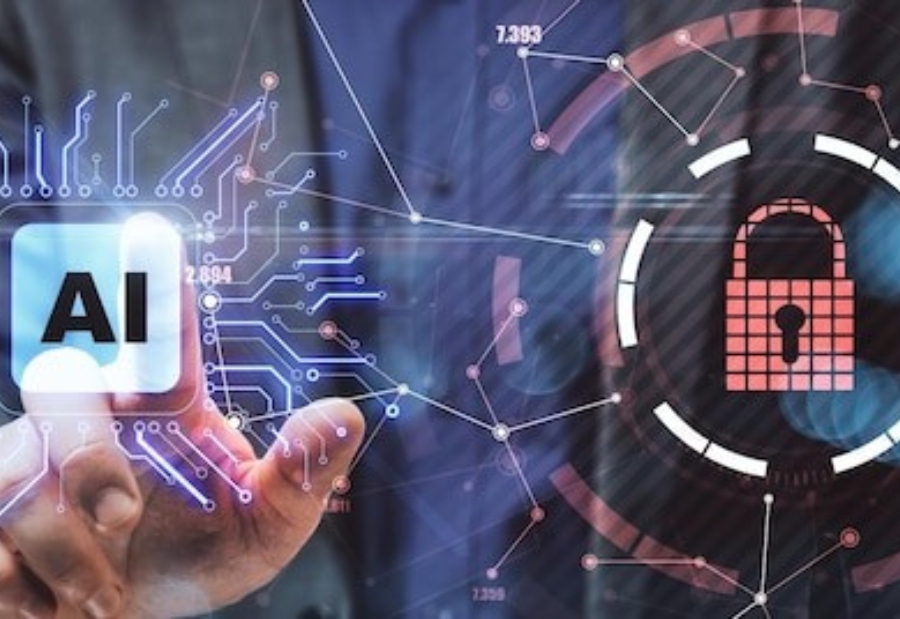
Introduction: The Role of AI and Cyber Defense in Today’s Digital Era
As digital transformation accelerates across every industry, organizations face a growing wave of complex cyber threats. In this fast-evolving environment, AI and cyber defense have emerged as the strongest allies in securing the digital world.
By integrating artificial intelligence into cybersecurity systems, companies can predict, detect, and prevent cyberattacks before they occur—a capability that traditional methods could never match.
According to The Mainstream, AI is not just enhancing cybersecurity—it’s redefining how we think about protection in an automated era. From smart threat detection to autonomous defense responses, AI-driven solutions are the backbone of next-generation digital resilience.
1. The Convergence of AI and Cyber Defense
The intersection of AI and cyber defense represents a major milestone in technology-driven protection. With cybercriminals becoming more sophisticated, manual monitoring and reactive defenses are no longer sufficient.
AI algorithms analyze massive datasets to identify irregular patterns, detect anomalies, and predict potential attacks in real-time. This proactive defense approach minimizes downtime and prevents data breaches.
As The Mainstream reports, organizations using AI-enhanced security frameworks can respond to cyber threats 90% faster than those relying solely on conventional systems.
2. AI-Powered Threat Detection and Response
AI has revolutionized how cybersecurity teams identify and mitigate risks. In traditional security models, human analysts would manually review threats — a process that was both time-consuming and error-prone. Now, with AI and cyber defense solutions, threat detection has become automated and precise.
Machine learning models continuously learn from historical data, enabling systems to recognize malicious behavior instantly. Automated response systems can isolate infected devices, block suspicious IPs, and alert administrators within seconds.
This rapid response capability ensures that cyber incidents are contained before they cause widespread damage — a crucial advantage in industries like finance, healthcare, and manufacturing.
3. Predictive Analytics: Anticipating Cyber Threats Before They Strike
One of the greatest strengths of AI and cyber defense lies in predictive analytics. Instead of reacting to breaches after they happen, AI models anticipate potential vulnerabilities based on behavioral trends and network traffic patterns.
For example, AI can detect when a system is being scanned by malicious bots or when unusual access patterns suggest insider threats. The Mainstream highlights that companies leveraging AI-based predictive tools have seen a 60% reduction in data breach incidents, proving that prevention is now possible through intelligent forecasting.
4. Automation and Human Collaboration: The Hybrid Security Model
While automation improves speed and accuracy, human expertise remains essential. The most effective approach to AI and cyber defense is a hybrid model that blends machine precision with human judgment.
AI handles repetitive tasks—scanning, filtering, and prioritizing alerts—while cybersecurity professionals focus on strategy, investigation, and decision-making. This collaboration not only enhances efficiency but also helps security teams stay ahead of evolving threats.
As The Mainstream emphasizes, the future of cybersecurity will depend on this seamless partnership between AI systems and human analysts.
5. AI’s Role in Combating Advanced Threats and Ransomware
Cybercriminals are using AI too—generating new forms of malware, phishing attacks, and ransomware that adapt to defenses. To counter this, organizations must deploy AI and cyber defense frameworks that learn and evolve faster than attackers.
AI-powered defense mechanisms detect ransomware patterns in early stages, allowing immediate isolation of infected files. These systems also use deep learning to identify polymorphic malware that traditional antivirus programs often miss.
By staying one step ahead of attackers, AI ensures that organizations can maintain digital trust and operational stability even in high-risk environments.
6. Challenges and Ethical Considerations in AI Cybersecurity
Despite its advantages, AI and cyber defense face certain challenges. Biased algorithms, false positives, and over-dependence on automation can create security blind spots. Moreover, as AI systems grow more autonomous, questions about accountability and transparency arise.
Ethical implementation is crucial. Businesses must ensure that AI-based security tools are trained on diverse data sets, regularly audited, and managed with human oversight. Responsible innovation, as The Mainstream points out, is key to ensuring that AI enhances safety without compromising fairness or privacy.
Final Thought: The Mainstream’s Perspective on AI and Cyber Defense
In an era where automation drives everything—from communication to commerce—AI and cyber defense stand as the guardians of digital trust. Their ability to predict, prevent, and respond to threats transforms how organizations protect what matters most: their data, customers, and reputation.
The Mainstream believes that the future of cybersecurity will be built on intelligent collaboration between humans and machines. By embracing AI-driven defense frameworks, businesses can not only withstand evolving cyber threats but also thrive in a secure digital ecosystem.
As automation reshapes the world, the fusion of AI and cyber defense will remain central to ensuring that innovation continues safely, responsibly, and fearlessly.