


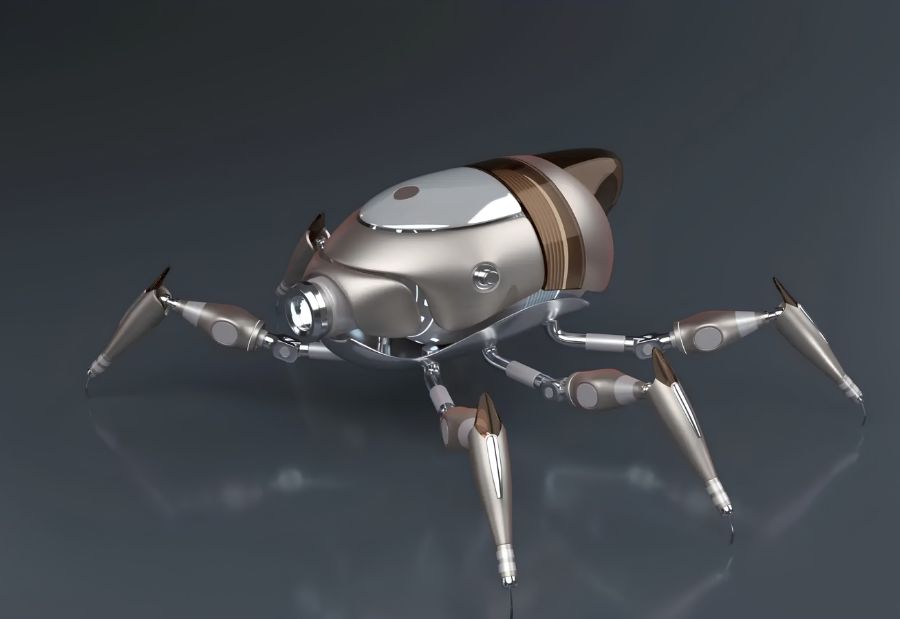
Researchers at the California Institute of Technology (Caltech) have developed tiny, light-activated robots that use gas-powered movement to carry drugs into the brain.
Called BrainBots, these nanorobots delivered approximately 5 times more medication to the brain than non-activated versions during experiments. The findings could open new possibilities for treating brain cancer and neurological disorders that are difficult to manage with conventional drug delivery methods.
Led by Wei Gao, professor of medical engineering at Caltech, the research was published online on November 25 in Science Robotics. The technology has so far been tested in mice, and further research is required before it can be evaluated in humans.
How BrainBots work
Measuring approximately 250 nanometers, BrainBots are made from biocompatible and biodegradable materials. Each capsule contains ammonium bicarbonate, a compound that produces gas, inside a chamber sealed with a temperature-sensitive gate. The structure is connected to a drug payload and fitted with DNA molecules known as aptamers.
After injection into the bloodstream, the nanorobots are activated using near-infrared light directed through the skull towards the brain. The light produces localised heat, which melts the temperature-sensitive gate and triggers gas production.
The gas provides propulsion, helping the robots move towards cells lining the blood–brain barrier (BBB). Their aptamers recognise and bind to these cells, allowing the nanorobots to be taken up and transported across the barrier. Once inside the brain, the capsules break down and release the medication.
This movement is important because injecting drug-carrying nanoparticles into the bloodstream does not necessarily ensure that enough medicine reaches brain tissue.
Tests show improved drug delivery and survival
The researchers tested BrainBots in mouse models of glioblastoma, an aggressive form of brain cancer. They loaded the nanorobots with doxorubicin, a chemotherapy drug, to study whether light activation could improve its delivery to the brain.
The activated BrainBots delivered approximately 5 times more medication than their non-activated counterparts. The treatment also slowed tumour growth and extended survival in the mice.
The team reported no detectable disruption to the blood–brain barrier during treatment. They also observed lower systemic toxicity compared with conventional administration of doxorubicin alone.
However, only a fraction of the injected nanorobots reached the brain. The remaining particles were expected to break down after being taken up by organs such as the liver and spleen, a common pathway for nanoparticle-based drug carriers.
Further research needed before human trials
The researchers believe BrainBots could eventually be adapted to deliver treatments for other neurological conditions, including Parkinson’s disease. However, improving delivery efficiency and establishing long-term safety will be important before the technology can move forward.
The team is now working to improve near-infrared light delivery and evaluate the nanorobots’ stability, degradation and safety inside the body.
Further research is needed before human studies can begin. For now, the findings represent an early demonstration of a potential drug-delivery approach rather than an established treatment for brain cancer or neurological disorders.
Also read: Viksit Workforce for a Viksit Bharat
Do Follow: The Mainstream LinkedIn | The Mainstream Facebook | The Mainstream Youtube | The Mainstream Twitter
About us:
The Mainstream is a premier platform delivering the latest updates and informed perspectives across the technology business and cyber landscape. Built on research-driven, thought leadership and original intellectual property, The Mainstream also curates summits & conferences that convene decision makers to explore how technology reshapes industries and leadership. With a growing presence in India and globally across the Middle East, Africa, ASEAN, the USA, the UK and Australia, The Mainstream carries a vision to bring the latest happenings and insights to 8.2 billion people and to place technology at the centre of conversation for leaders navigating the future.