


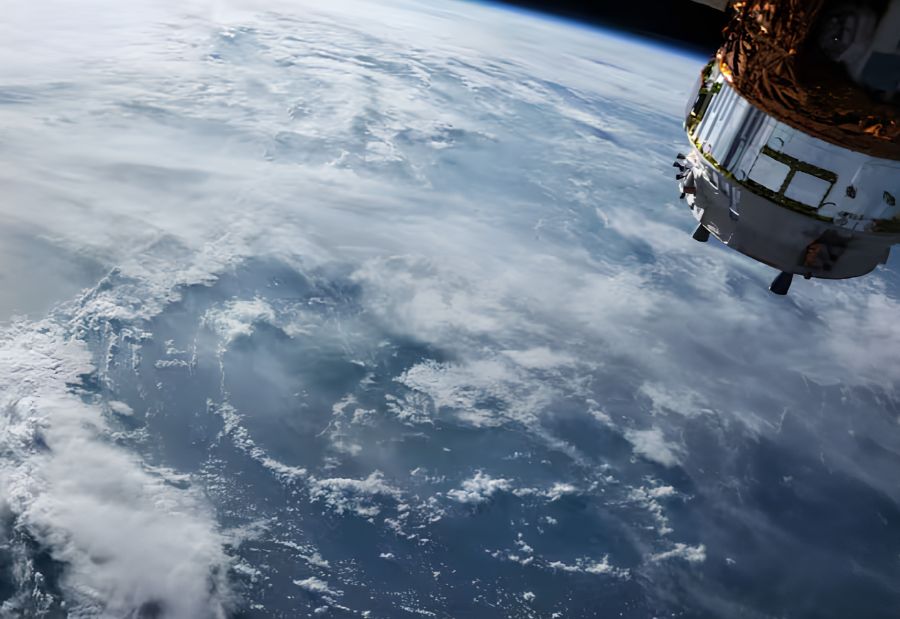
China could potentially position around 40 reusable spaceplanes in orbit to create rapid descent opportunities towards almost any location on Earth, according to a new study. The research suggests that such an orbital constellation could reduce the maximum wait for a suitable return window to just 2.5 minutes, with most populated regions having an estimated wait of around 1 minute.
The findings are based on computer simulations and do not represent the actual time required for a spacecraft to reach its destination. Instead, the figures indicate how quickly an orbiting vehicle could begin its return journey towards a selected location.
The research was conducted by Du Chongrui and his team at the School of Astronautics at Northwestern Polytechnical University in Xi’an, China. The study was published on October 30 in the peer-reviewed journal Acta Aeronautica et Astronautica Sinica.
The proposed orbital network could have applications in rapid global transportation as well as military operations. The researchers noted that spaceplanes already positioned in orbit could begin descending towards distant targets shortly after receiving an order. Such capabilities could potentially reduce the time available for a target to detect or respond to an incoming vehicle.
The study comes days after the US Defence Intelligence Agency (DIA) released a photograph on October 26 showing what is widely believed to be China’s classified Shenlong spaceplane in orbit. The image showed a delta-wing spacecraft with its payload bay doors open and equipment mounted at the rear. However, neither the DIA nor the Chinese government has confirmed the spacecraft’s identity.
The photograph was reportedly captured on May 28, 2024, by Maxar Technologies’ WorldView-3 commercial imaging satellite, now operated by Vantor, from a distance of less than 90 km.
The spacecraft resembles the US military’s Boeing X-37B, an uncrewed reusable spaceplane designed to remain in orbit for extended periods before returning to Earth for a runway landing.
China has conducted 4 missions involving its experimental reusable spacecraft since 2020, with the latest launch taking place in February. However, authorities have shared limited information about the programme’s design and capabilities.
According to the DIA, the Chinese spacecraft appeared to manoeuvre alongside a companion satellite during its second mission in 2022–23. During its third mission in 2023–24, it reportedly released and interacted with an unidentified object.
These activities could support satellite deployment, inspection and servicing. They may also have military applications, including intelligence gathering and interference with other spacecraft.
Beijing has described its reusable spacecraft programme as an effort to make access to space more convenient and affordable. However, the latest study highlights how orbital spaceplane networks could also have wider implications for global mobility and military capabilities.
Also read: Viksit Workforce for a Viksit Bharat
Do Follow: The Mainstream LinkedIn | The Mainstream Facebook | The Mainstream Youtube | The Mainstream Twitter
About us:
The Mainstream is a premier platform delivering the latest updates and informed perspectives across the technology business and cyber landscape. Built on research-driven, thought leadership and original intellectual property, The Mainstream also curates summits & conferences that convene decision makers to explore how technology reshapes industries and leadership. With a growing presence in India and globally across the Middle East, Africa, ASEAN, the USA, the UK and Australia, The Mainstream carries a vision to bring the latest happenings and insights to 8.2 billion people and to place technology at the centre of conversation for leaders navigating the future.