


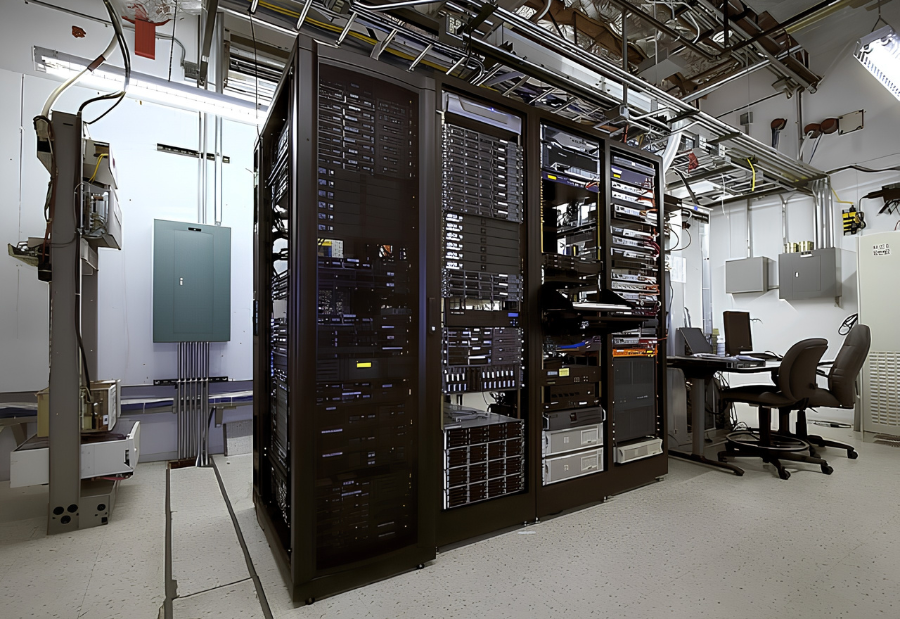
The US administration is preparing to move forward with restrictions on imports of Chinese data centre equipment, despite opposition from major technology companies, including Amazon, Google and Meta, according to people familiar with the discussions.
The Federal Communications Commission (FCC) is seeking to block imports of new models of Chinese optical transceivers. These devices transmit data through fibre-optic cables inside data centres. The proposed restrictions are driven by national security concerns.
The move has faced wider industry resistance than previously known. Amazon, Google, Meta, CoreWeave and Cisco joined Microsoft in a meeting with White House officials earlier this year. Executives reportedly warned that US companies could need up to 10 years to comply with such a mandate. Despite the lobbying, 3 people familiar with the matter said the proposal was moving forward.
Concerns have also grown in Washington following reports about Nvidia CEO Jensen Huang’s alleged affair with a Chinese spy. The developments have renewed calls for stronger action against potential Chinese technology threats. US officials are concerned that Chinese transceivers could be used to steal data, install malware or disrupt data centre operations.
The FCC and the companies involved did not respond to requests for comment, while Microsoft declined to comment. A White House official also declined to discuss the proposal but said recent FCC restrictions on Chinese and other foreign technology had generated billions of dollars in US manufacturing investments and thousands of American jobs.
China’s dominance in optical transceivers
China accounts for around two-thirds of the global optical transceiver market, according to Counterpoint Research. Chinese manufacturers Eoptolink and Zhongji Innolight dominate supply and count major US hyperscalers among their customers. Zhongji Innolight has also been added to the Pentagon’s list of Chinese military-backed companies.
US manufacturers Coherent and Lumentum offer competing products but lack the scale to replace Chinese suppliers, according to a report by the Foundation for American Innovation.
US companies also reportedly raised concerns about possible retaliation from China, including restrictions on indium phosphide exports. The mineral is essential for US firms seeking to manufacture their own optical transceivers.
Broader technology restrictions
While Trump has taken a more conciliatory approach towards China during his 2nd term amid Beijing’s rare-earth export controls, the FCC has continued to restrict Chinese technology imports. Over the past year, it has blocked new models of Chinese drones, robots, power inverters and routers.
The latest developments involving Huang have also increased pressure on the administration, bringing renewed attention to cases of Nvidia AI chips being smuggled into China that reportedly went unaddressed by the Commerce Department.
(Sources: REUTERS)
Also read: Viksit Workforce for a Viksit Bharat
Do Follow: The Mainstream LinkedIn | The Mainstream Facebook | The Mainstream Youtube | The Mainstream Twitter
About us:
The Mainstream is a premier platform delivering the latest updates and informed perspectives across the technology business and cyber landscape. Built on research-driven, thought leadership and original intellectual property, The Mainstream also curates summits & conferences that convene decision makers to explore how technology reshapes industries and leadership. With a growing presence in India and globally across the Middle East, Africa, ASEAN, the USA, the UK and Australia, The Mainstream carries a vision to bring the latest happenings and insights to 8.2 billion people and to place technology at the centre of conversation for leaders navigating the future.