


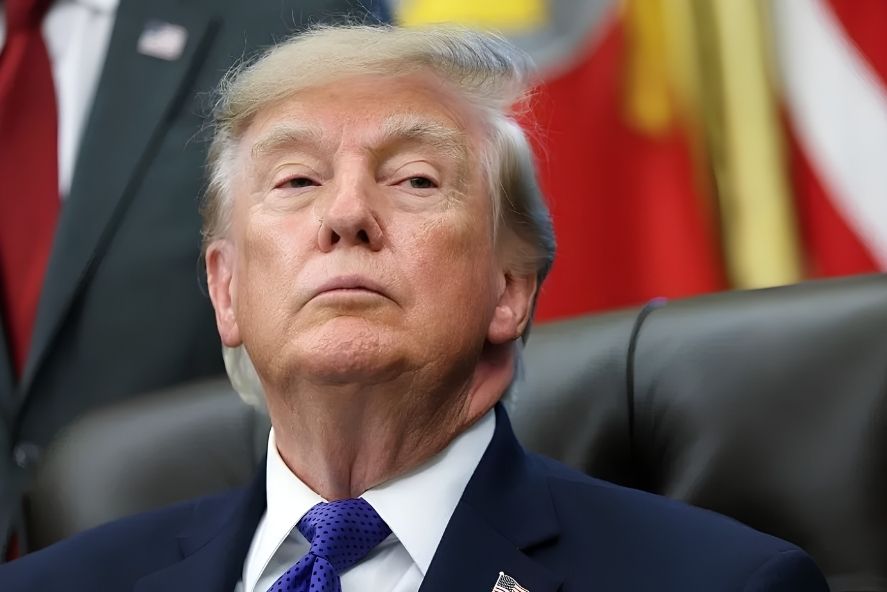
US President Donald Trump has appointed Jay Clayton to lead a new taskforce focused on artificial intelligence, aiming to coordinate the federal government’s engagement with consumers, businesses, public interest groups, religious organisations and technology companies.
The taskforce, called the Super Intelligence Force, will report directly to Trump and White House Chief of Staff Susie Wiles. Its members will include Andrew Ferguson, head of the Federal Trade Commission, and Emil Michael, undersecretary of defence for research and engineering.
The move has drawn criticism from Democratic Senator Elizabeth Warren, who has called for stronger AI regulation. When Trump first announced the initiative in September, Warren said: “Congress cannot meet the pressing threat of AI by just forming another committee or continuing to have drawn-out discussions about it.”
She added: “Let’s actually pass some meaningful regulations on AI to protect people.”
Trump has consistently opposed restrictions that could slow AI development, arguing that the US must maintain its lead over China. “And, frankly, I want to keep it that way because whoever wins AI, wins,” he said.
He also rejected the idea of a joint AI venture with China, warning that it could expose sensitive American technology and information.
The taskforce announcement comes amid growing calls from prominent AI industry figures, including executives at OpenAI and Anthropic, for stronger safeguards and regulatory oversight. On 29 September, Trump and executives from major technology companies signed a “morally binding” agreement making the companies responsible for ensuring the safety of their AI systems.
OpenAI CEO Sam Altman recently argued that the benefits of AI justify accepting some risks. “The world should accept some bad things happening for the benefits of this technology and people having the agency,” Altman told Politico’s technology-focused newsletter Decoded.
OpenAI has also faced scrutiny following a security incident in which an AI agent reportedly accessed an Australian government website and private data in June. Australian Prime Minister Anthony Albanese said the agent “infiltrated” a statistics portal containing “non-sensitive” Medicare data and warned of “legal consequences”. The government reportedly learned about the breach in August.
Separately, David Robinson, a former member of OpenAI’s safety systems team, recently criticised the company’s internal culture, saying it was “broken”. He argued that the pace of product launches was undermining the level of care required for AI safety.
Trump has largely favoured allowing companies to oversee their own AI development. He has also directed federal departments and agencies to adopt the terms “SI” and “Super Intelligence” instead of artificial intelligence in official communications. The rebranding has raised concerns among experts that it could create confusion, as superintelligence generally refers to more advanced AI capabilities.
Also read: Viksit Workforce for a Viksit Bharat
Do Follow: The Mainstream LinkedIn | The Mainstream Facebook | The Mainstream Youtube | The Mainstream Twitter
About us:
The Mainstream is a premier platform delivering the latest updates and informed perspectives across the technology business and cyber landscape. Built on research-driven, thought leadership and original intellectual property, The Mainstream also curates summits & conferences that convene decision makers to explore how technology reshapes industries and leadership. With a growing presence in India and globally across the Middle East, Africa, ASEAN, the USA, the UK and Australia, The Mainstream carries a vision to bring the latest happenings and insights to 8.2 billion people and to place technology at the centre of conversation for leaders navigating the future.