


Artificial intelligence is no longer simply changing how work gets done. It is beginning to reshape how organisations think about people, productivity and the workplace itself.
For HR leaders, the question is moving beyond whether technology will replace human roles. The more important question is how organisations can redesign work so that technology takes care of what it does best, while people remain at the centre of decisions that require judgement, empathy and context.
From digitising routine HR processes and using AI to improve productivity to rethinking flexibility, retention, diversity, and the role of first-line managers, the transformation underway is as much about organisational culture as technology.
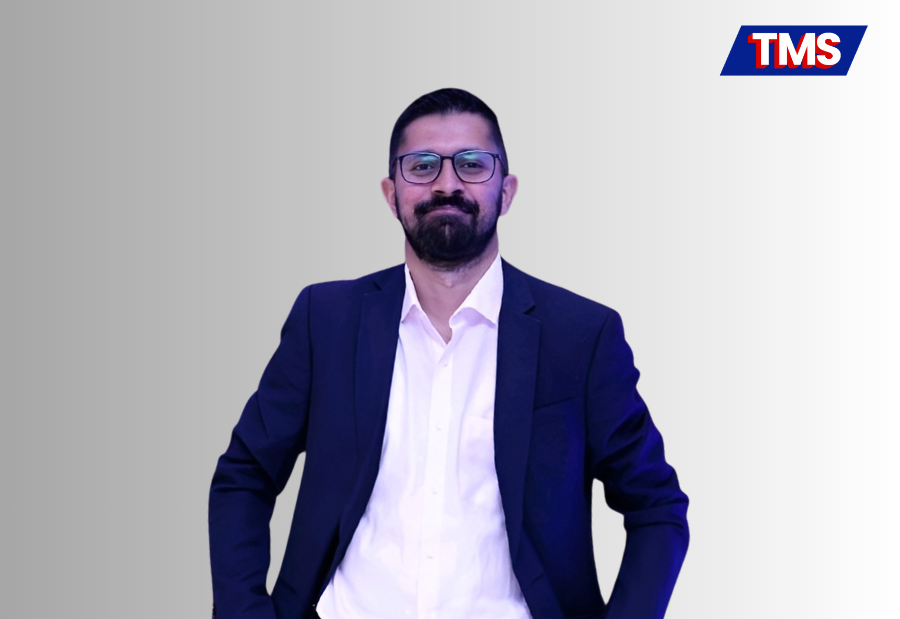
With nearly two decades of HR experience, including 16 years with Bajaj Allianz General Insurance, Saptarshi Bhattacharya, CPO at Motilal Oswal Private Equity, brings a cross-sector perspective to this changing landscape. In his current role, he works closely with promoters and founders across portfolio companies on areas ranging from CXO hiring building culture, overseeing Org Structure changes and building value across people practices.
In this conversation, Bhattacharya reflects on what AI and automation mean for the future of HR, why productivity should not be equated with reducing headcount, how organisations can approach talent and flexibility differently, and why the first-line manager may be one of the most important links between organisational intent and employee experience.
1. You have spent nearly two decades in HR, including a long stint with Bajaj Allianz and now working closely with companies across sectors through Motilal Oswal Private Equity. How has this journey shaped your understanding of HR?
Saptarshi: I now have about 19 years of HR experience, including 16 years with Bajaj Allianz General Insurance, where I joined as a management trainee. The management trainee programme was a five- to six-year curated growth journey where you worked across different functions in close collaboration with the sales, finance and technical teams.
At Motilal Oswal Private Equity, my role gives me a very different perspective because I work with promoters and founders across multiple sectors. We have invested in close to 52 organisations across BFSI, consumer and FMCG, healthcare and industrials. My role is to advise these companies on different aspects of HR, from CXO hiring and organisation structure to HR technology, digitisation and ESOP implementation. The advantage is that I get to see how different organisations approach people and growth, rather than looking at HR through the lens of a single company.
2. Digitisation, automation and AI are now becoming central to HR. What do you see as the most fundamental shift taking place?
Saptarshi: There is still a lot of ambiguity around what organisations actually want to achieve through HR digitisation. There is a significant difference between digitising a process and automating it. HR digitisation has evolved from something as basic as converting physical personnel files into digital records to much more sophisticated automation and AI-led processes.
Earlier, there was also resistance to excessive digitisation because of the concern that it could take the human out of human resources. But today, we are seeing much greater adoption. Take something as simple as an HR chatbot. Employees can get answers to routine questions such as accessing a payslip, an insurance card or other HR documents without having to approach an HR team member. That changes what HR can spend its time on.
3. Does that mean technology is ultimately making HR more human?
Saptarshi: In many ways, yes. Technology can take away a lot of transactional work, but it cannot replace the human conversations that matter. If employees no longer need to approach their HR business partner for routine administrative queries, the conversation can shift towards career development, learning, employee challenges and grievances. That also means HR teams need to become better at having those conversations. Empathy and the ability to understand an employee’s situation become even more important when technology is handling the transactional side.
4. As more administrative work becomes automated, how should organisations balance technology, human judgement and productivity?
Saptarshi: The people-facing roles in HR will continue to be required. I don’t see those going away anytime soon. Technology can make operations, learning and recruitment much more efficient. For example, if you are conducting a large management trainee programme, there is no reason for several people in HR to spend their time coordinating activities that can be automated. The objective should not simply be reducing headcount. It should be using people’s time better. You want to remove the operational work that prevents HR from focusing on people.
5. You also work with companies where AI is changing knowledge-intensive work. How is this affecting the way organisations think about talent?
Saptarshi: Leaders cannot be blind to the impact of technology and AI on their roles. Take private equity. Earlier, evaluating a potential deal could involve weeks of work. Today, tools such as ChatGPT and other AI platforms can significantly reduce the time required for analysis, provided people know how to use them properly.
That does not necessarily mean the team becomes smaller. It means the same talent can become significantly more productive.
6. Is simply giving employees access to AI tools enough to create that advantage?
Saptarshi: No. There is a difference between having a licence and knowing how to use the technology optimally. Almost every organisation is getting access to tools such as Claude, ChatGPT and other AI products. But the real advantage comes from understanding how to use them effectively. I have seen employees, including at junior levels, become significantly more productive after adopting these technologies. That does not make them redundant. It can make them more valuable to the organisation.
We are still at the beginning of understanding what AI can do. Every company is buying licences, experimenting and learning. The next five to ten years could change the way we work much more than we currently anticipate.
7. Technology is changing work, but culture remains deeply human. How do organisations build cultures that allow people to experiment, challenge assumptions and take risks?
Saptarshi: Culture is a very broad term, and every company, and even every team, can have a different culture. For me, certain things are non-negotiable. Ethics, for example, cannot be compromised. Technology is never going to replace that. Sometimes culture is also about very simple and practical things. One of our portfolio companies, for instance, had a very strong focus on creating opportunities for women from local communities. Today, around 35% of the plant workforce comes from local communities. That made me realise that sometimes we overcomplicate the idea of culture. Having the heart in the right place and being empathetic towards employees can matter more than elaborate frameworks.
8. You mentioned the role of technology in improving productivity. Can technology also help create healthier workplaces?
Saptarshi: Absolutely. At Motilal Oswal, we have what we call a switch-off policy. For employees up to a certain level, covering about 95% of our workforce, emails are blocked after office hours, including weekends. The idea is simple. In a city like Mumbai, some employees can spend several hours commuting every day. After that, they spend eight hours at work. You have to recognise the effort employees are already putting in. Technology should not create an expectation that employees are available 24/7. Ironically, technology is what allows us to stop technology at 7 PM and give people the mental space to switch off.
9. A large part of the workplace conversation today revolves around Gen Z. Do you think organisations risk oversimplifying talent by putting people into generational categories?
Saptarshi: I don’t particularly like the idea of categorising people simply as Gen Z, Gen X or any other generation. No two people are the same, and no two generations are completely uniform either. We have seen differences even within the same generation based on geography, family background and socioeconomic context. So rather than generalising, organisations should study what is actually working for them. We have looked at which talent profiles stay longer, are more committed to the organisation and are more interested in growing internally. The answer can sometimes be surprising.
Yes, younger employees may be more impatient than earlier generations, but they are also often much smarter about using technology and finding new ways of doing things. The answer is not “us versus them”. Both sides have to adapt.
10. What makes an organisation genuinely worth staying with for the next generation of talent?
Saptarshi: Flexibility and empowerment are definitely important. When we joined as management trainees, empowerment was not something we expected from an organisation. We were grateful for the opportunity and wanted to learn. The mindset is different today. But flexibility cannot be one-size-fits-all. If you are in a trading role, you need to be logged in when the market opens. There are no two ways about it. In private equity or investment banking, there can be much more flexibility as long as the work gets done. So even within the same organisation, different teams can require different approaches.
11. Does that also change how organisations should think about retention?
Saptarshi: I think organisations need to become more comfortable with the fact that attrition is not always a bad thing. If someone who is not among your most productive or top-performing talent wants to leave, it is not necessarily a failure.
We also need to change our expectations of younger talent. Earlier, we expected management trainees to spend many years within an organisation and build their entire career there. Today, average tenure can be much shorter. If someone stays for two and a half years instead of five, the organisation has to ask how it can make those two and a half years productive and meaningful rather than simply seeing the shorter tenure as a problem.
12. Finally, what should organisations be thinking about when it comes to diversity and building the workforce of the future?
Saptarshi: Diversity needs to go beyond gender. Age and geography matter as well. In a country like India, geographical diversity is still not discussed enough. Having people from different parts of the country brings different perspectives.
The same applies to professional backgrounds. We are increasingly looking beyond hiring people only from the same industry. For example, one of our portfolio companies in healthcare has hired people from telecom and insurance sales. Someone who has sold SIM cards may bring a very different perspective to selling healthcare services. That diversity of thought can be extremely valuable.
And I think organisations also need to become more patient. Management often gets impatient with younger employees and interprets their behaviour as a lack of commitment. Sometimes it is simply a different way of communicating and working. The first-line manager becomes extremely important here. Organisations spend a lot of time thinking about senior leadership and top talent, but first-line managers have a tremendous influence on how employees actually experience the organisation.
If we can help those managers understand how to work with different kinds of talent, we can make a significant difference to the workplace.
Also read: Viksit Workforce for a Viksit Bharat
Do Follow: The Mainstream LinkedIn | The Mainstream Facebook | The Mainstream Youtube | The Mainstream Twitter
About us:
The Mainstream is a premier platform delivering the latest updates and informed perspectives across the technology business and cyber landscape. Built on research-driven, thought leadership and original intellectual property, The Mainstream also curates summits & conferences that convene decision makers to explore how technology reshapes industries and leadership. With a growing presence in India and globally across the Middle East, Africa, ASEAN, the USA, the UK and Australia, The Mainstream carries a vision to bring the latest happenings and insights to 8.2 billion people and to place technology at the centre of conversation for leaders navigating the future.