


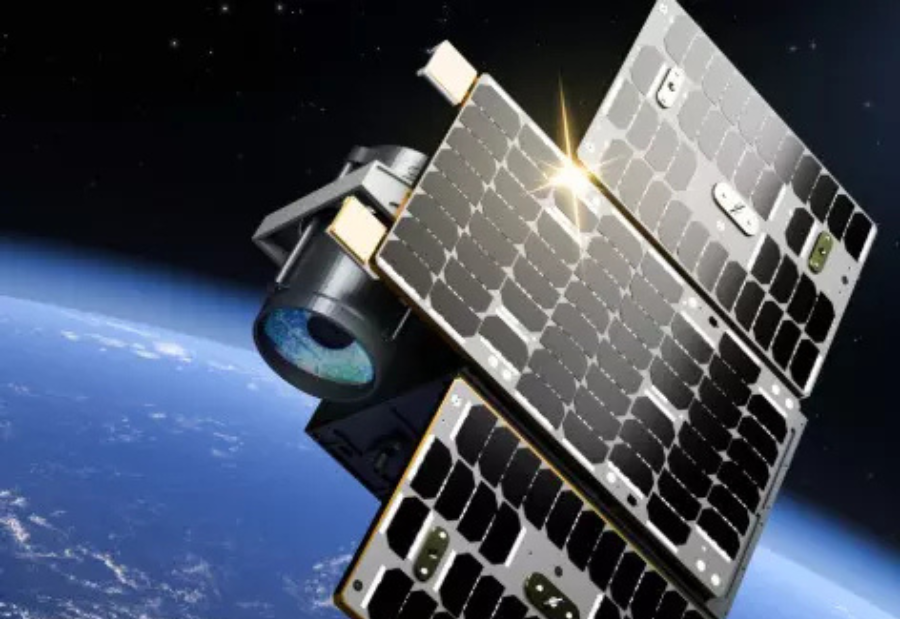
India’s space technology sector is gaining another boost as Bengaluru-based startup GalaxEye secures a US patent for technology that combines optical and radar imaging on a single satellite.
The patent covers a system that synchronises optical and radar sensors to capture precisely aligned images of the same location at the same time. The technology forms the foundation of GalaxEye’s OptoSAR imaging system.
The development comes as demand for satellite-based Earth observation grows across security, agriculture, insurance and disaster response. The global commercial satellite imaging market was valued at $6.55 billion in 2024 and is projected to reach $20.15 billion by 2033, according to SkyQuest Technology.
Combining 2 ways of observing Earth
Optical sensors work like advanced cameras. They capture detailed images that can show vegetation, roads, buildings and water bodies. However, they depend on light and can be affected by cloud cover.
Synthetic Aperture Radar (SAR) uses microwave signals to observe the ground. It can operate during both day and night and can capture information through clouds, making it useful when optical sensors cannot provide a clear view.
Combining data from separate satellites can be difficult because images may be captured from different angles or at different times. GalaxEye’s patented system is designed to address this by synchronising both sensors on the same satellite, creating observations that are aligned in both space and time.
“This patented technology enables us to serve the global markets and provide weather-agnostic imaging capabilities across sectors,” CEO Suyash Singh told news agency Reuters.
Plans for a 30 satellite constellation
GalaxEye, founded by engineers from IIT Madras, tested its technology in space through Mission Drishti, launched on May 3, 2026. The company described Drishti as the world’s first OptoSAR satellite, while the Indian government recognised it as the world’s first satellite combining optical cameras with all-weather radar.
The mission faced a setback in July after communication with Drishti was lost following an anomaly linked to a geomagnetic solar storm. GalaxEye said the mission had still validated key spacecraft systems before contact was lost.
The startup plans to build a 30-satellite constellation over the next 5 years. In August, it also acquired Bengaluru-based spacecraft engineering firm StarOps to strengthen its in-house capabilities.
The US patent provides intellectual property protection as GalaxEye works to expand its Indian-developed technology into a global Earth observation business.
India’s space economy is projected to reach about $44 billion by 2033 under the government’s space-sector strategy.
Also read: Viksit Workforce for a Viksit Bharat
Do Follow: The Mainstream LinkedIn | The Mainstream Facebook | The Mainstream Youtube | The Mainstream Twitter
About us:
The Mainstream is a premier platform delivering the latest updates and informed perspectives across the technology business and cyber landscape. Built on research-driven, thought leadership and original intellectual property, The Mainstream also curates summits & conferences that convene decision makers to explore how technology reshapes industries and leadership. With a growing presence in India and globally across the Middle East, Africa, ASEAN, the USA, the UK and Australia, The Mainstream carries a vision to bring the latest happenings and insights to 8.2 billion people and to place technology at the centre of conversation for leaders navigating the future.