


The scenes came from a members-only club in Mumbai and surfaced during a wider food safety campaign across Maharashtra. Images of cockroaches on kitchen floors, spider webs on walls, spoiled vegetables and pest-infested food counters have drawn widespread attention in India.
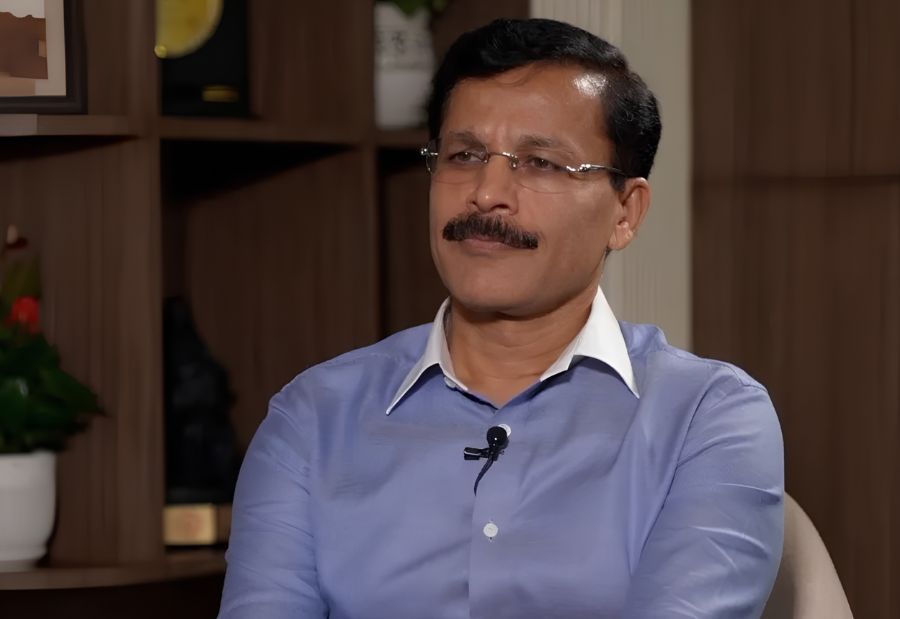
At the centre of the campaign is 51-year-old civil servant Tukaram Mundhe, who took charge as Maharashtra’s food commissioner in May. Since then, the Maharashtra Food and Drug Administration (FDA) has carried out thousands of inspections at restaurants, cafes and other food businesses across the state.
Mundhe has said food safety laws must be enforced regardless of a business’s size, influence or reputation. His department has suspended licences of several quick-commerce warehouses and issued notices to Bollywood celebrities over advertisements suspected of indirectly promoting restricted products.
“These actions are taken in public health interest. We will continue to take them against violations,” Mundhe said.
The campaign has made him an unusual public figure for a civil servant. Videos of his inspections and press briefings have spread widely across social media, while reels and podcasts have added to his visibility. He now has more than 3.8 million followers on Instagram.
Mundhe, an Indian Administrative Service officer, has more than 20 years of experience. He has been transferred so frequently that reports suggest the number of transfers may exceed his years in service, although he does not confirm the figure.
“I have stopped counting my transfers,” he said.
Supporters view his frequent transfers as evidence of his uncompromising approach, while critics say his confrontational style has created tensions with colleagues and elected representatives.
Over the past decade, Mundhe has received praise for his handling of the Covid pandemic while serving as Nagpur’s municipal commissioner. He was also recognised earlier for his work on water conservation in Maharashtra’s drought-prone areas.
“When he was transferred out of Nagpur during the pandemic, thousands showed up outside his home to bid him farewell. It took him an hour just to reach his car,” said Shafi Pathan, a journalist who wrote Mundhe’s biography in Marathi.
His food safety campaign, however, has brought him his widest attention so far.
Data presented to Parliament in July showed the scale of India’s food safety challenge. Of 223,808 food samples tested across India in 2025 and 2026, nearly 1 in 5 were found to be “non-conforming”, meaning they were unsafe, substandard or mislabelled.
By the end of July, Mundhe’s department had conducted more than 3,100 inspections across Maharashtra. He expects the number has since crossed 4,000. Around 300 licences had been suspended and more than 1,000 improvement notices issued.
A new complaints portal also received more than 16,000 complaints during its first 3 months, Mundhe said.
“What Mundhe has done differently is make it visible,” said Pawan Agarwal, a former food regulator. He said consumers have responded positively because enforcement actions and complaints are now visible to the public instead of taking years to move through regulators and courts.
The food industry, however, has raised concerns about the approach. Restaurant associations allege that the statutory process has been bypassed, while courts have described some actions as “high-handed”.
Under food safety laws, businesses are generally given time to correct violations before their licences are suspended or cancelled. Immediate suspension is allowed only in urgent public health situations, with reasons required to be recorded.
“While compliance is non-negotiable, high-handed approaches – like public naming-and-shaming, instant suspensions over minor procedural or rectifiable issues and treating administrative oversights with harsh penal measures – create panic rather than reform,” said Niranjan Laxman Shetty, legal chairman of a hospitality association.
Mundhe has defended the raids as lawful and said suspensions are reserved for extreme cases. Some businesses, however, have claimed they were shut over minor violations without receiving warnings or an opportunity to make corrections.
His actions have also faced legal challenges. In some cases, courts have overturned licence suspensions, ordered compensation and criticised the regulator’s approach.
In August, the Bombay high court ordered Mundhe’s department to pay Rs 500,000 in compensation to a sweets shop whose licence remained suspended even after a reinspection found it 98% compliant.
The court called the regulator’s intentions “laudable” but said it had “gone overboard”.
The judges also questioned whether government establishments were facing the same level of scrutiny as private businesses. Within a day, Mundhe’s team inspected canteens in the state high court complex and flagged violations.
For Mundhe, this showed that the rules apply equally to everyone.
“Had the food business operators or establishment complied with existing regulations, I would not be needed to take those actions,” he said.
“We are not here to close down or suspend every licensee,” he added. “We are here to ensure food is safe, food is not substandard, it is not misbranded and it is good for consumption.”
Restaurant inspections are only part of the campaign. Mundhe has also enforced bans on wrapping food in newspapers, using synthetic dyes and selling banned analogue paneer, which refers to non-dairy cottage cheese substitutes.
The department has now shifted its focus to schools. It has ordered canteens, hostel kitchens and midday meal suppliers to obtain proper licences and banned the sale of food high in fat, sugar or salt within 50m of schools.
The longer-term question is whether the impact will continue after Mundhe moves to another post.
“The efforts of Mundhe have created a nationwide awareness about food safety, both amongst businesses and consumers, which is desirable – but not sustainable,” Agarwal said.
He said the challenge is to create systems that can continue beyond the tenure of an individual officer.
For now, the campaign is already changing practices. Yuvraj Yadav, who sells sandwiches in a Mumbai suburb, said he previously used discarded newspapers to wrap them despite concerns that chemicals from printing ink could enter food. After hearing about the ban, he switched to greaseproof paper.
“We started this a few months ago after newspapers were not allowed for packing as it’s bad for health,” he said.
Also read: Viksit Workforce for a Viksit Bharat
Do Follow: The Mainstream LinkedIn | The Mainstream Facebook | The Mainstream Youtube | The Mainstream Twitter
About us:
The Mainstream is a premier platform delivering the latest updates and informed perspectives across the technology business and cyber landscape. Built on research-driven, thought leadership and original intellectual property, The Mainstream also curates summits & conferences that convene decision makers to explore how technology reshapes industries and leadership. With a growing presence in India and globally across the Middle East, Africa, ASEAN, the USA, the UK and Australia, The Mainstream carries a vision to bring the latest happenings and insights to 8.2 billion people and to place technology at the centre of conversation for leaders navigating the future.