


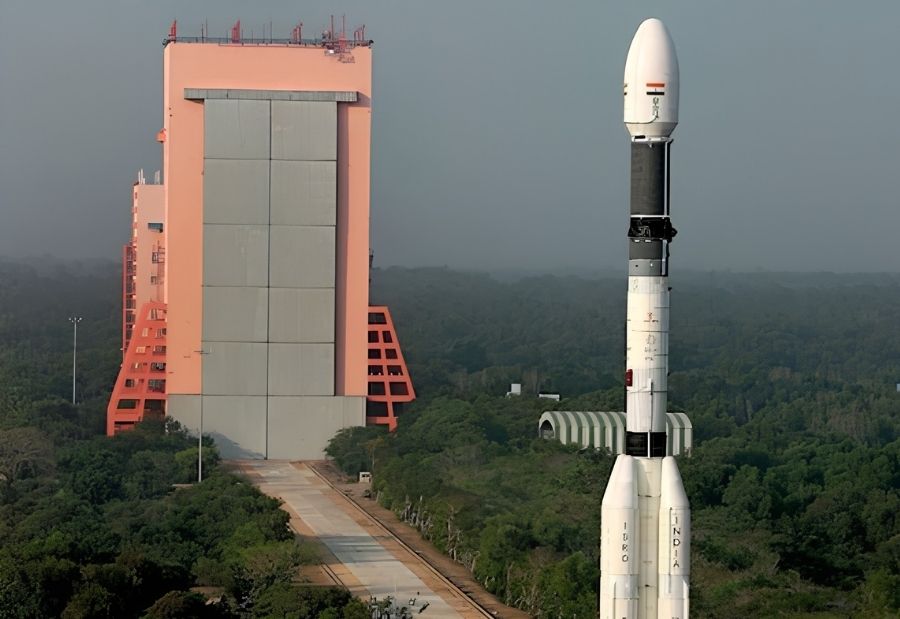
After months away from the launch pad, the Indian Space Research Organisation (ISRO) is preparing for a key mission aimed at strengthening its Earth observation capabilities. ISRO Chairman Dr V Narayanan said the agency is targeting September 4 for the launch of EOS 5 aboard the GSLV F17.
The mission will carry EOS 5, earlier known as GISAT 1A, into a geosynchronous orbit nearly 36,000 kilometres above Earth. The satellite is designed to provide India with a continuous view of the country and support rapid monitoring of changing conditions on the ground.
EOS 5 is expected to repeatedly image the Indian landmass throughout the day. Its data could help monitor cyclones, floods, cloudbursts, forest fires and other rapidly developing events. The information is expected to support disaster management agencies, weather forecasters, agricultural planners and security agencies.
The mission comes after 2 consecutive PSLV failures, which have left the rocket grounded while investigations and validation tests are completed. However, the GSLV Mk II that will carry EOS 5 does not share engines or critical propulsion systems with the PSLV.
The mission also carries significance because it follows the loss of EOS 03 during the GSLV F10 launch on August 12, 2021. The earlier mission failed after a problem with the indigenous cryogenic upper stage, resulting in the loss of the satellite. EOS 5 is effectively the successor to that mission and is intended to deliver the Earth observation capability that India had sought through EOS 03.
The upcoming launch will also test the reliability and maturity of the GSLV Mk II. The rocket recently launched the NASA-ISRO Synthetic Aperture Radar (NISAR) satellite, a major India-US Earth observation mission regarded as the world’s most expensive Earth imaging satellite. That success strengthened confidence in the vehicle and highlighted ISRO’s progress in cryogenic propulsion technology.
ISRO is also planning an ambitious launch schedule. Dr Narayanan said the agency aims to conduct 7 launches between now and March 2027, including the G1 mission under the Gaganyaan programme, which will be the first uncrewed flight. For the current financial year, ISRO plans to realise 12 satellites and target 8 launch vehicle missions covering communication, navigation, Earth observation and scientific research.
For ISRO, EOS 5 therefore represents more than another satellite launch. It is an important step in restoring momentum while expanding India’s capabilities in Earth monitoring, disaster response and future space programmes.
Also read: Viksit Workforce for a Viksit Bharat
Do Follow: The Mainstream LinkedIn | The Mainstream Facebook | The Mainstream Youtube | The Mainstream Twitter
About us:
The Mainstream is a premier platform delivering the latest updates and informed perspectives across the technology business and cyber landscape. Built on research-driven, thought leadership and original intellectual property, The Mainstream also curates summits & conferences that convene decision makers to explore how technology reshapes industries and leadership. With a growing presence in India and globally across the Middle East, Africa, ASEAN, the USA, the UK and Australia, The Mainstream carries a vision to bring the latest happenings and insights to 8.2 billion people and to place technology at the centre of conversation for leaders navigating the future.