


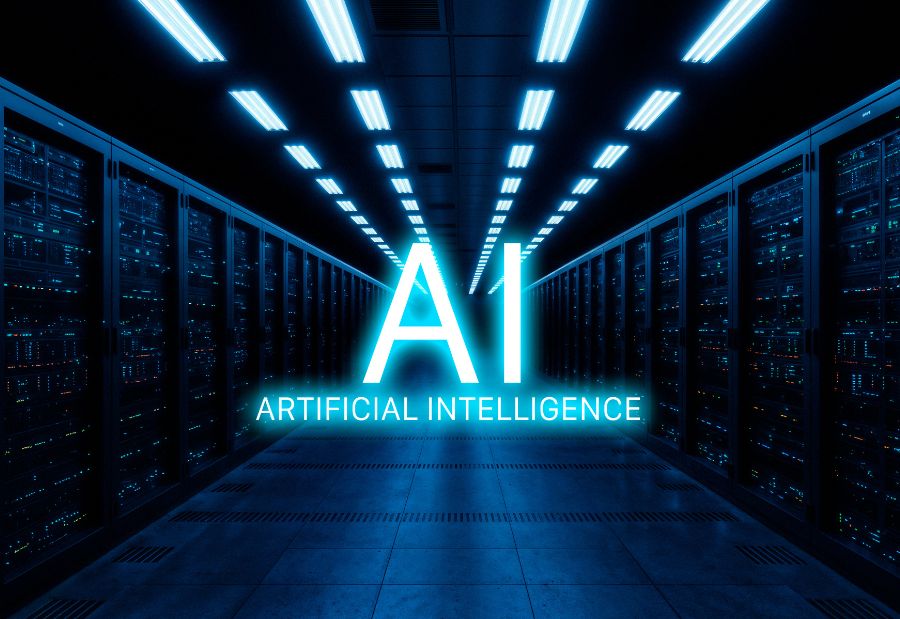
AI is changing more than software. It is also changing the physical infrastructure needed to build and run AI applications. As businesses, startups, research institutions and public organizations increase their use of artificial intelligence, India is expanding data centers designed to handle demanding AI workloads.
AI data centers are reshaping India’s technology infrastructure in 2026 by increasing demand for high-performance computing, faster networks, advanced cooling, reliable power, cloud capacity and secure digital infrastructure. This shift is also encouraging new investments in AI computing and strengthening India’s position as a growing technology and AI infrastructure hub.
What are AI data centers?
AI data centers are specialized facilities built for AI workloads such as model training, machine learning and large-scale data processing. They require powerful computing, fast networks, advanced cooling, reliable power and strong security to support growing AI demand in India.
What are the key facts about AI data centers in India?
- India’s data center capacity has expanded significantly in recent years.
- AI workloads are increasing demand for high-density computing infrastructure.
- Government programs are expanding access to AI computing resources.
- Mumbai–Navi Mumbai remains an important data center hub, alongside Bengaluru, Hyderabad, Chennai, Delhi NCR, Pune and other locations.
- New AI infrastructure is creating demand for advanced power and cooling systems.
- Data center development is increasingly connected with cloud computing, AI, telecom networks and enterprise technology.
How are AI data centers reshaping India’s technology infrastructure?
1. AI is changing data center design.
Traditional data centers were built around a broad range of computing requirements. AI workloads can create much higher demands on computing systems.
This is pushing operators to design facilities around high-density computing, advanced servers, faster networking and improved thermal management.
AI infrastructure is therefore changing the physical design of data centers rather than simply adding more servers to existing facilities.
2. Power infrastructure is becoming more important
AI computing requires significant and reliable electricity. As more AI facilities are developed, access to suitable power is becoming an important factor when companies decide where to build.
India’s Ministry of Power has projected substantial additional electricity demand from AI data centers over the coming years. This makes grid capacity, renewable energy, power reliability and efficient energy use increasingly important parts of India’s technology infrastructure planning.
3. Cooling technology is evolving
More powerful computing systems generate more heat. As AI servers become denser, traditional cooling approaches may not always be enough.
Data center operators are therefore exploring advanced cooling methods, including liquid cooling, to manage heat more efficiently. The Indian government has also highlighted the industry’s adoption of advanced cooling technologies to reduce water usage.
4. Faster networks are becoming essential
AI data centers do not work in isolation. They need strong network connections to move large amounts of information between data centres, cloud platforms, enterprises and users.
This is creating opportunities for new fiber networks and high-speed connectivity infrastructure. Recent developments in India include dedicated fiber infrastructure aimed at connecting AI data center clusters.
5. Sovereign AI infrastructure is growing
India is also focusing on building AI computing capacity within the country. This can give organizations greater control over where sensitive data is processed and where AI models are developed and deployed.
The IndiaAI Mission is supporting the expansion of domestic compute capacity and access for startups, researchers, academia and enterprises.
What are some examples of India’s AI data center development?
Recent developments show how quickly the infrastructure landscape is changing.
Large AI computing facilities: NVIDIA has highlighted partnerships with Indian infrastructure providers such as Yotta, L&T and E2E Networks to expand AI computing capacity in India. These facilities are designed to support model training, fine-tuning and large-scale AI inference.
AI-focused infrastructure projects: L&T has secured a major contract to develop an AI data center for Together AI, demonstrating the growing role of Indian infrastructure companies in large-scale AI computing projects.
What is the industry impact of AI data centers?
The growth of AI data centers is affecting several parts of India’s technology ecosystem.
Technology companies
Cloud providers, AI companies, software businesses and technology vendors can access more computing infrastructure for developing and deploying AI applications.
Enterprises
Businesses can use locally available AI infrastructure for applications such as automation, customer service, analytics, software development, cybersecurity and industry-specific AI.
Telecom and network providers
The growth of AI workloads is increasing the need for high-speed connectivity between data centers and business locations.
Energy and infrastructure companies
AI data centers are creating new requirements for electricity, backup power, cooling, construction and renewable energy.
Startups and researchers
Greater access to domestic computing resources can make it easier for startups and researchers to experiment with AI models and applications. Government-backed compute programs are intended to broaden this access.
Conclusion
AI data centers are reshaping India’s technology infrastructure in 2026 by driving demand for stronger computing, power, cooling, connectivity and cloud capabilities. Sustainable growth will depend on balancing AI innovation with energy efficiency, security and responsible infrastructure planning. The Mainstream covers AI, cloud, data centers, cybersecurity and enterprise technology trends for business and technology leaders.
Frequently Asked Questions
Q1. Why are AI data centers important for India’s technology growth?
AI data centers provide the computing, storage, networking and power infrastructure needed to develop and run advanced AI applications across industries.
Q2. How do AI data centers affect India’s energy infrastructure?
AI data centers require reliable and efficient power because high-performance computing generates significant energy demand. This is encouraging greater focus on grid capacity, renewable energy, backup power and energy efficiency.
Q3. Will AI data centers create new opportunities for Indian businesses?
Yes. Growing AI infrastructure can create opportunities for cloud providers, technology companies, telecom operators, startups, infrastructure firms and enterprises developing AI-powered products and services.