


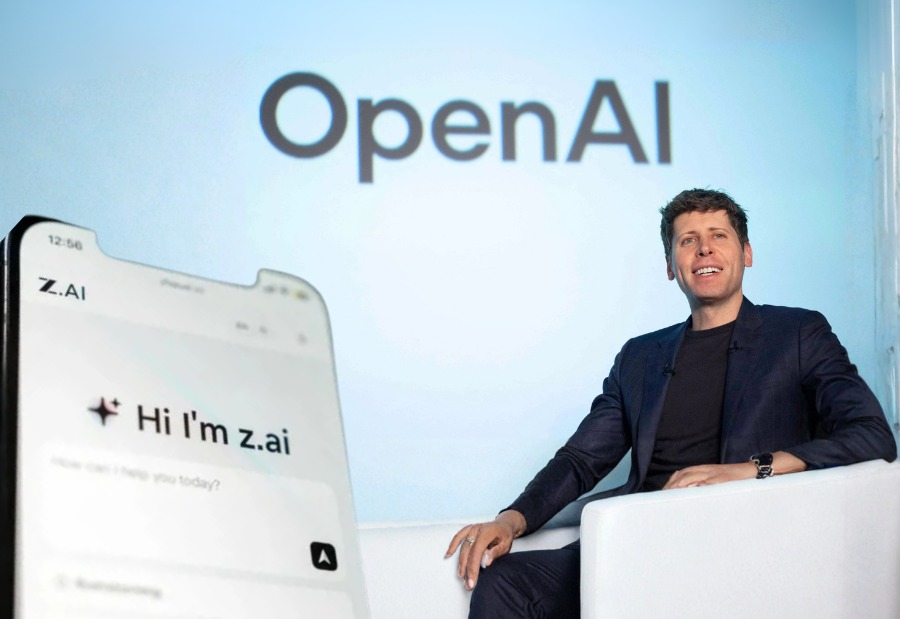
The global artificial intelligence race has entered a new phase as Chinese startup Z.ai unveiled GLM-5.2, a large language model that is rapidly gaining attention for delivering advanced capabilities at a fraction of the cost of leading Western AI systems.
The launch marks another milestone for China’s fast-evolving AI ecosystem, which is increasingly competing not only on affordability but also on performance. Industry observers say the development reflects how Chinese AI companies are narrowing the technological gap with established players such as OpenAI and Anthropic while challenging long-held assumptions about the economics of frontier AI.
GLM-5.2 has attracted attention for its performance across reasoning, coding and general-purpose language tasks. Independent benchmark results have placed the model among the strongest available today, while developers have praised its ability to handle complex programming and agentic workflows. Its competitive pricing has further accelerated interest among startups and enterprises looking to reduce AI deployment costs.
The model’s emergence also highlights a broader shift within the AI industry. While the first wave of competition centred on building the most capable models, the focus is increasingly moving towards delivering greater value for every dollar spent. Lower operating costs are becoming an important differentiator as organisations seek to scale AI adoption without significantly increasing technology budgets.
According to industry analysts, pricing is likely to become one of the defining battlegrounds of the next phase of AI competition. As more capable models become widely available, businesses are expected to compare providers not only on benchmark scores but also on cost efficiency, reliability and ecosystem support.
China’s AI sector has made rapid progress despite ongoing US export restrictions on advanced semiconductor technology. Domestic developers have responded by improving model architectures, optimising training techniques and making better use of available computing resources. The result has been a growing pipeline of competitive AI models that are increasingly attracting global developer interest.
For established AI leaders including OpenAI and Anthropic, the challenge extends beyond maintaining technological leadership. They must also demonstrate that premium-priced models deliver enough additional value to justify higher costs, particularly for businesses deploying AI at scale.
At the same time, adoption decisions remain influenced by factors beyond performance and pricing. Enterprises operating in regulated industries continue to evaluate issues such as data governance, security, compliance and geopolitical risk before selecting AI providers.
With GLM-5.2, Z.ai has demonstrated that China’s AI industry is becoming an increasingly influential force. While OpenAI and Anthropic remain among the leaders in frontier AI, the competitive gap continues to narrow.
Also read: Viksit Workforce for a Viksit Bharat
Do Follow: The Mainstream LinkedIn | The Mainstream Facebook | The Mainstream Youtube | The Mainstream Twitter
About us:
The Mainstream is a premier platform delivering the latest updates and informed perspectives across the technology business and cyber landscape. Built on research-driven, thought leadership and original intellectual property, The Mainstream also curates summits & conferences that convene decision makers to explore how technology reshapes industries and leadership. With a growing presence in India and globally across the Middle East, Africa, ASEAN, the USA, the UK and Australia, The Mainstream carries a vision to bring the latest happenings and insights to 8.2 billion people and to place technology at the centre of conversation for leaders navigating the future.