


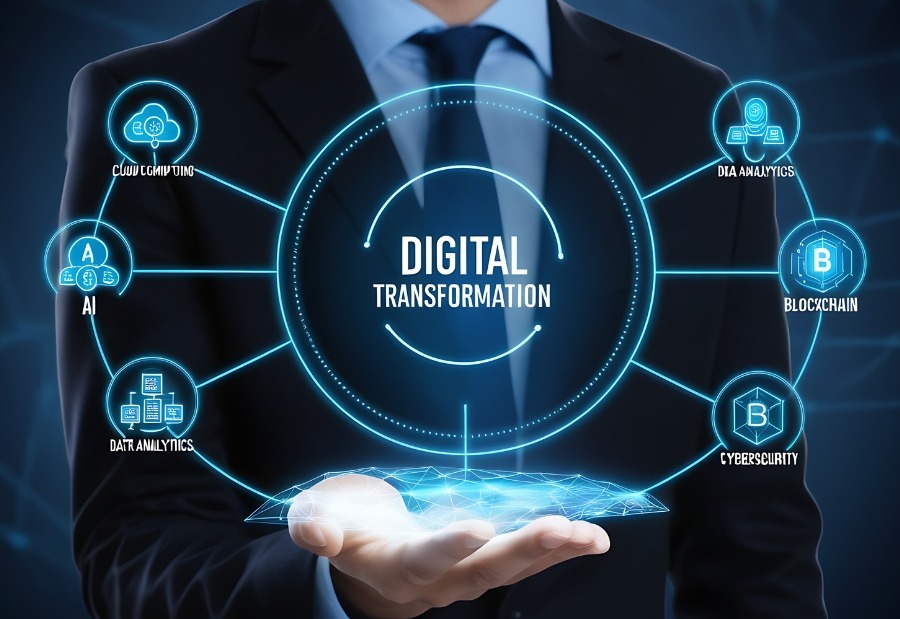
It’s not one big shift—more like steady changes happening across different areas
Digital Transformation in the Middle East is not happening all at once. There’s no single moment where everything changes.
Instead, it feels gradual. Businesses are making small adjustments, testing what works, and then building on it.
If you look across industries, the pattern is quite similar—slow movement, but consistent.
At The Mainstream, this kind of change shows up often. Not dramatic, but noticeable over time.
It Often Starts With Small Problems
Most companies are not starting with large transformation plans.
They are fixing everyday issues first.
A process that takes too long.
A system that doesn’t connect properly.
A task that repeats again and again.
Digital tools are being used to solve these problems.
Once that works, businesses move to the next step.
Technology Is Becoming Part of Routine Work
One thing that stands out in Digital Transformation in the Middle East is how normal technology use has become.
Teams are not thinking in terms of “digital transformation” anymore.
They are just using tools to get work done—managing operations, tracking performance, communicating with customers.
It becomes part of the daily routine without much attention.
Customer Experience Is Driving Change
A lot of transformation is coming from customer expectations.
People expect faster responses.
They expect simple and smooth interactions.
To keep up, businesses are improving their digital services—websites, apps, and support systems.
This push from customers is one of the biggest drivers.
Infrastructure Is Becoming More Digital
Large projects in the region are being built with technology in mind.
Smart systems, connected platforms, digital monitoring—these are becoming part of infrastructure development.
It’s not only about construction anymore.
Technology is being built into the foundation.
Work Has Changed After Remote and Hybrid Models
Work is no longer limited to one location.
Employees are working from offices, homes, and different cities.
This has forced businesses to rethink how systems are accessed and managed.
Tools need to be flexible. Systems need to be secure.
And not every company has fully figured this out yet.
Not Everything Works Smoothly
Digital transformation is not always easy.
Sometimes systems don’t integrate well.
Sometimes teams take time to adjust.
Sometimes new tools create new challenges.
This part doesn’t get much attention, but it’s real.
Some Businesses Are Moving Faster Than Others
There’s a clear difference between companies that are actively investing in digital systems and those that are more cautious.
Some are experimenting, improving, and scaling quickly.
Others are moving step by step, focusing only on immediate needs.
This creates a mixed pace across the region.
Investment Is Growing, But Carefully
Businesses are spending on digital tools and platforms, but not without thinking.
Decisions are made more carefully now.
Companies want to see clear results before making bigger investments.
This makes the transformation steady, not rushed.
Why This Shift Feels More Practical Now
Earlier, digital transformation was often discussed as a future goal.
Now, it feels practical.
It’s about solving real problems, improving efficiency, and keeping up with expectations.
That’s what makes Digital Transformation in the Middle East more relevant today.
The Mainstream’s View
At The Mainstream, digital transformation is not seen as a single trend or event.
It’s a collection of small, ongoing changes happening across businesses.
Different industries, different speeds—but a similar direction.
Conclusion
Digital Transformation in the Middle East shows that change is happening, even if it doesn’t always look dramatic.
Businesses are adapting step by step—improving systems, adjusting processes, and responding to customer needs.
Through platforms like The Mainstream, these patterns become easier to understand.
And while the transformation is still ongoing, one thing is clear—it is already shaping how businesses in the region operate today.