


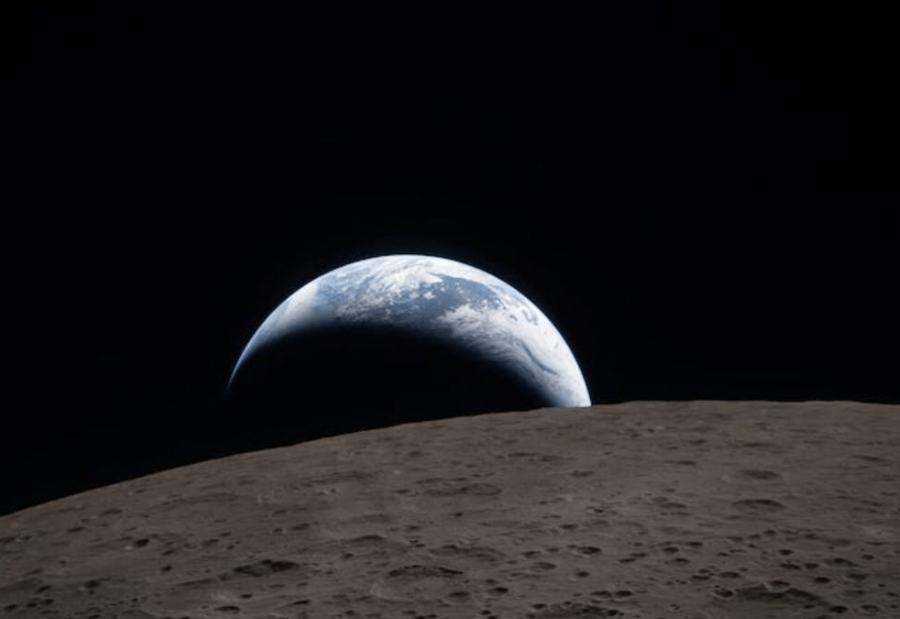
With NASA’s Artemis II mission now complete, a fresh collection of high-quality images is offering a modern perspective of space travel. Unlike the Apollo era, today’s digital photography allows near real-time sharing, giving audiences an immediate and immersive view of the mission.
For many generations born after Apollo 17 in 1972, these images provide the first real visual connection to human journeys near the Moon. The photographs, transmitted during the mission and stored on digital devices, reflect a cleaner and sharper aesthetic made possible by advanced imaging tools.
The Artemis II crew — Reid Wiseman, Victor Glover, Christina Koch, and Jeremy Hansen — underwent extensive photography training using Nikon digital cameras and smartphones. NASA continued its use of the Nikon D5, known for reliability in space conditions.
The mission also marked a shift in imaging capability. The Orion spacecraft, larger than Apollo modules, features more windows and onboard cameras. Five out of six windows were equipped with live-streaming cameras, capturing detailed visuals of the lunar flyby and sharing them with audiences on Earth.
Because Artemis II traveled farther from the Moon than Apollo missions, astronauts could view larger sections of the lunar surface at once. The crew also worked closely with scientists, identifying craters, potential landing sites, and geological features, while their observations were broadcast live.
The mission offered unique visual moments, including Earthset and a solar eclipse. While the iconic Earthrise view from Apollo 8 was not visible due to lunar phase conditions, Artemis II delivered a new perspective of Earth.
One standout image recalls the famous “Blue Marble” photograph captured during Apollo 17 by Harrison Schmitt. The 2026 version shows Earth illuminated by the Moon’s glow, highlighting the planet’s thin atmosphere and visible auroras.
With modern storage, Artemis II is expected to produce far more than the nearly 4,000 images captured during Apollo 17. As more visuals are released, the mission is set to redefine how space exploration is documented and experienced.
Also read: Viksit Workforce for a Viksit Bharat
Do Follow: The Mainstream LinkedIn | The Mainstream Facebook | The Mainstream Youtube | The Mainstream Twitter
About us:
The Mainstream is a premier platform delivering the latest updates and informed perspectives across the technology business and cyber landscape. Built on research-driven, thought leadership and original intellectual property, The Mainstream also curates summits & conferences that convene decision makers to explore how technology reshapes industries and leadership. With a growing presence in India and globally across the Middle East, Africa, ASEAN, the USA, the UK and Australia, The Mainstream carries a vision to bring the latest happenings and insights to 8.2 billion people and to place technology at the centre of conversation for leaders navigating the future.