


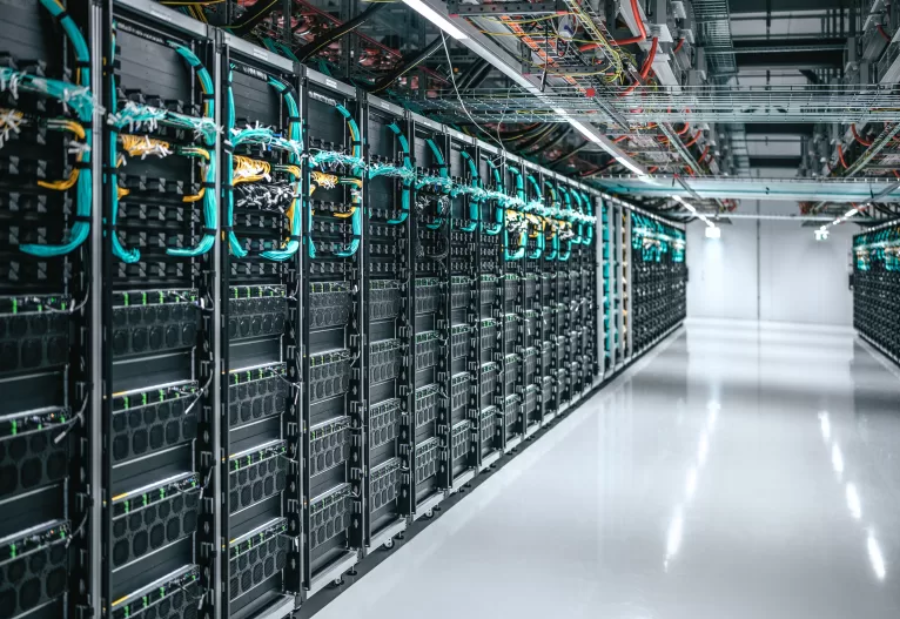
Growing scrutiny is reshaping how major tech companies approach their data centre expansion, as investors and communities raise concerns over environmental impact and resource use.
Amazon, Microsoft, Meta, and Google are facing increasing challenges in the US. Alongside community resistance to large infrastructure projects, investors are now demanding greater transparency around water usage and energy consumption.
Several multi-billion-dollar data centre projects have recently been cancelled due to local opposition. At the same time, more than a dozen investors are raising concerns ahead of upcoming shareholder meetings, seeking clarity on how companies plan to manage rising resource demands as computing capacity expands.
Trillium Asset Management, which manages over $4 billion in assets, has filed a resolution with Alphabet, Google’s parent company, asking for details on how it will meet its climate targets. Despite a 2020 commitment to reduce emissions and shift to carbon-free energy by 2030, the company’s emissions have risen by 51%, raising concerns among investors.
Similarly, Green Century Capital Management is in discussions with Nvidia to ensure that short-term AI growth does not lead to long-term climate and financial risks. This reflects widening scrutiny across the AI ecosystem.
Water usage has emerged as a key concern. Data indicates that North American data centres used nearly 1 trillion liters of water in 2025, comparable to the annual consumption of New York City. While companies have introduced closed-loop cooling systems to reduce water use, disclosures remain inconsistent.
Meta reported a 51% increase in water usage, rising from 3,726 megalitres in 2020 to 5,637 megalitres in 2024. However, its disclosures excluded leased and under-construction facilities. Google included owned and leased sites in its report but did not account for third-party operations. Amazon and Microsoft disclosed total usage but did not provide site-level breakdowns.
An Amazon spokesperson stated the company aims to be a “good neighbor” by improving efficiency, adding new energy sources, and reducing water use. A Microsoft spokesperson said sustainability remains a “core value” and that the company is actively addressing long-term environmental challenges. Google declined to comment, while Meta did not respond.
Investors stress that site-level data is critical to assess operational risks and understand local impact. “We haven’t seen them disclosing enough about their water consumption (and the) impact on the local community,” said Jason Qi of Calvert Research and Management.
Dan Diorio, vice-president of the Data Center Coalition, noted that community engagement has gained importance. “Being upfront with them regarding energy and water use so that residents can understand that this project will not stress their resources… and will protect them as rate payers is crucial,” he said.
Also read: Viksit Workforce for a Viksit Bharat
Do Follow: The Mainstream LinkedIn | The Mainstream Facebook | The Mainstream Youtube | The Mainstream Twitter
About us:
The Mainstream is a premier platform delivering the latest updates and informed perspectives across the technology business and cyber landscape. Built on research-driven, thought leadership and original intellectual property, The Mainstream also curates summits & conferences that convene decision makers to explore how technology reshapes industries and leadership. With a growing presence in India and globally across the Middle East, Africa, ASEAN, the USA, the UK and Australia, The Mainstream carries a vision to bring the latest happenings and insights to 8.2 billion people and to place technology at the centre of conversation for leaders navigating the future.