


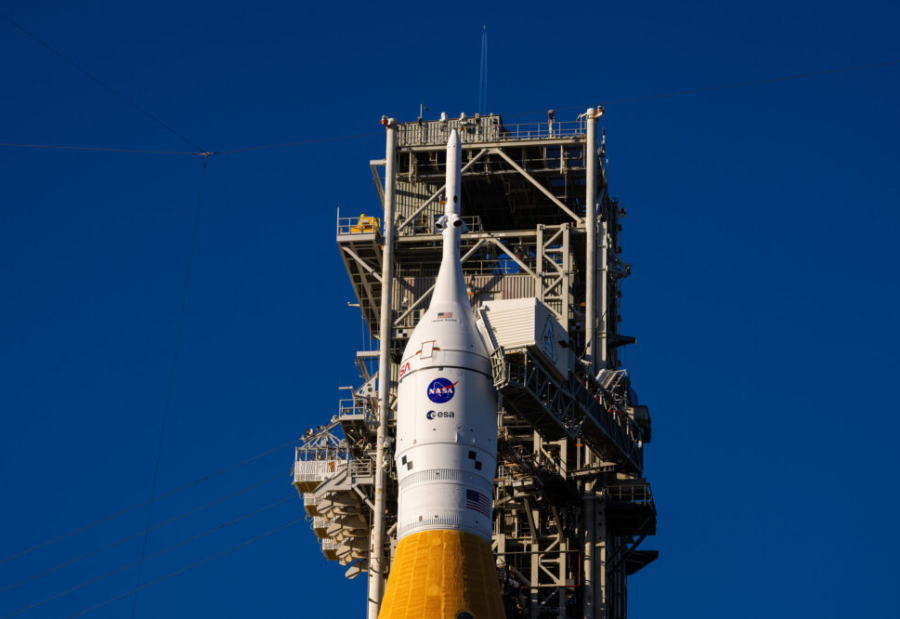
Marking a major milestone in space exploration, NASA has officially launched the Artemis II mission, with the Orion spacecraft now successfully orbiting Earth.
The spacecraft is currently positioned at an altitude of more than 69202km above Earth. At this stage, the crew is focused on checking critical systems, including life support and communication, before moving further into the mission.
Once these checks are complete, Orion will begin its journey toward the Moon’s gravity zone, which will take about 3 days. Around 5 days after launch, the spacecraft is expected to fly as close as 6598km above the Moon’s surface, offering astronauts a rare opportunity to observe previously unseen areas on the far side.
A key feature of this mission is Orion’s use of the Moon’s gravity to follow a free-return trajectory, allowing it to loop around the Moon and head back to Earth without requiring major propulsion changes.
If everything proceeds as planned, the mission will conclude with a splashdown in the Pacific Ocean on April 10, 2026. This mission is set to become NASA’s longest human spaceflight since Apollo 13.
Also read: Viksit Workforce for a Viksit Bharat
Do Follow: The Mainstream LinkedIn | The Mainstream Facebook | The Mainstream Youtube | The Mainstream Twitter
About us:
The Mainstream is a premier platform delivering the latest updates and informed perspectives across the technology business and cyber landscape. Built on research-driven, thought leadership and original intellectual property, The Mainstream also curates summits & conferences that convene decision makers to explore how technology reshapes industries and leadership. With a growing presence in India and globally across the Middle East, Africa, ASEAN, the USA, the UK and Australia, The Mainstream carries a vision to bring the latest happenings and insights to 8.2 billion people and to place technology at the centre of conversation for leaders navigating the future.