


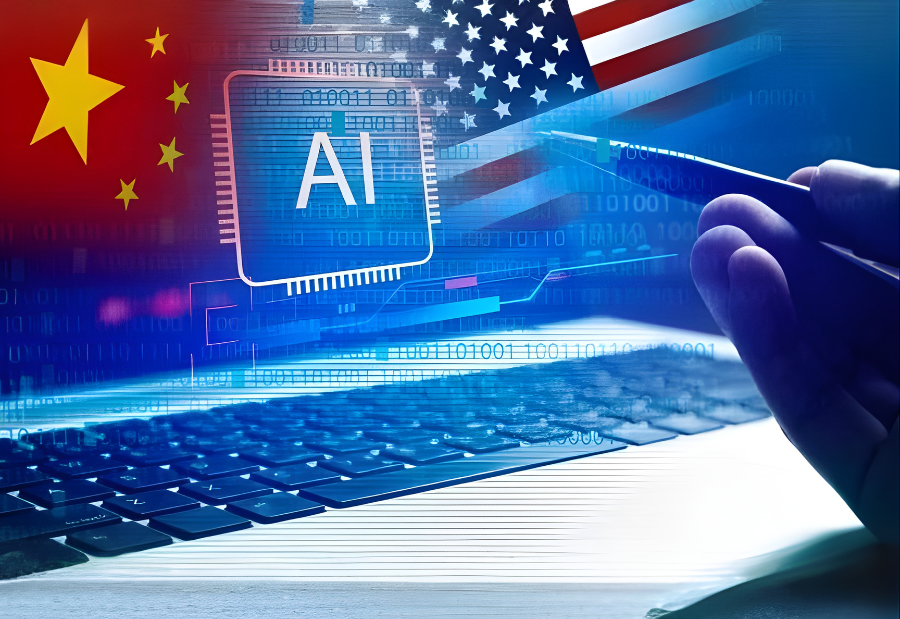
Dispute highlights growing geopolitical tensions shaping global AI research collaboration.
China has moved to boycott NeurIPS, one of the world’s most influential artificial intelligence conferences, after organisers briefly imposed restrictions on research submissions linked to US-sanctioned entities—triggering a wider debate over the politicisation of global AI research.
The decision followed guidance from the China Association for Science and Technology (CAST), which advised Chinese researchers to withdraw participation and discouraged institutions from recognising papers presented at the conference for funding or evaluation purposes. The move effectively signalled an organised academic pullback from a key global forum.
At the centre of the controversy was a policy introduced by conference organisers that restricted submissions from organisations appearing on US sanctions lists. The rule affected several Chinese technology firms and research bodies, raising concerns within China’s scientific community over fairness and academic neutrality.
In response to mounting backlash and the boycott threat, NeurIPS organisers issued a clarification, stating the policy had been implemented in error due to legal misinterpretation. They apologised and revised the guidelines, limiting restrictions to a narrower set of explicitly sanctioned entities.
Despite the reversal, the episode has underscored deeper fractures emerging within the global AI ecosystem, where scientific collaboration is increasingly intersecting with national security concerns and geopolitical strategy.
The dispute comes amid escalating technology tensions between the United States and China, particularly around advanced computing, semiconductors, and artificial intelligence. US sanctions targeting Chinese firms have expanded in recent years, with implications now extending beyond trade into academic and research domains.
Experts warn that such developments risk fragmenting the global research landscape, potentially creating parallel ecosystems where collaboration becomes constrained by political alignment rather than scientific merit.
For a conference like NeurIPS—long regarded as a neutral platform for cutting-edge AI breakthroughs—the incident marks a turning point. It raises broader questions about whether international research forums can remain insulated from geopolitical pressures as AI becomes central to economic and strategic competition.
While organisers have attempted to restore confidence, China’s response signals a growing willingness to push back against perceived restrictions, setting the stage for further tensions in the global technology and research community.
Also read: Viksit Workforce for a Viksit Bharat
Do Follow: The Mainstream LinkedIn | The Mainstream Facebook | The Mainstream Youtube | The Mainstream Twitter
About us:
The Mainstream is a premier platform delivering the latest updates and informed perspectives across the technology business and cyber landscape. Built on research-driven, thought leadership and original intellectual property, The Mainstream also curates summits & conferences that convene decision makers to explore how technology reshapes industries and leadership. With a growing presence in India and globally across the Middle East, Africa, ASEAN, the USA, the UK and Australia, The Mainstream carries a vision to bring the latest happenings and insights to 8.2 billion people and to place technology at the centre of conversation for leaders navigating the future.