


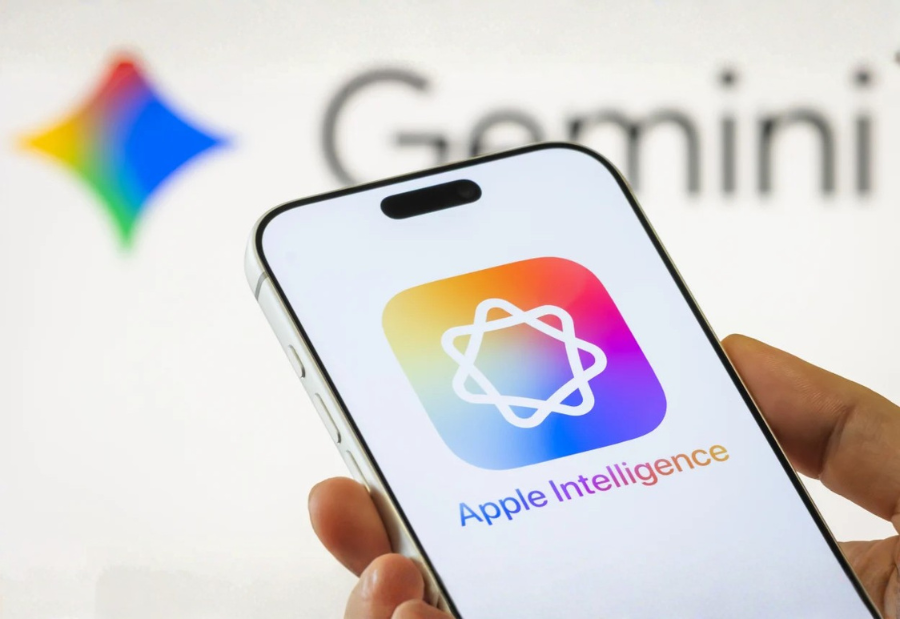
Shift to localised AI highlights focus on privacy, speed and offline performance
Apple is reportedly working on adapting Google’s Gemini artificial intelligence technology into smaller, more efficient models to enable advanced AI features directly on iPhones.
The approach centres on creating compact AI systems that can run on-device, reducing reliance on cloud-based processing. By doing so, Apple aims to deliver faster responses, improved performance and stronger data privacy for users.
At the core of this strategy is a technique known as model distillation, where a large AI model is simplified into a smaller version that retains key capabilities while requiring less computational power. These lightweight models are better suited for smartphones, allowing AI-driven features to function seamlessly without constant internet access.
The move reflects a broader shift in Apple’s artificial intelligence strategy, which has increasingly prioritised on-device processing. Unlike cloud-dependent systems, localised AI keeps user data within the device ecosystem, addressing growing concerns around data security and privacy.
Industry observers believe this development could significantly enhance Apple’s voice assistant and system-wide intelligence features. Future updates may enable more context-aware interactions, personalised responses and improved task automation across apps and services.
The collaboration also signals a pragmatic approach in the competitive AI landscape. While Apple continues to invest in its own AI research, leveraging Google’s Gemini technology allows it to accelerate deployment and bridge capability gaps more quickly.
However, integrating external AI models into Apple’s tightly controlled ecosystem may present challenges. Ensuring consistency in performance, maintaining privacy standards and optimising models for Apple’s hardware will require careful engineering.
The emphasis on smaller, on-device AI models is part of a larger industry trend. As smartphones become more powerful, companies are exploring ways to shift AI processing closer to users, reducing latency and improving reliability.
For consumers, this could translate into more responsive and personalised experiences without compromising data security. Features powered by local AI models are expected to work even in low-connectivity environments, expanding usability.
The development also highlights a key transition in the evolution of artificial intelligence. Instead of relying solely on large, centralised systems, technology companies are increasingly investing in distributed AI architectures that bring intelligence directly to devices.
As the competition intensifies, Apple’s focus on integrating efficient, privacy-centric AI into its ecosystem may shape how users experience artificial intelligence in everyday interactions.
Also read: Viksit Workforce for a Viksit Bharat
Do Follow: The Mainstream LinkedIn | The Mainstream Facebook | The Mainstream Youtube | The Mainstream Twitter
About us:
The Mainstream is a premier platform delivering the latest updates and informed perspectives across the technology business and cyber landscape. Built on research-driven, thought leadership and original intellectual property, The Mainstream also curates summits & conferences that convene decision makers to explore how technology reshapes industries and leadership. With a growing presence in India and globally across the Middle East, Africa, ASEAN, the USA, the UK and Australia, The Mainstream carries a vision to bring the latest happenings and insights to 8.2 billion people and to place technology at the centre of conversation for leaders navigating the future.