


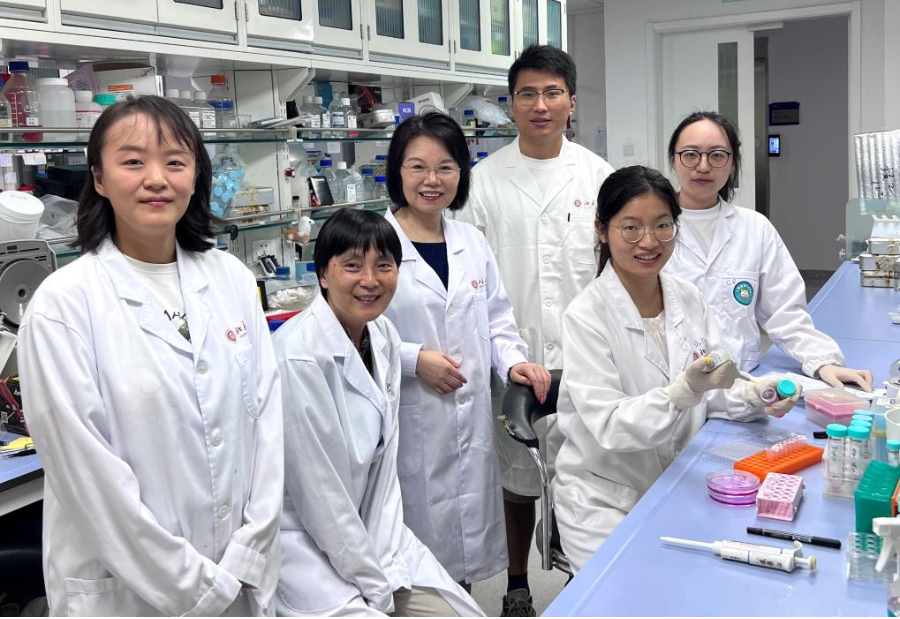
China has completed a large-scale screening of patents held by universities and research institutions, aiming to boost commercialization and turn innovation into economic value.
The country’s top intellectual property regulator reviewed over 1.3 million patents and identified 680,000 invention patents with strong commercial potential. These were matched with 460,000 companies to help move technologies from labs to the market.
The initiative is part of a 2023 action plan focused on patent transformation and utilization. Over the past 3 years, around 80,000 invention patents from more than 2,700 universities and research institutions have been commercialized.
“By the end of 2025, the industrialization rates of these patents from universities and research institutes had reached 10.1% and 17.2%, respectively, showing greater improvement compared with the pre-action period,” said Hu Wenhui, deputy commissioner of the China National Intellectual Property Administration.
The plan also focuses on future technologies such as quantum computing, bio-manufacturing, brain-computer interfaces, and 6G communications, laying the groundwork for high-value innovation.
Small and medium enterprises (SMEs), especially those focused on deep tech, have benefited from the push. Hu highlighted the growth of companies like Unitree Robotics under regional patent industrialization programmes.
Large enterprises have also seen gains, with patent-driven products contributing to higher profits and increased overseas sales.
China now holds over 5 million valid domestic invention patents and has led global international patent filings for 6 consecutive years. However, commercialization rates have historically been low, especially in universities, where the rate stood at just 3.9% in 2022.
Officials pointed to key challenges such as limited commercial focus among researchers, long transfer cycles, high risks, lack of skilled professionals in patent transfer, and inefficiencies in the ecosystem.
To address these issues, China has introduced several reforms over the past 3 years. These include pre-application evaluation systems, incentives linked to successful commercialization, dedicated technology transfer platforms, and policy measures like technology share mechanisms.
The Ministry of Education is also exploring the use of AI and big data to assess patent value and identify real-world applications.
“Inventions that simply sit in labs are like castles in the air,” said Wei Wei from the Ministry of Industry and Information Technology. “Technology must move out of the lab and onto the production line to become tangible products that people can see, touch and use in their daily lives.”
Also read: Viksit Workforce for a Viksit Bharat
Do Follow: The Mainstream LinkedIn | The Mainstream Facebook | The Mainstream Youtube | The Mainstream Twitter
About us:
The Mainstream is a premier platform delivering the latest updates and informed perspectives across the technology business and cyber landscape. Built on research-driven, thought leadership and original intellectual property, The Mainstream also curates summits & conferences that convene decision makers to explore how technology reshapes industries and leadership. With a growing presence in India and globally across the Middle East, Africa, ASEAN, the USA, the UK and Australia, The Mainstream carries a vision to bring the latest happenings and insights to 8.2 billion people and to place technology at the centre of conversation for leaders navigating the future.