


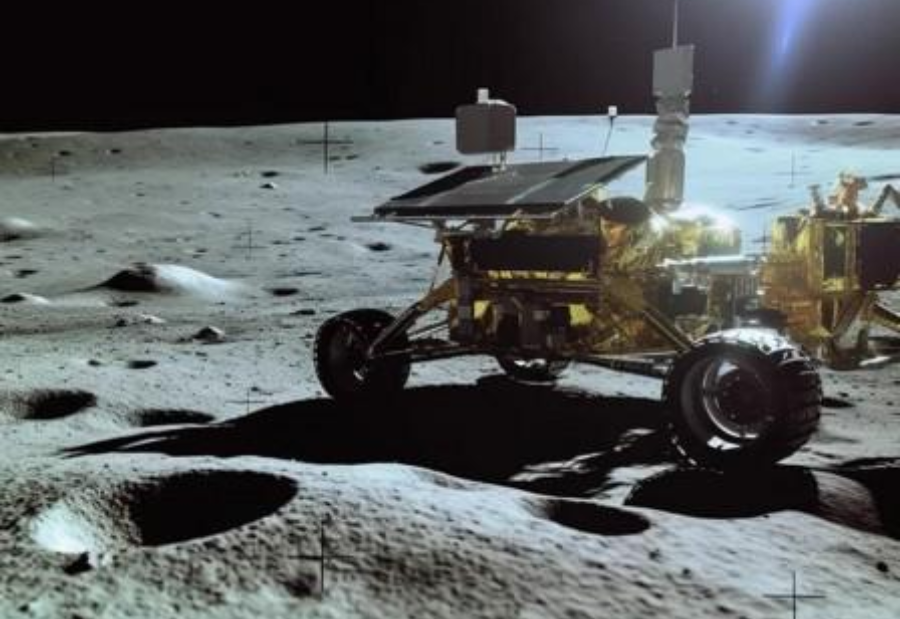
In a major step forward for India’s lunar ambitions, researchers from the Indian Institute of Technology Kharagpur, in collaboration with the Physical Research Laboratory, have uncovered new insights into the Moon’s deep interior that could directly support the upcoming Chandrayaan-4 mission.
The study focuses on rare iron- and titanium-rich rocks known as ilmenite-bearing cumulates (IBC), believed to have formed around 4.3–4.4 billion years ago when a vast magma ocean covered the Moon. As this molten layer cooled, dense minerals sank deep inside, preserving clues about the Moon’s early evolution.
To study these materials, scientists recreated extreme lunar conditions in labs, exposing samples to pressures of up to 3 gigapascals and temperatures above 1,500°C. The experiments revealed how these rocks partially melt and interact with the mantle, producing magmas similar to titanium-rich basalts found on the lunar surface.
“These results provide an experimental framework to better understand the origin and evolution of lunar samples,” said Professor Sujoy Ghosh, highlighting the importance of the research ahead of future sample-return missions.
What the study found:
- Different temperatures produce different types of magma
- Higher temperatures create moderately titanium-rich basalts
- Lower temperatures lead to very high titanium, magnesium-poor compositions that later mix with other magmas
- These processes explain the formation of high-Ti basalts observed on the Moon
The research also reveals how magma behaves beneath the Moon’s surface. At lower pressures, it rises and contributes to volcanic activity. At higher pressures, some magma sinks back into the mantle, pointing to a dynamic internal system known as mantle overturn.
The findings have been published in Geochimica et Cosmochimica Acta.
Impact on Chandrayaan-4:
The study is expected to play a key role in mission planning. Chandrayaan-4, India’s first sample-return mission, will require precise identification of scientifically valuable landing sites and better interpretation of collected samples.
Scientists say this research will help identify titanium-rich regions and improve analysis of lunar materials brought back to Earth.
“We are trying to understand how these unusual, titanium-rich magmas form deep within the Moon and eventually reach the surface. This is important for future missions,” Professor Ghosh said.
Chandrayaan-4 is expected to target a mountainous region near the Moon’s South Pole. Researchers from ISRO’s Space Applications Centre have identified this area as both safe and scientifically rich.
The development highlights how Earth-based laboratory research is shaping the future of space exploration and strengthening India’s next leap toward the Moon.
Also read: Viksit Workforce for a Viksit Bharat
Do Follow: The Mainstream LinkedIn | The Mainstream Facebook | The Mainstream Youtube | The Mainstream Twitter
About us:
The Mainstream is a premier platform delivering the latest updates and informed perspectives across the technology business and cyber landscape. Built on research-driven, thought leadership and original intellectual property, The Mainstream also curates summits & conferences that convene decision makers to explore how technology reshapes industries and leadership. With a growing presence in India and globally across the Middle East, Africa, ASEAN, the USA, the UK and Australia, The Mainstream carries a vision to bring the latest happenings and insights to 8.2 billion people and to place technology at the centre of conversation for leaders navigating the future.