


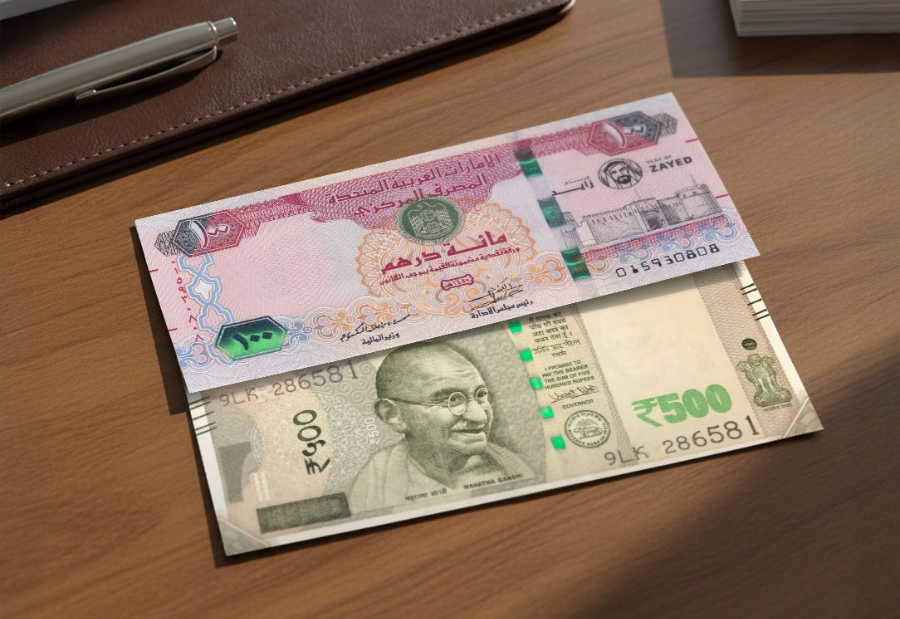
A sharp decline in the Indian rupee has created a favourable moment for Indian expatriates in the UAE who regularly send money back home. On Wednesday morning, the rupee touched its weakest level ever against the UAE dirham, crossing a key psychological mark and increasing the value of remittances.
The rupee briefly weakened to around ₹25.05 per Dh1 at about 8:55 am, compared with approximately ₹24.85 the previous day. This movement pushed the rupee past the ₹25 level against the dirham for the first time.
With the currency weakening, each dirham now converts into more rupees than before. A Dh1,000 transfer now converts to roughly ₹25,040, offering noticeably higher returns compared with levels seen only weeks earlier.
The sudden shift has renewed attention on remittance strategies among UAE residents, especially those who send funds regularly to support families or manage financial commitments in India.
Gradual weakening through February
Currency traders say the latest drop follows a gradual weakening trend that started earlier in February.
During the first week of February, the exchange rate remained around ₹24.49 to ₹24.54 per dirham. The rate stayed relatively stable for several days before beginning a slow upward movement.
By mid-February, the dirham was converting between ₹24.57 and ₹24.61, reflecting steady pressure on the rupee. Toward the end of February, the rate moved closer to ₹24.66.
Momentum strengthened as March began. The exchange rate rose to around ₹24.71 on March 1, then ₹24.82 on March 2 and ₹24.85 the following day. Wednesday’s jump beyond ₹25 marked the sharpest move in recent weeks and pushed the currency to a record level.
Market observers note that exchange rates can change quickly once external pressures start building.
Rising oil prices add pressure
A major factor behind the rupee’s recent slide is the surge in global crude oil prices.
According to available data, the rupee also weakened sharply against the US dollar, falling 0.7% to around ₹92.0875 per dollar on Wednesday. At the same time, India’s 10-year government bond yield rose to about 6.72%.
Global oil prices have risen significantly, with Brent crude moving above $82 per barrel after climbing nearly 12% in just 2 days. This marks the largest short-term increase since 2020 and has renewed concerns about imported inflation in energy-dependent economies.
India imports most of its crude oil requirements. As a result, rising global oil prices often increase pressure on the country’s trade balance and weaken the currency.
Impact on UAE remittances
The UAE remains one of the largest sources of remittances to India. Millions of Indian expatriates transfer money home every month to cover household expenses, education costs and loan repayments.
When the dirham strengthens against the rupee, expatriates can send the same amount of money while delivering a higher rupee value to recipients in India. This often triggers increased remittance activity when the exchange rate crosses important psychological levels.
However, currency markets remain volatile. Future movements in the rupee will depend on factors such as global oil prices, geopolitical developments and broader currency trends.
Also read: Viksit Workforce for a Viksit Bharat
Do Follow: The Mainstream LinkedIn | The Mainstream Facebook | The Mainstream Youtube | The Mainstream Twitter
About us:
The Mainstream is a premier platform delivering the latest updates and informed perspectives across the technology business and cyber landscape. Built on research-driven, thought leadership and original intellectual property, The Mainstream also curates summits & conferences that convene decision makers to explore how technology reshapes industries and leadership. With a growing presence in India and globally across the Middle East, Africa, ASEAN, the USA, the UK and Australia, The Mainstream carries a vision to bring the latest happenings and insights to 8.2 billion people and to place technology at the centre of conversation for leaders navigating the future.