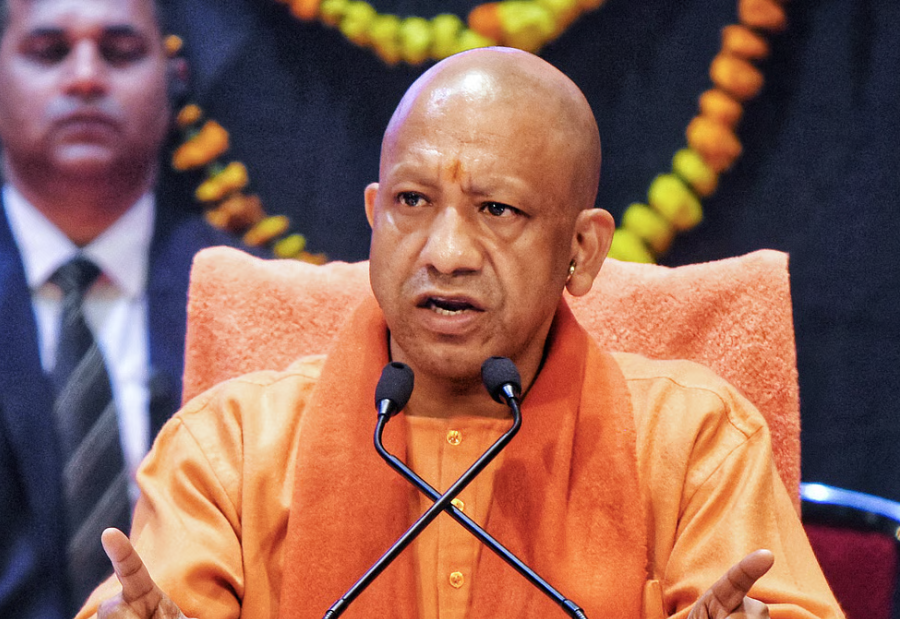
Positioning technology as a catalyst for inclusive growth, Uttar Pradesh Chief Minister Yogi Adityanath said the state is set to become a national leader in the use of artificial intelligence in healthcare services. He made the remarks while inaugurating a 2-day conference on AI in Transforming Healthcare in Lucknow.
Addressing the gathering, the Chief Minister stressed that development becomes meaningful when technology is guided by compassion, policy is powered by innovation, and governance is built on trust. He said, “Artificial Intelligence (AI) is emerging as a powerful instrument to transform governance from a reactive approach to a proactive one,” adding that under the UP AI Mission, the state is moving decisively to integrate AI into healthcare delivery.
He highlighted that AI can significantly improve the accuracy and effectiveness of health policies. “By enabling real-time data collection and feedback on epidemics and vector-borne diseases, AI can support informed decision-making, stronger policies, and better outcomes,” he said.
The Chief Minister outlined several technology-driven healthcare initiatives underway in the state. These include a Medical Device Park, a Pharma Park, a MedTech Center of Excellence in Lucknow, an AI and Innovation-based Entrepreneurship Center in Gautam Buddha Nagar, a Center of Excellence at Indian Institute of Technology Kanpur, and the development of Lucknow as an AI City. He added that projects worth nearly ₹2,000 crore will be implemented in phases over the next 3 years under the UP AI Mission.
Reflecting on governance reforms, he said that over the last 11 years, technology-led initiatives have transformed service delivery across India. In Uttar Pradesh, he noted that the installation of e-POS machines in 80,000 fair price shops and the removal of 30 lakh fake ration cards have brought complaints related to the public distribution system down to zero. He also said that 1.06 crore families are receiving pensions directly through DBT, ensuring transparency.
On healthcare infrastructure, the Chief Minister said the number of medical colleges in the state has risen from 40 before 2017 to 81. Facilities such as ICUs, oxygen plants, dialysis units, blood banks, and digital diagnostics are now available across all districts. Telemedicine and virtual ICUs introduced during COVID-19 continue to serve remote areas.
Citing public health gains, he said encephalitis, which once caused 1,200–1,500 child deaths annually, has recorded zero deaths. He added that AI tools are now being used in tuberculosis detection, treatment monitoring, and high-risk mapping. AI is also being applied in policing, agriculture, education, and other sectors.
Concluding, he said AI must remain human-driven and expressed confidence that the conference would result in practical solutions and a time-bound action plan.
The event was attended by Jitin Prasada, Brajesh Pathak, Sunil Sharma, Ajit Pal, V. K. Paul, and other senior officials and experts.
Also read: Viksit Workforce for a Viksit Bharat
Do Follow: The Mainstream formerly known as CIO News LinkedIn Account | The Mainstream formerly known as CIO News Facebook | The Mainstream formerly known as CIO News Youtube | The Mainstream formerly known as CIO News Twitter
About us:
The Mainstream is a premier platform delivering the latest updates and informed perspectives across the technology business and cyber landscape. Built on research-driven, thought leadership and original intellectual property, The Mainstream also curates summits & conferences that convene decision makers to explore how technology reshapes industries and leadership. With a growing presence in India and globally across the Middle East, Africa, ASEAN, the USA, the UK and Australia, The Mainstream carries a vision to bring the latest happenings and insights to 8.2 billion people and to place technology at the centre of conversation for leaders navigating the future.